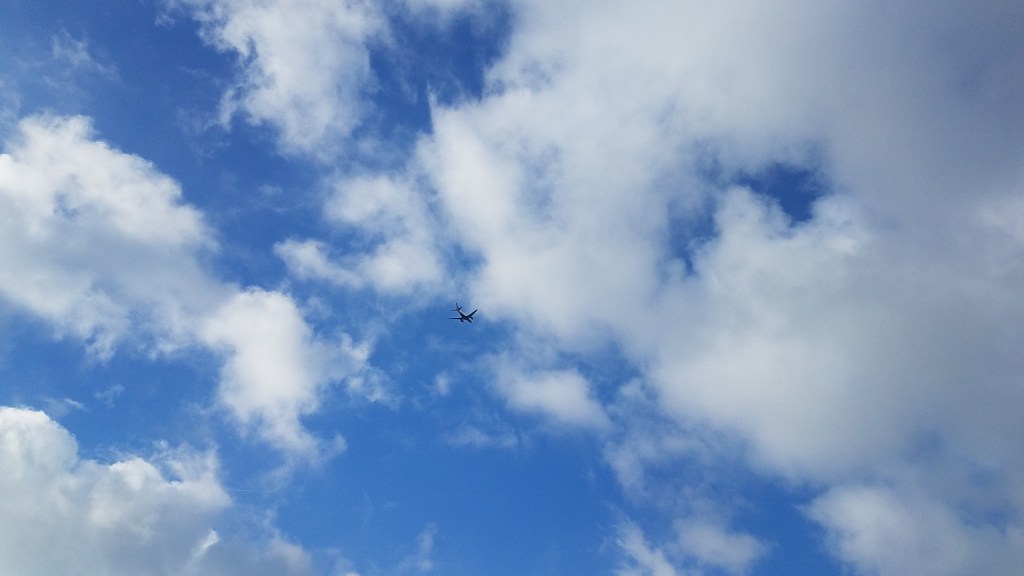
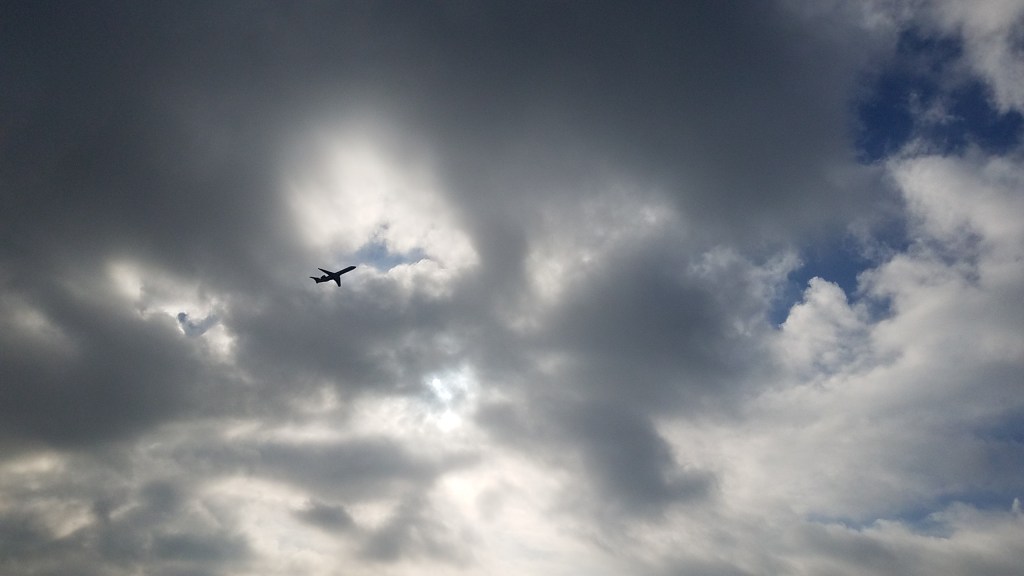
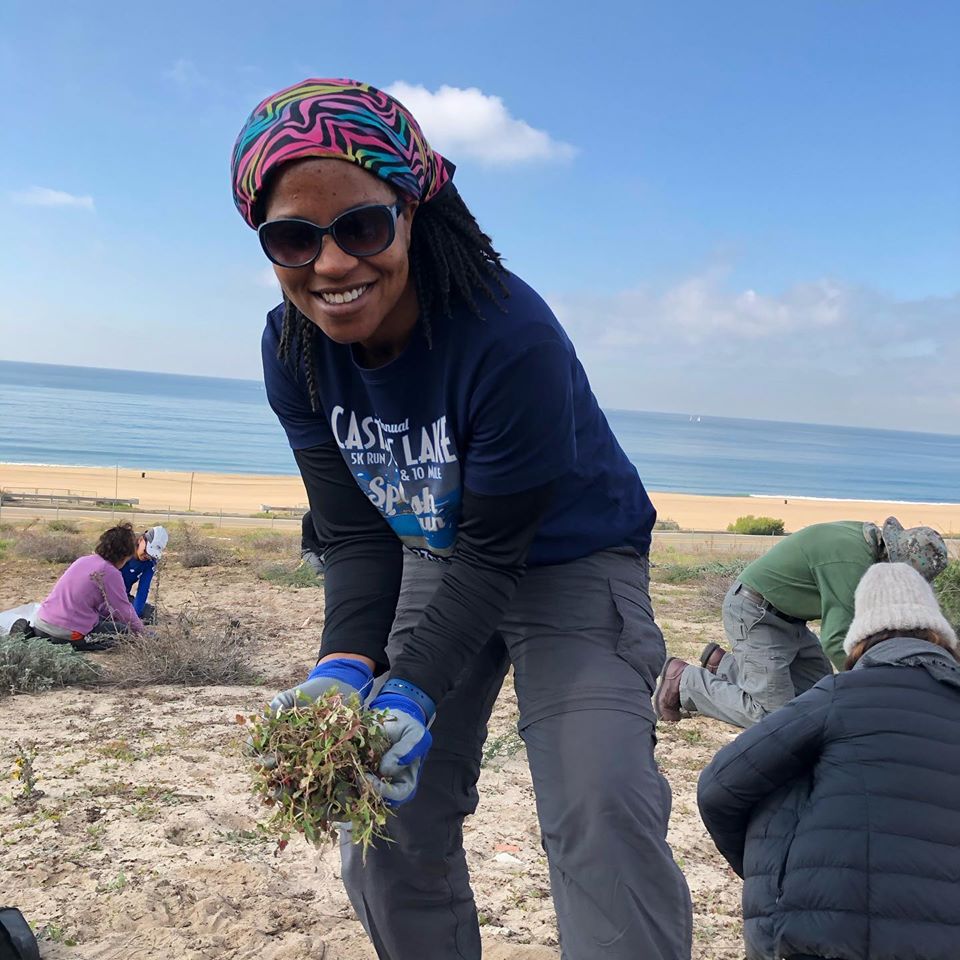
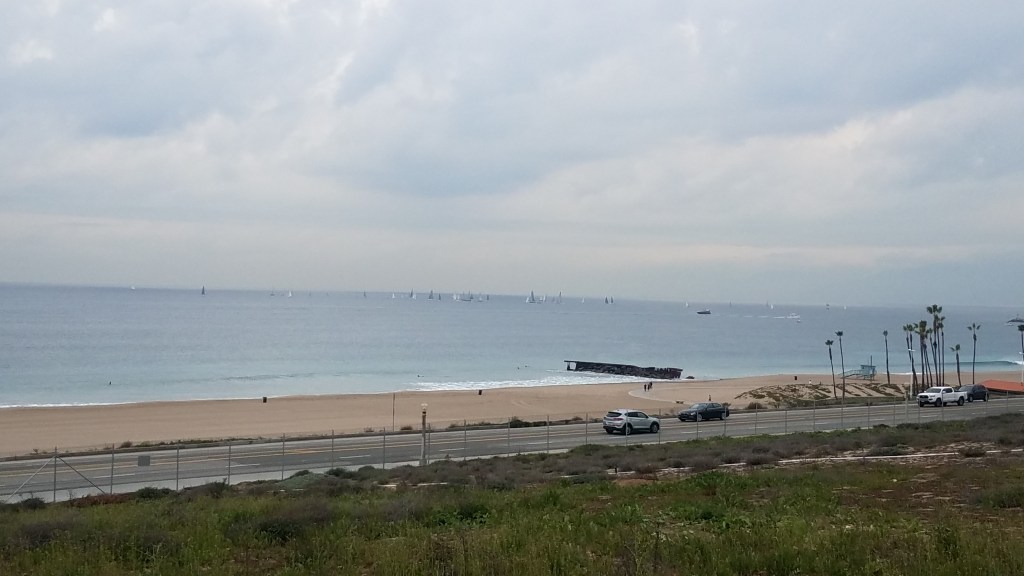
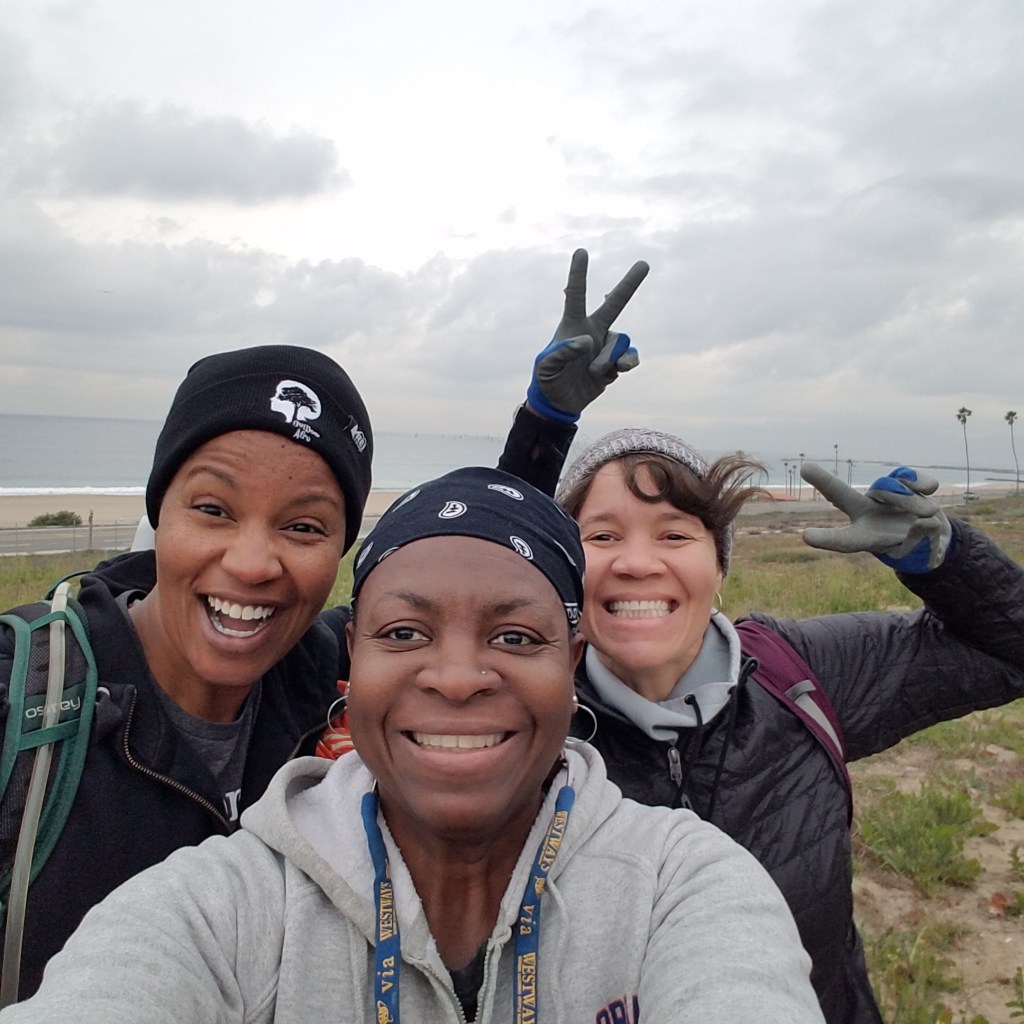
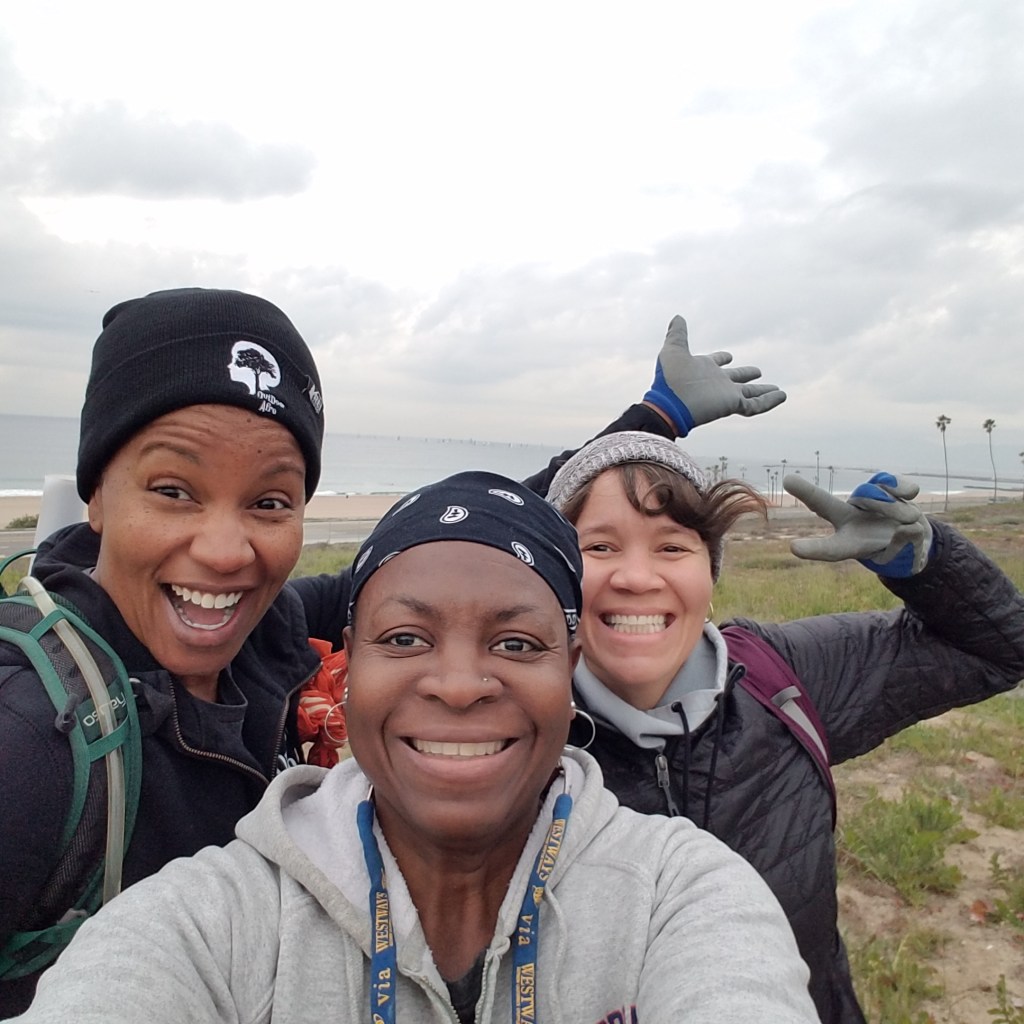
Sometimes the simplest things trigger profound memories. To get my outdoor stewardship going for 2020, I volunteered on the second Saturday of the year at the same place I started my stewardship last year – LAX Dunes. Jennetta and I spent a few hours helping to remove (pull up 😄) broad leaf filaree (Erodium botrys) – a non-native (aka invasive) plant species. We set this up as an event for our outdoor group but alas it was just us two, ‘toiling’ in the crisp air, enjoying the views, watching planes fly overhead, and pulling up broad leaf filaree. It wasn’t hard work, just tedious and necessary work.
It was a bit chilly when we arrived, but my outer layer soon became a knee and bottom pad 🙂
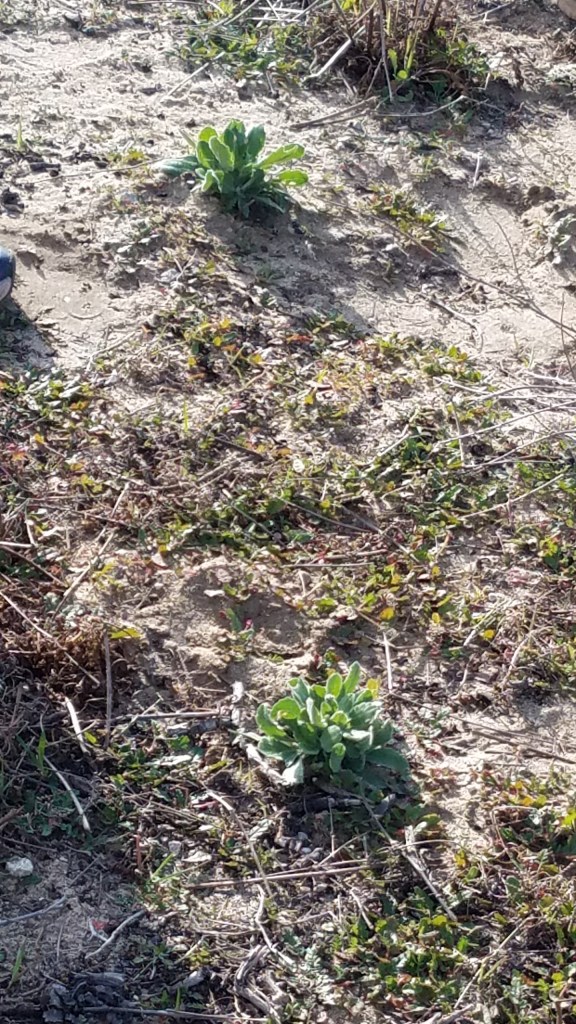
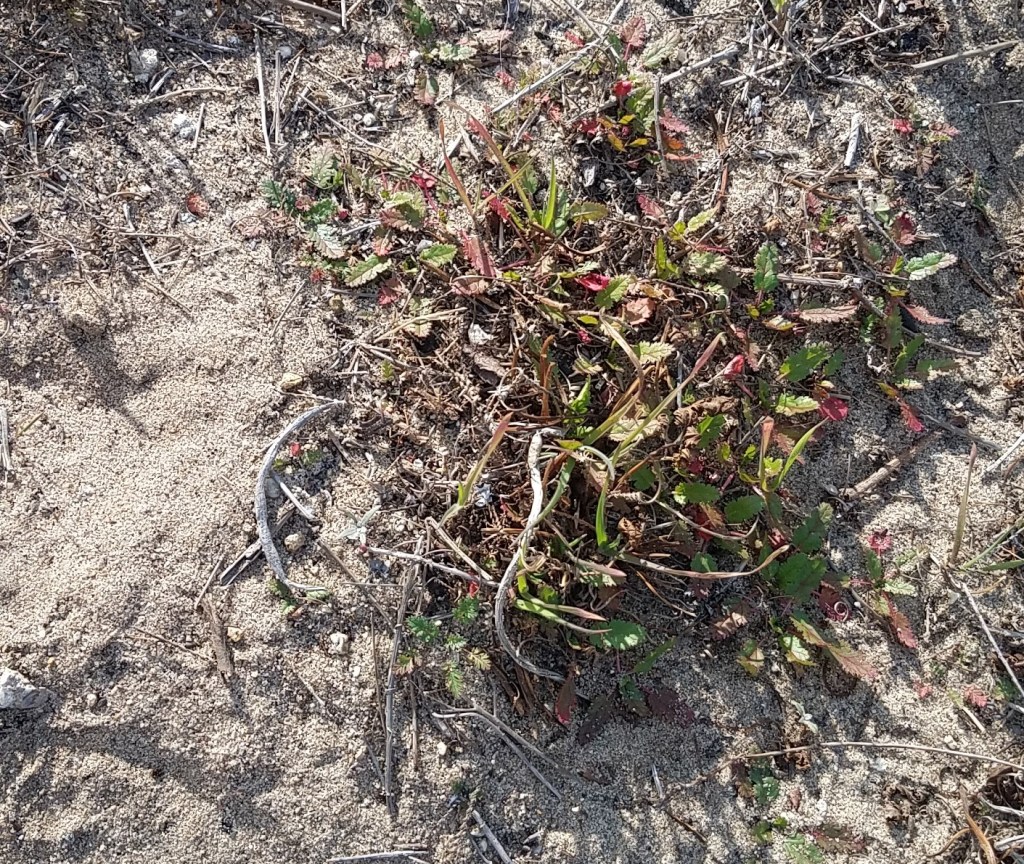
Broadleaf filaree and telegraph weed.
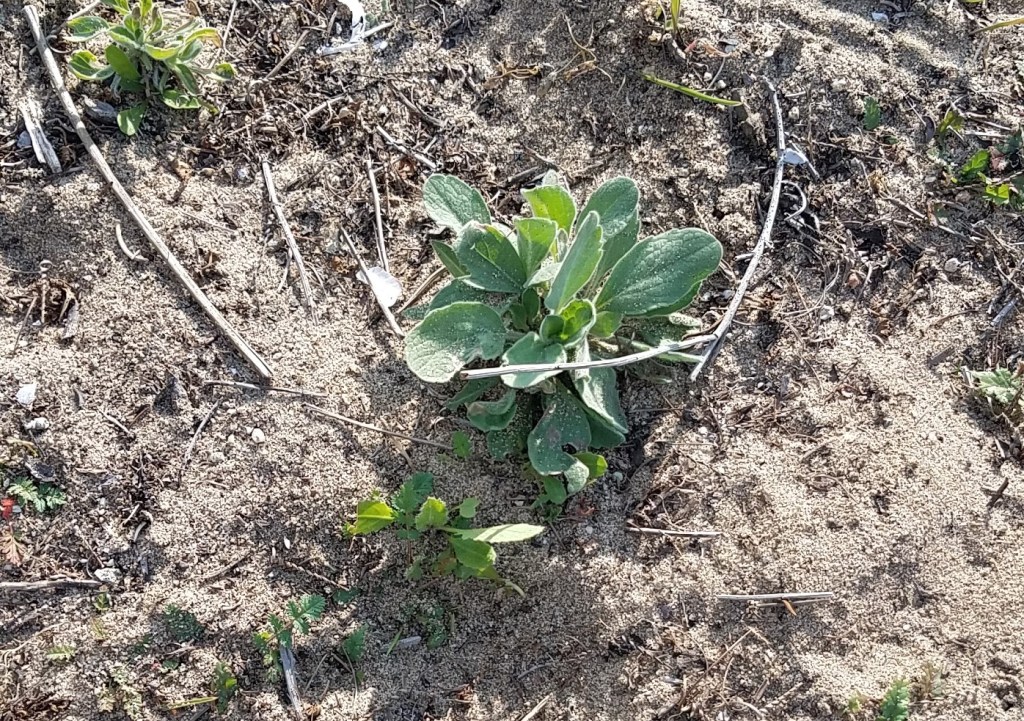
Broadleaf filaree – the invasive – we don’t want this.
Telegraph weed (Heterotheca grandiflora) – native – we want to keep this.
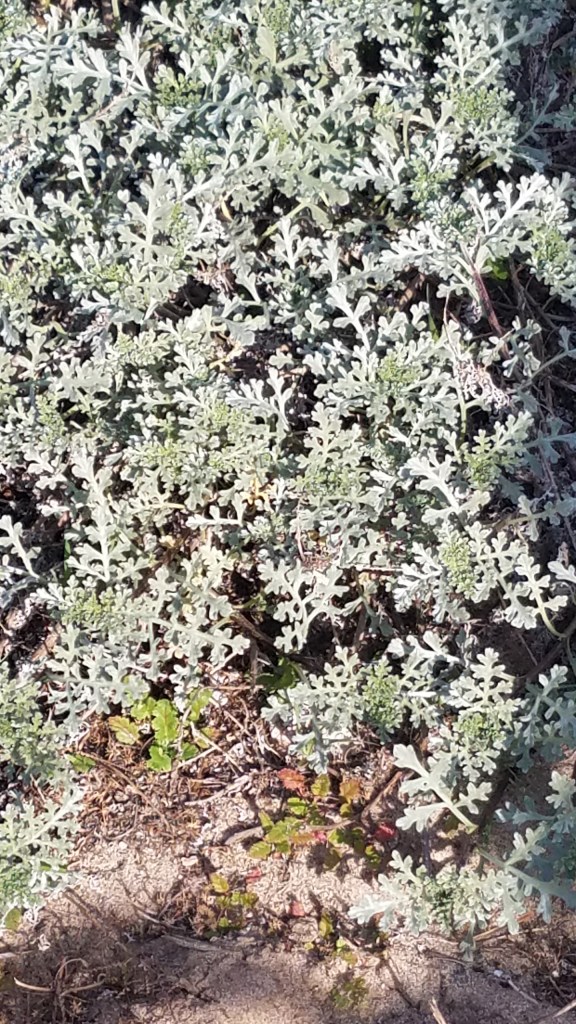
Beach bur sage (Ambrosia chamissonis) – native – we want this as well.
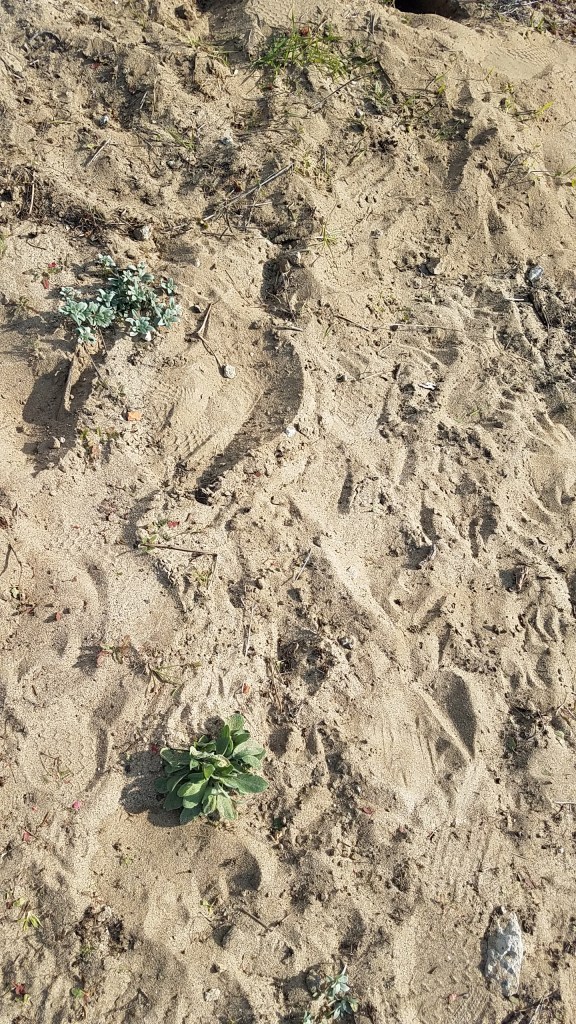
After we removed the invasives.
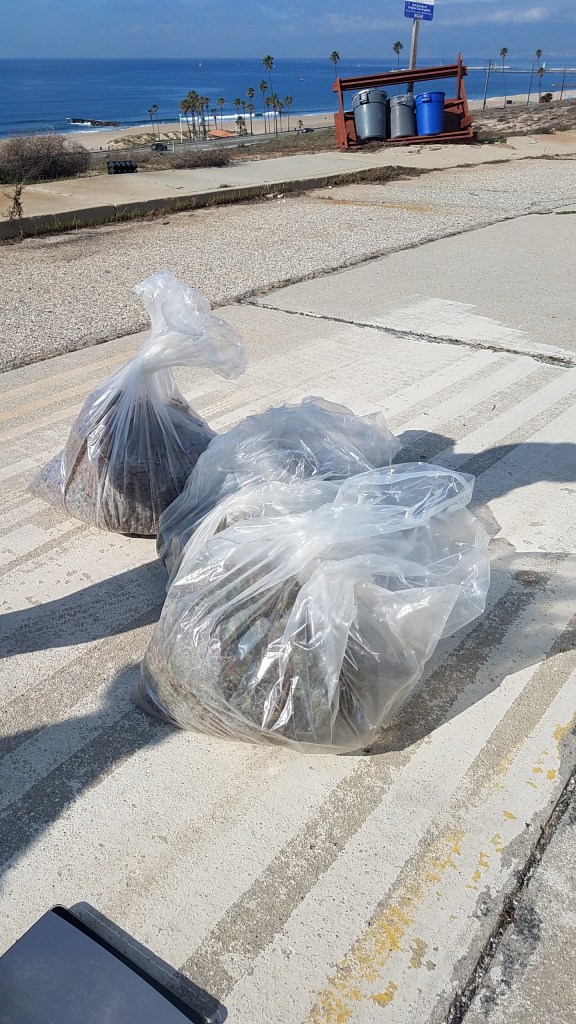
Only one bag is ours.
Before we got started I thought we would be working on the same species we pulled last year, given we were working in the same general area at the same time of year. However, I didn’t notice a lot of that plant around and was very happy to get confirmation from the coordinator that the work volunteers did last year made a difference. That particular species is now less widespread in the area and hopefully with ongoing efforts will stay that way.
Part of Jennetta’s haul
Trust me, I pulled a lot more than this one sprig!
So what memory(ies) did pulling up the invasives trigger? Helping in my mother’s and my family’s ‘kitchen’ gardens as I was growing up. A chore that I did not often enjoy, sometimes did grudgingly, but always did nonetheless because I had no choice. Also ‘small-farming’ or ‘kitchen gardening’ as we call it at home, helped to pay for my education from primary school to tertiary level. Now I reflect on and really appreciate the hard work my mother and family did, and still do. Back then, I had a sense of how much we depended on those gardens, but now I understand a lot more. Perhaps gardening is in my DNA – a bit latent when I was younger, but certainly a hobby (and a necessity) in the last several years. I value the lessons I learned from my family and have been able to do substantial work on my backyard because of them.
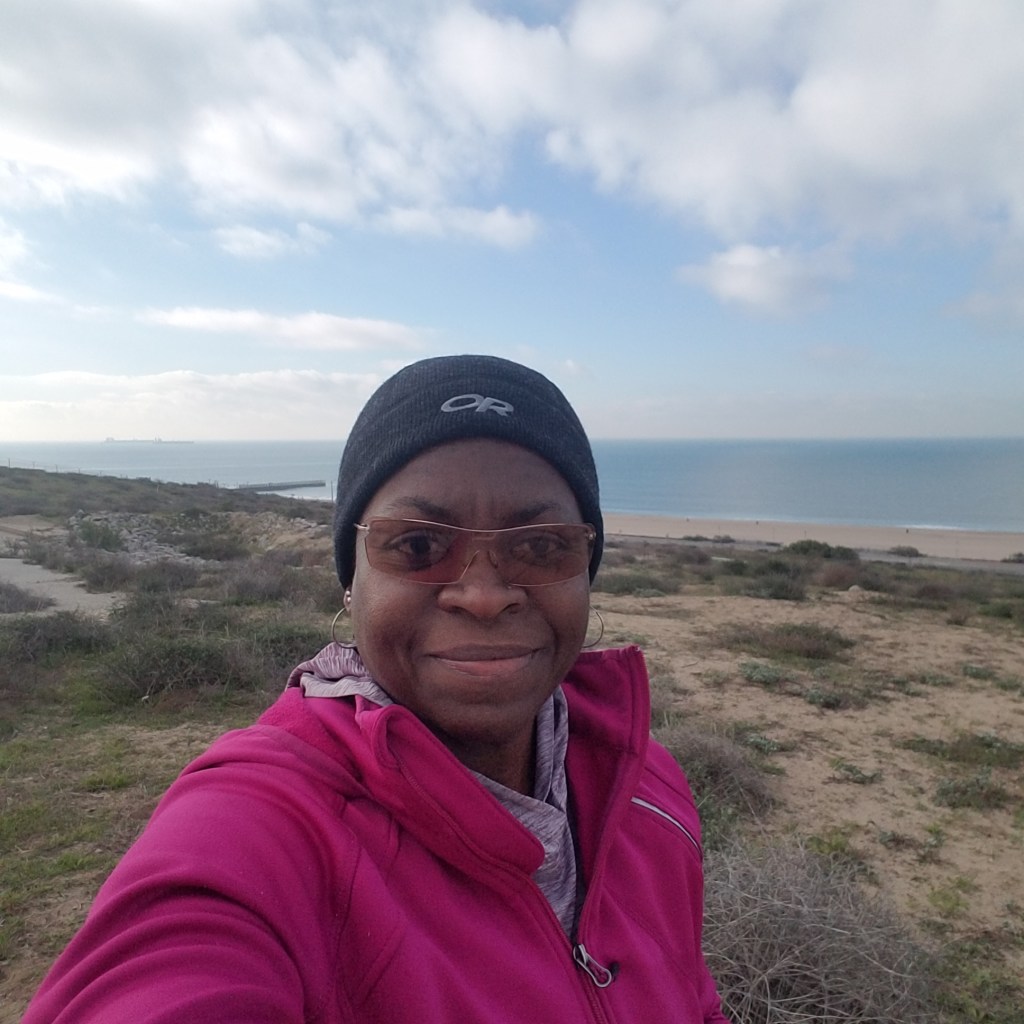
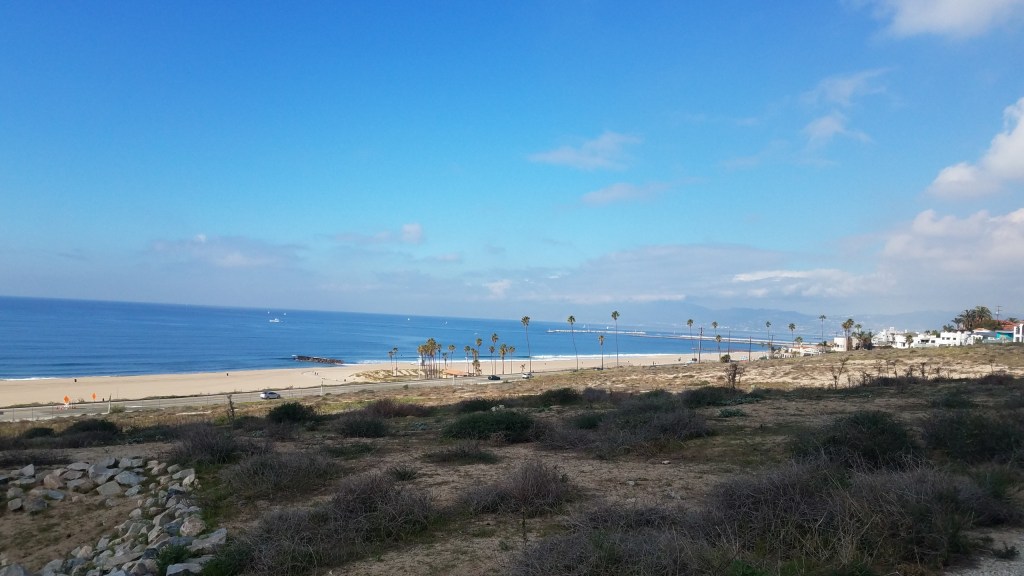
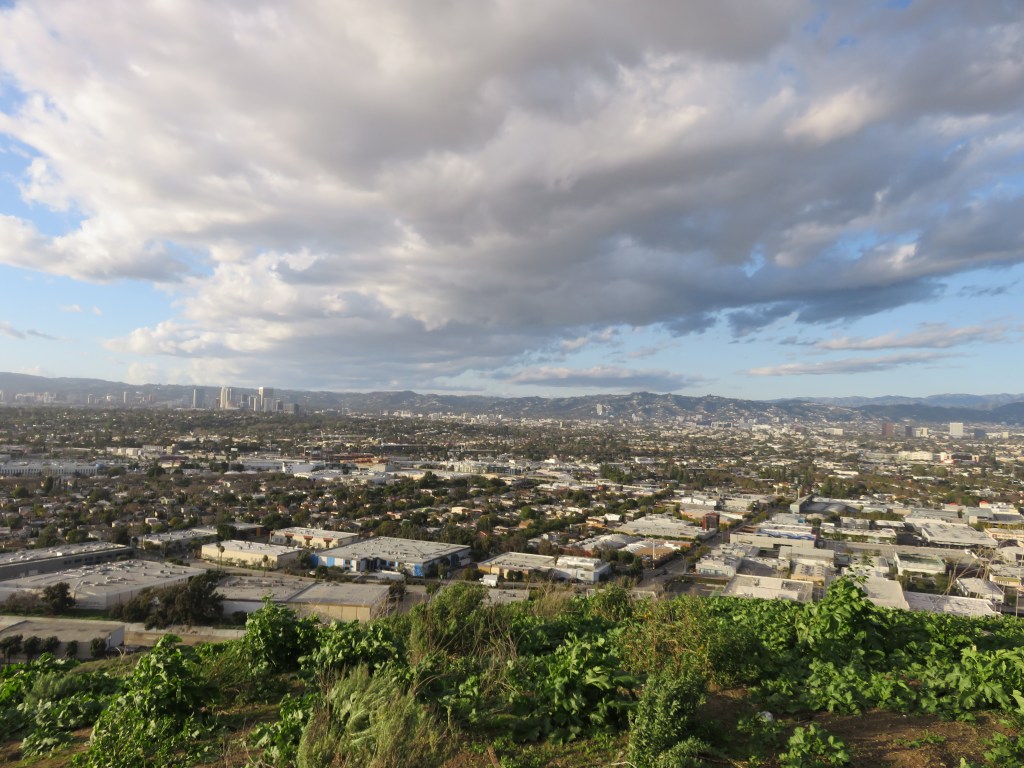
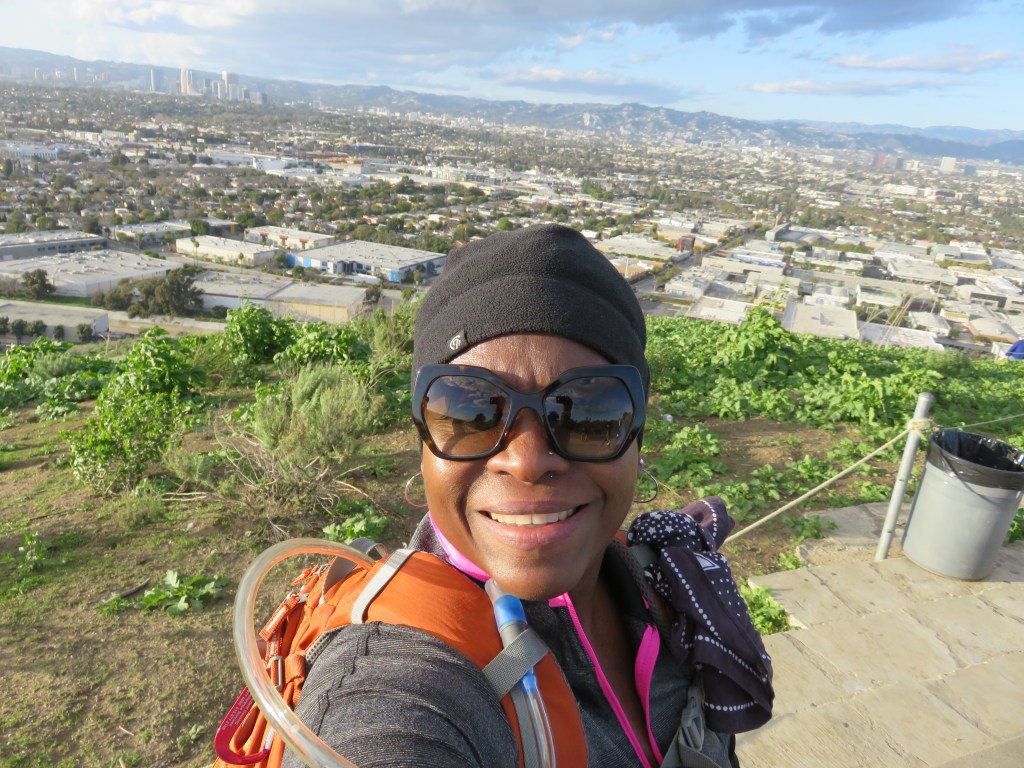
Who would complain about pulling up invasives when this is the view?
Working at the dunes also prompted specific memories of other stewardship efforts like beach cleanups (still working on the post I started after the last one) and removing invasive species elsewhere (e.g. air potato roundup in Gainesville). It also got me thinking of how much more I could be doing. I strongly believe that all of us have the responsibility to be good stewards of the natural resources we benefit from, even if many people don’t use and enjoy them as actively as I do. All people benefit from the services provided by natural ecosystems (think of the air we breathe, the oceans we swim and fish in, the coral reefs that protect our coastlines). So if only for practical reasons we should take good care of what we depend on to survive.
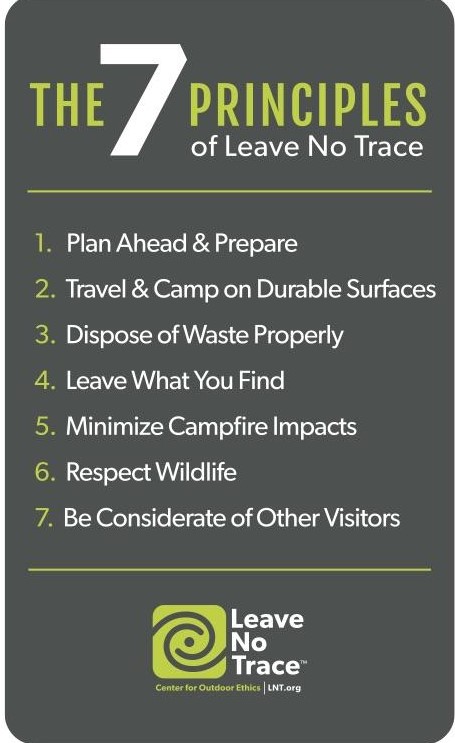
I consider myself a responsible user of natural resources, following ‘Leave-no-Trace’ principles when I’m outdoors and actively encouraging others to do so, but I don’t otherwise practice natural resource stewardship as much as I should, relative to the amount of use I derive from these resources. What’s stopping me? I did a mere 3 cleanups in 2019. How many will I do in 2020? At least 6? Can I make it to 12? This is one more improvement that I’m working on this year.
In previous years I not only volunteered for cleanups, but helped to plan them as well (more about this in a post coming soon). I also volunteered in areas other than natural resource protection and restoration. I touch on this again here because travelling to volunteer is an important part of tourism and a topic I hope to focus on in a future post.
About the Enamel Plates …
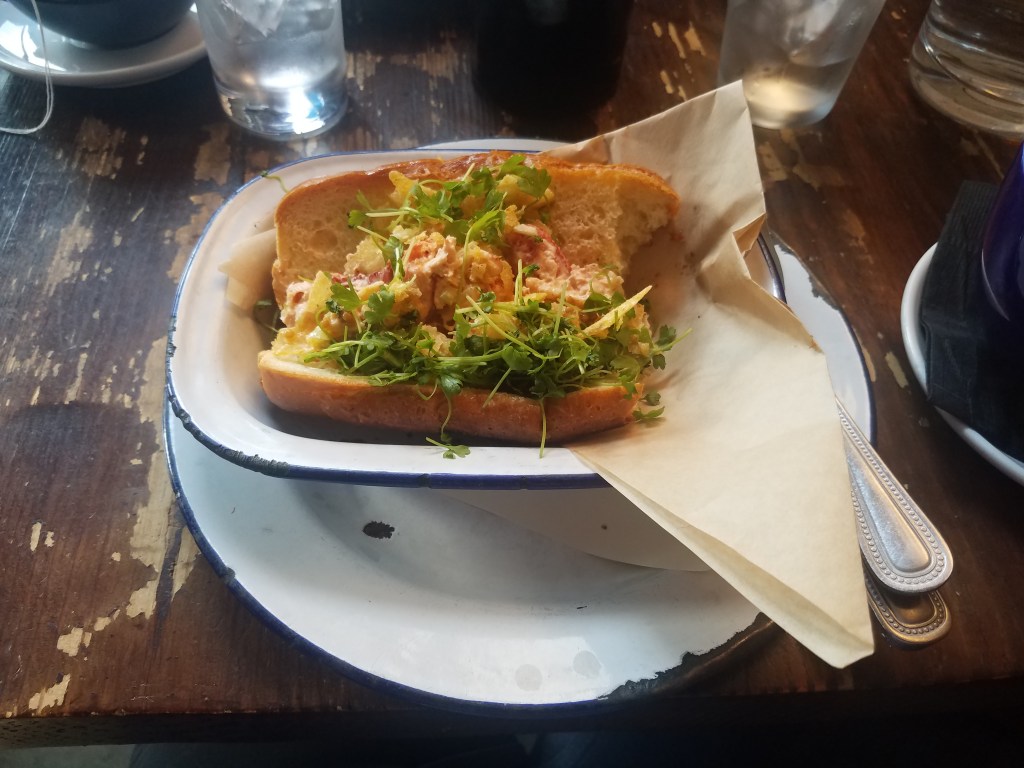
After pulling up lots of broad leaf filaree, we of course had to eat and deciding where to eat is usually a job and a half 😁. This time around it was relatively simple because close to the end of our work two volunteers next to us were chatting about good restaurants in the area – we just chose one they discussed. It turned out to be a good choice. My lobster roll wasn’t as big as I expected, given what I paid for it, but it was certainly tasty.
One major highlight of lunching in this restaurant was that my meal was served on ‘vintage’ enamel tableware which immediately took me back to my childhood in Barbados. Though these plates look worn, they were made to look that way (distressed is how they are described by retailers) rather than having survived years and years of distress. No restaurant worth its salt would risk enamel flakes in a customer’s meal.
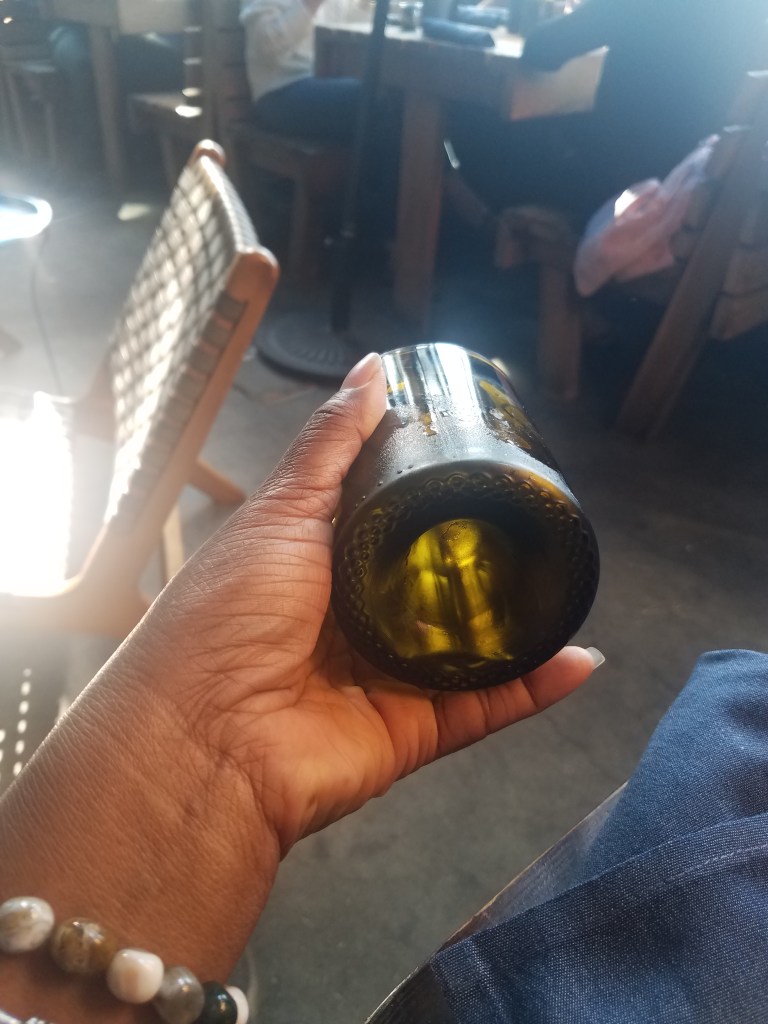
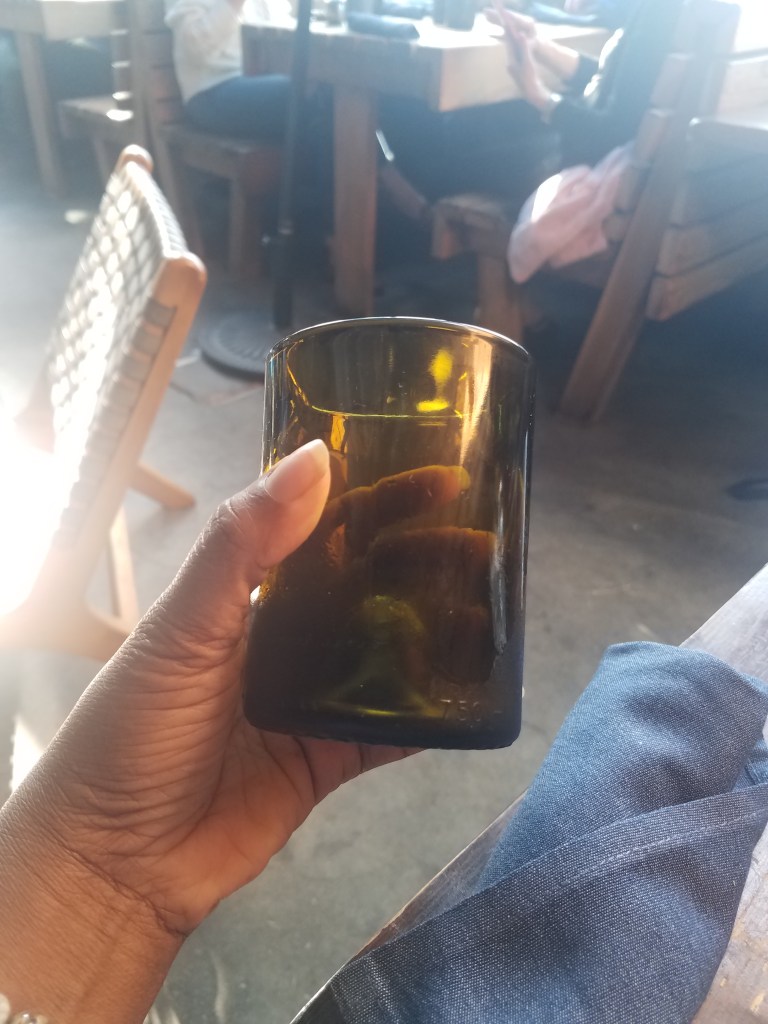
Another highlight was that their water glasses were made from used wine bottles 😊. Of course I asked to make sure that they weren’t just glasses designed to look like wine bottles. Excellent reuse of a container for a beverage that I thoroughly enjoy!🥂
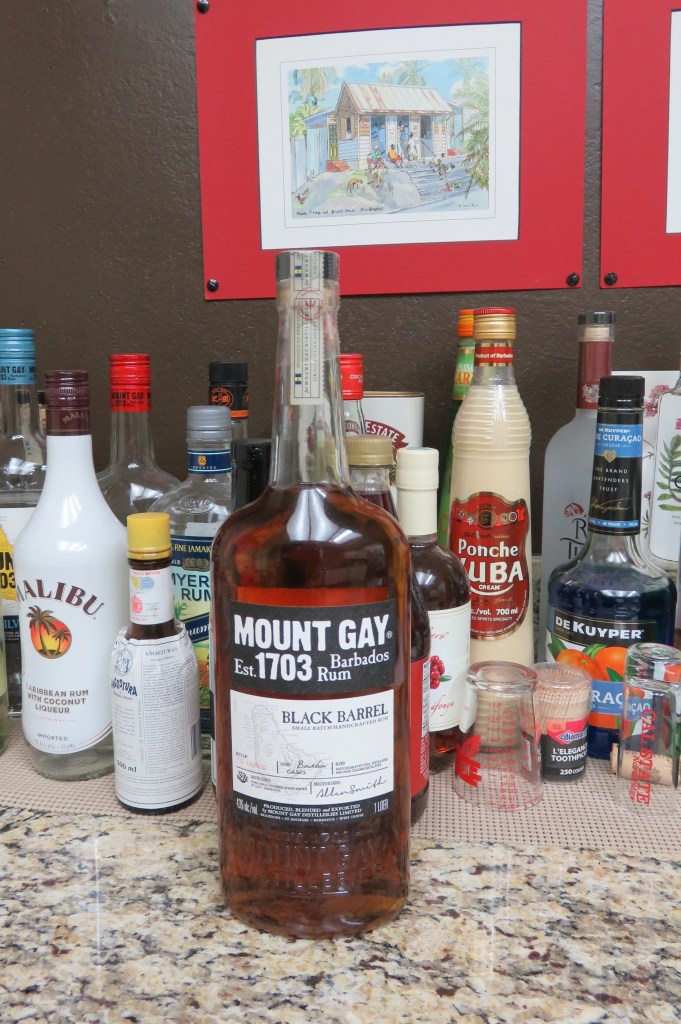
Yet another highlight – Mount Gay Black Barrel was on their menu … just like it is on StinkaMissy’s Rum Shop’s menu 😉.
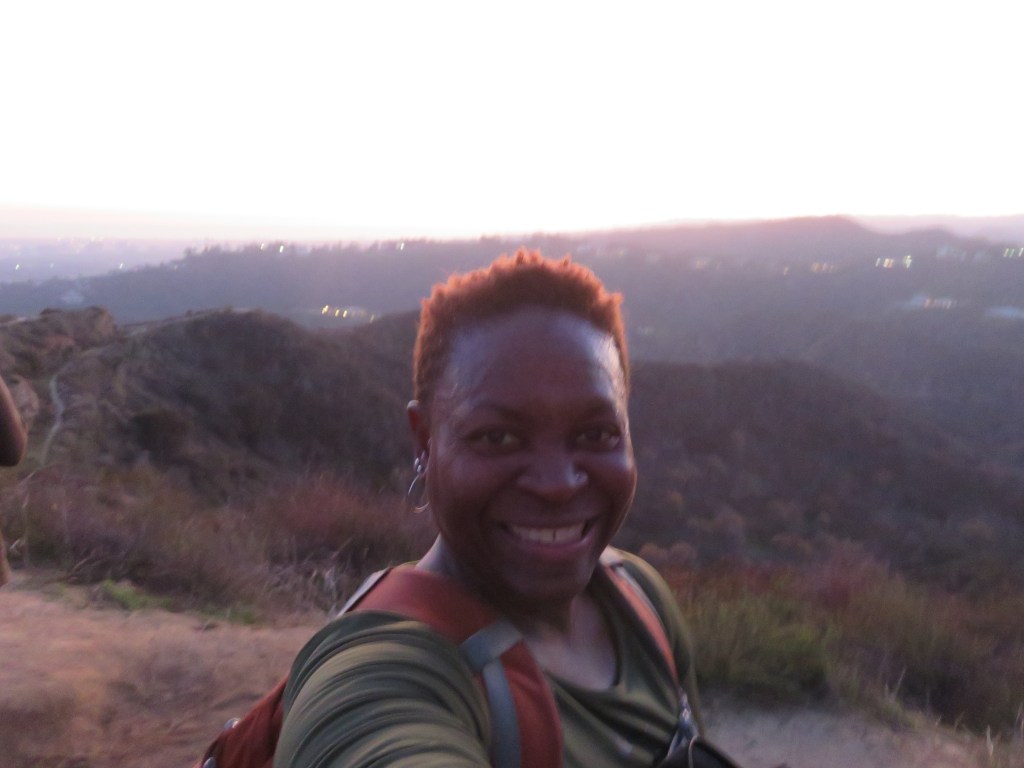
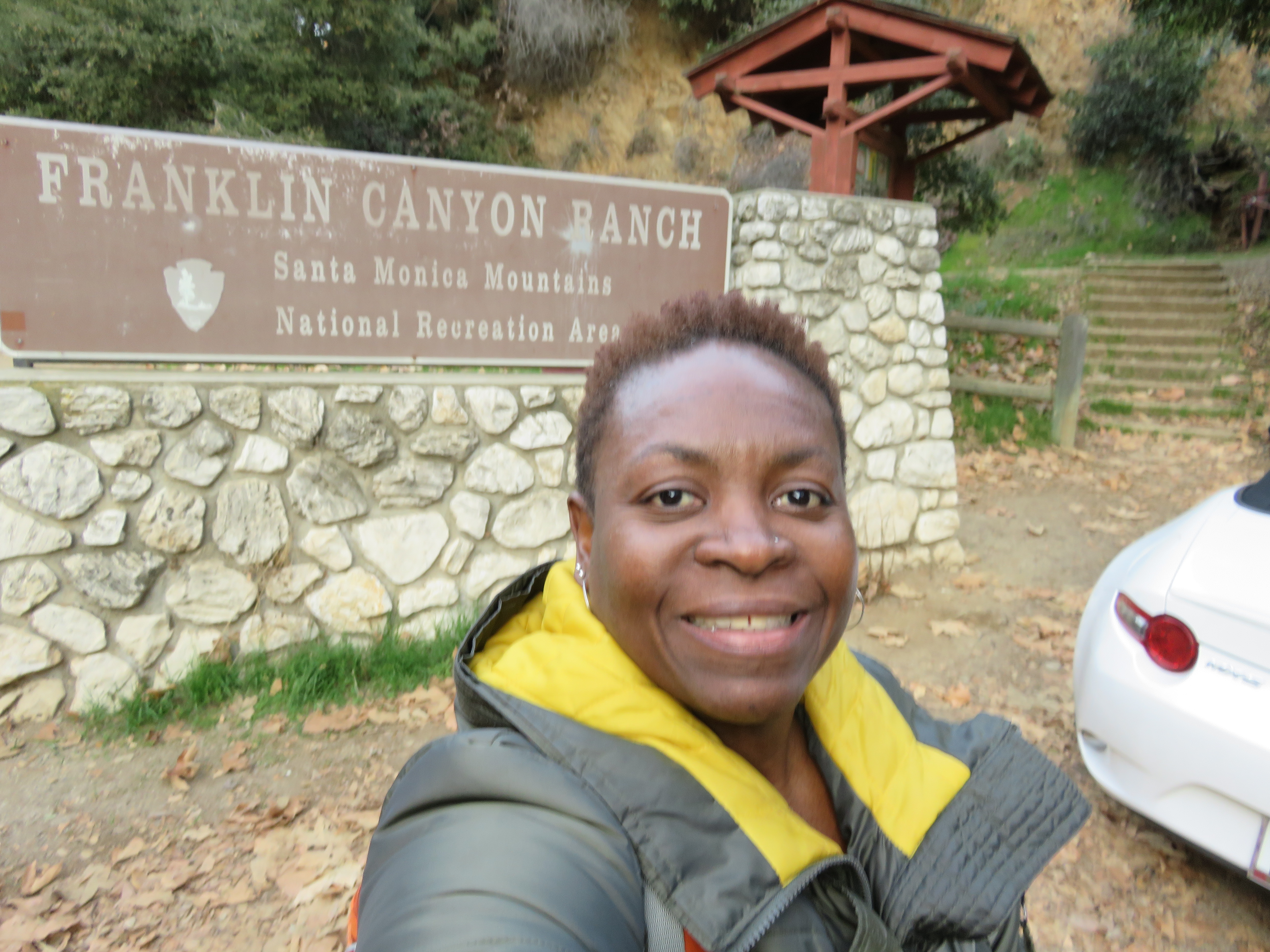
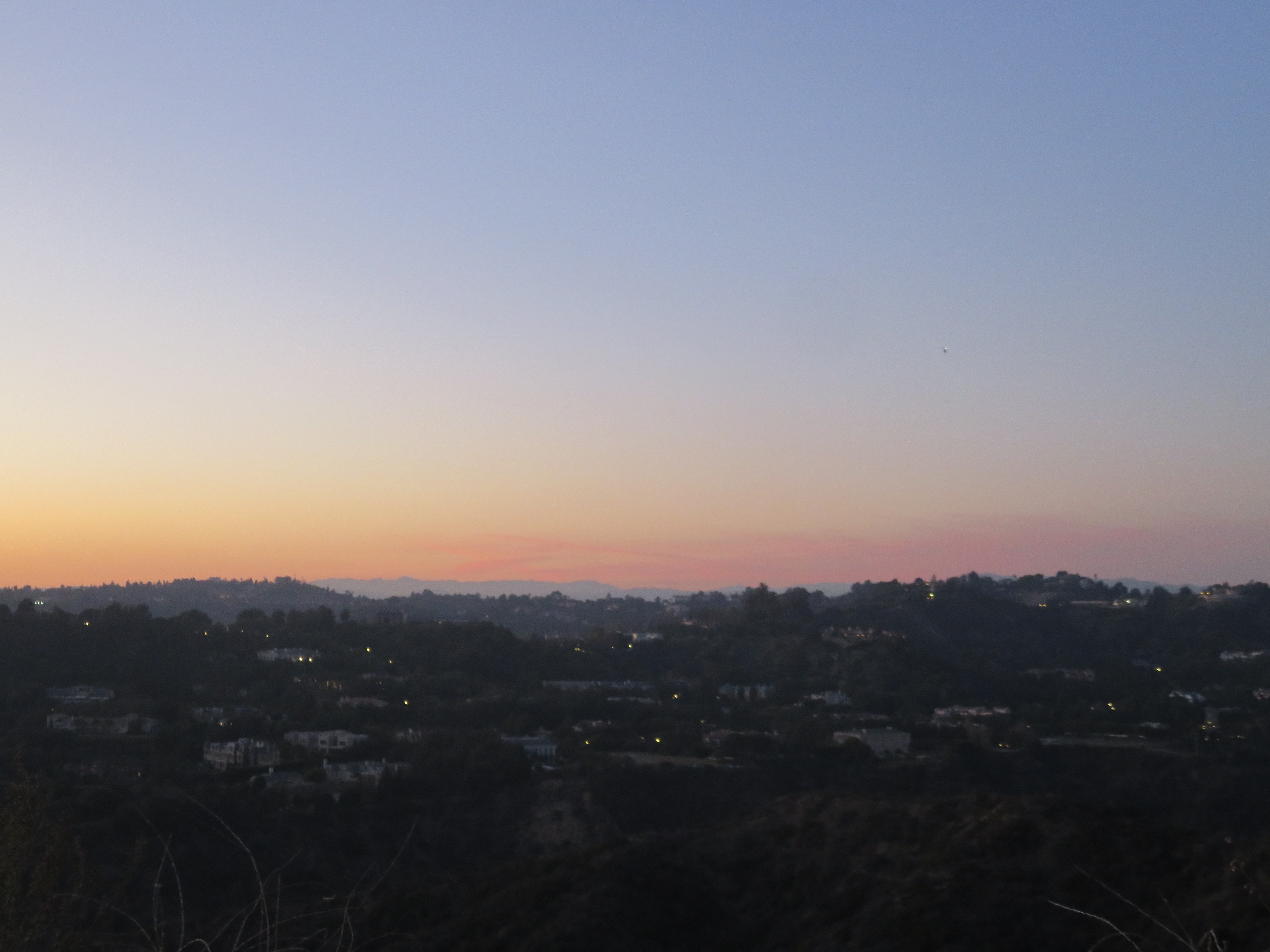
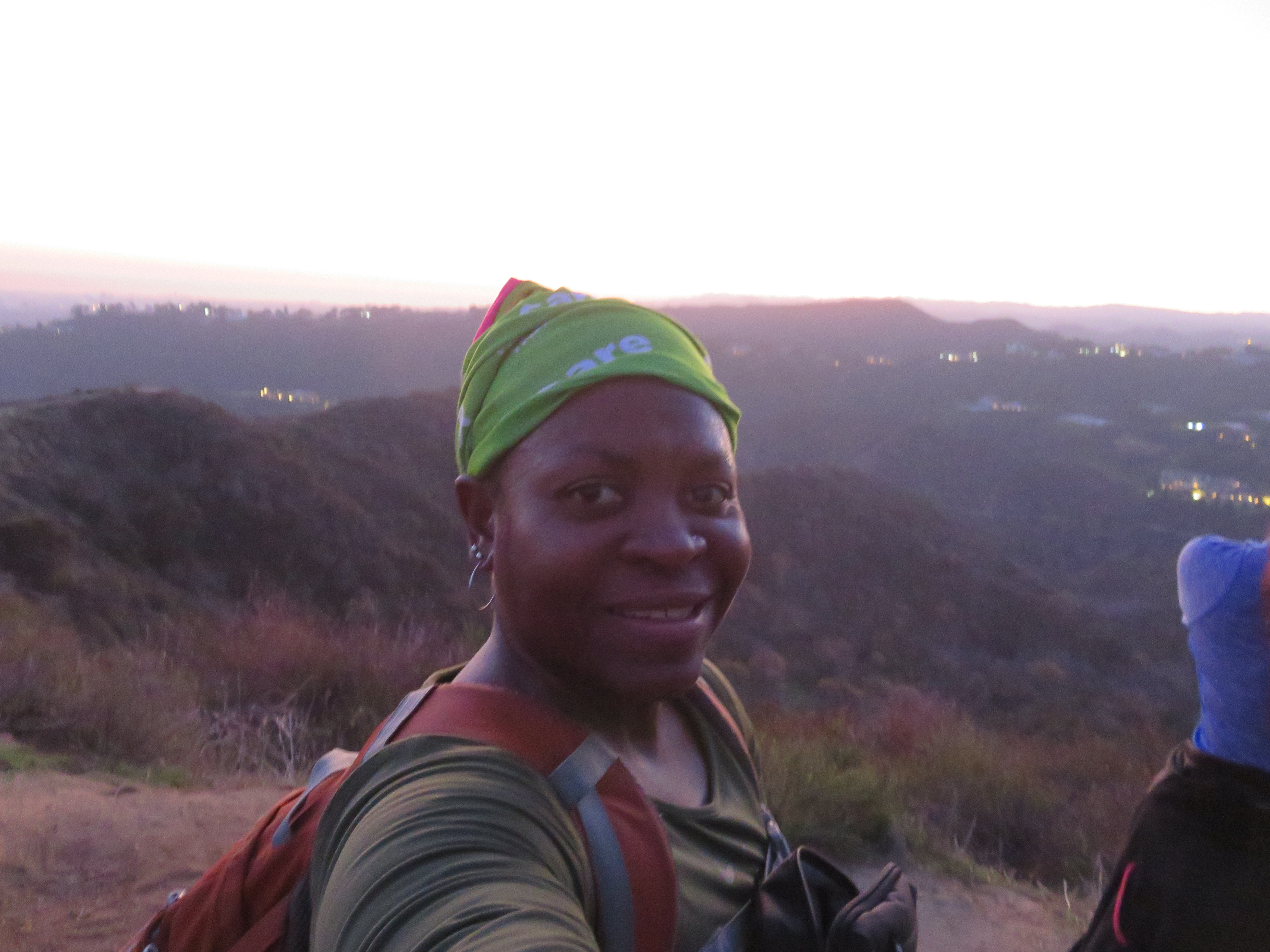
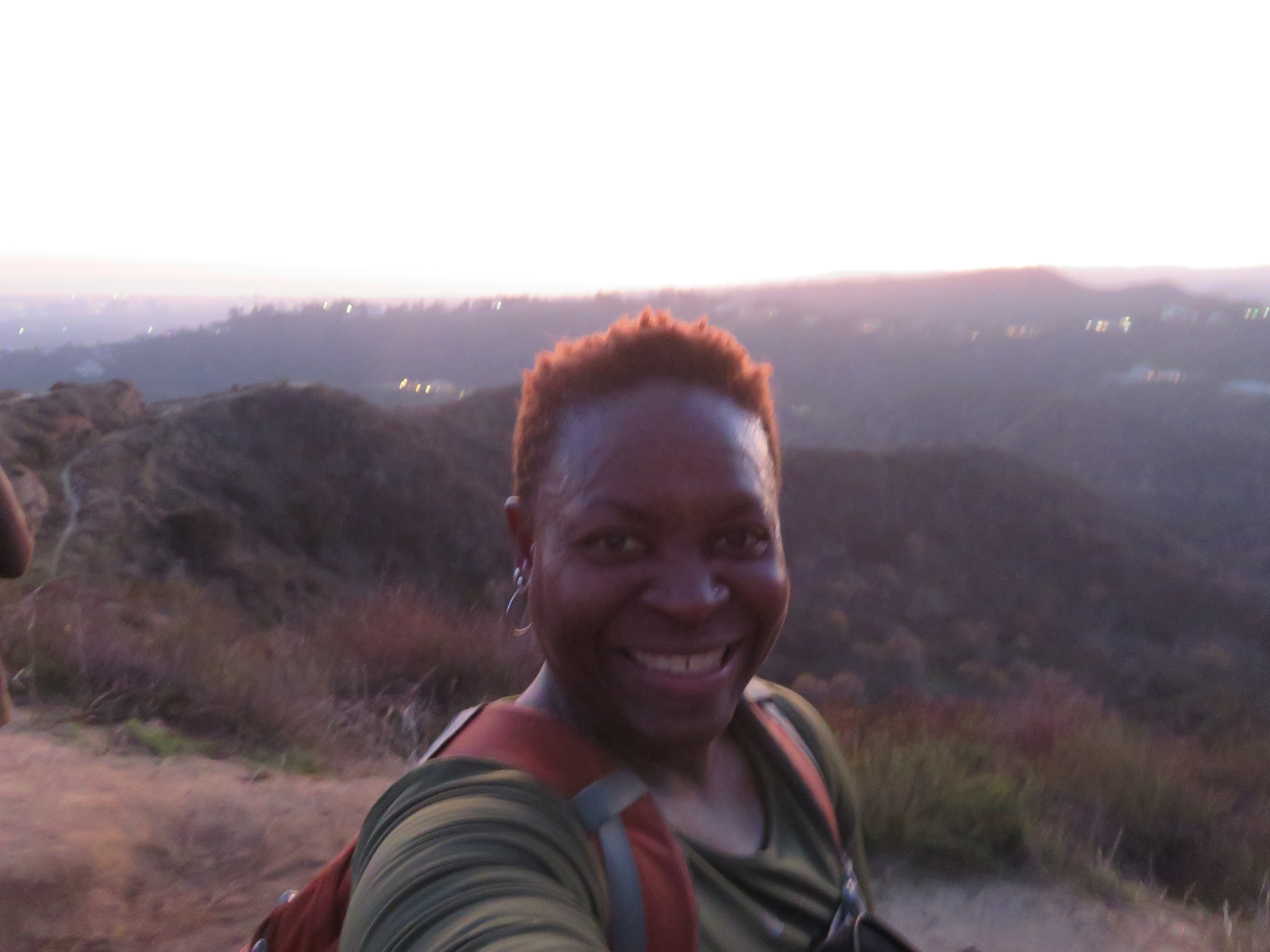
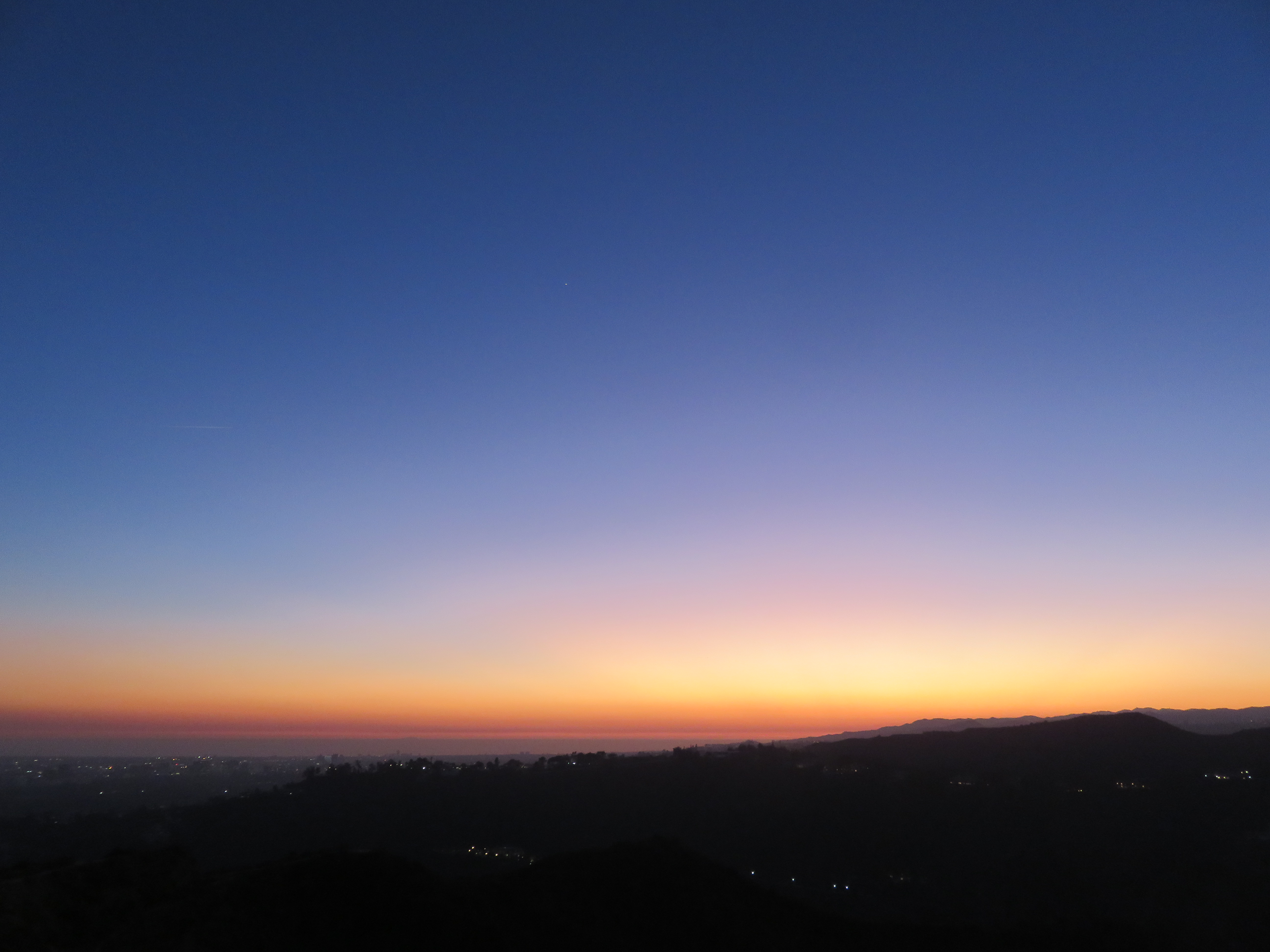
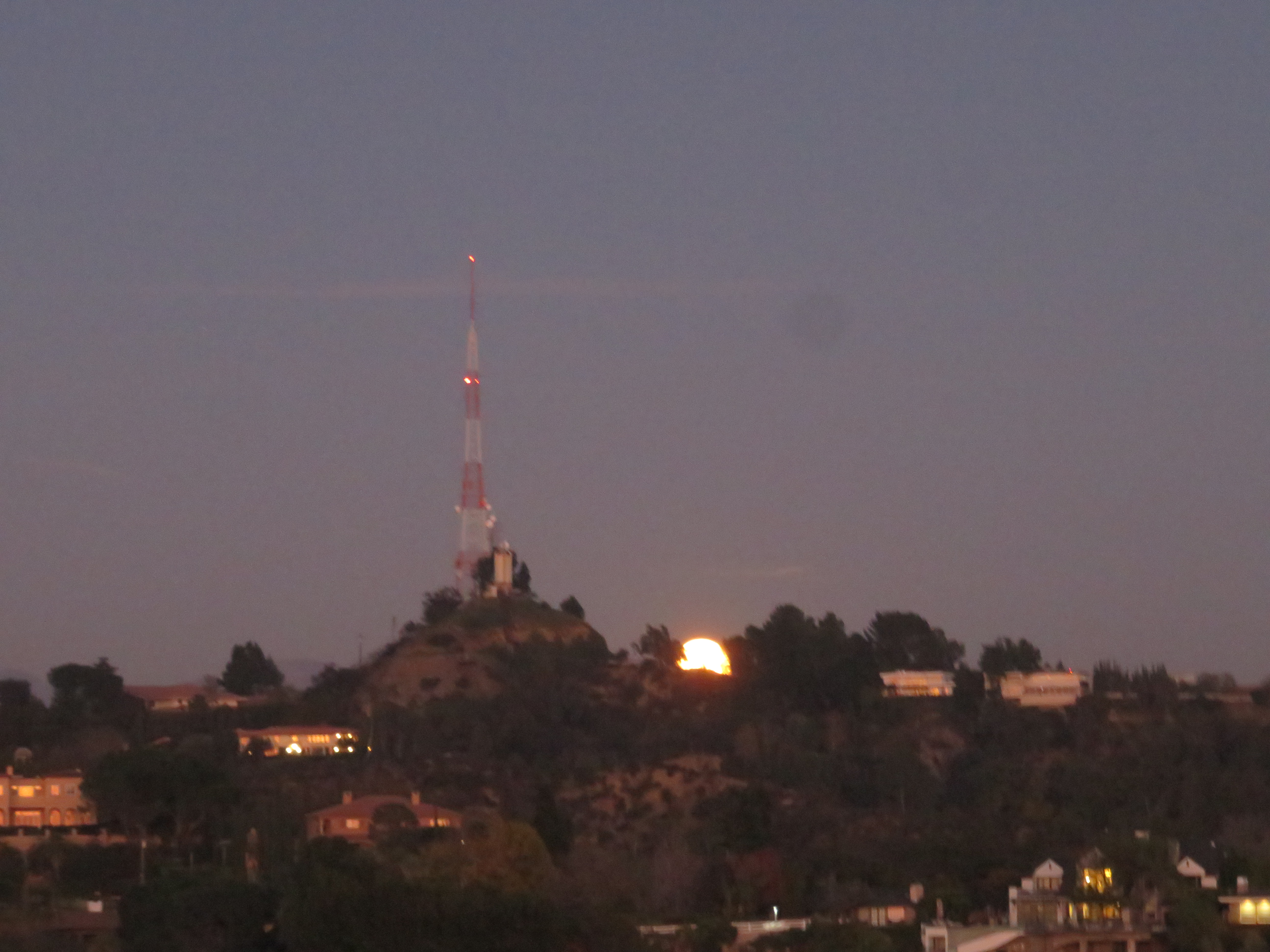
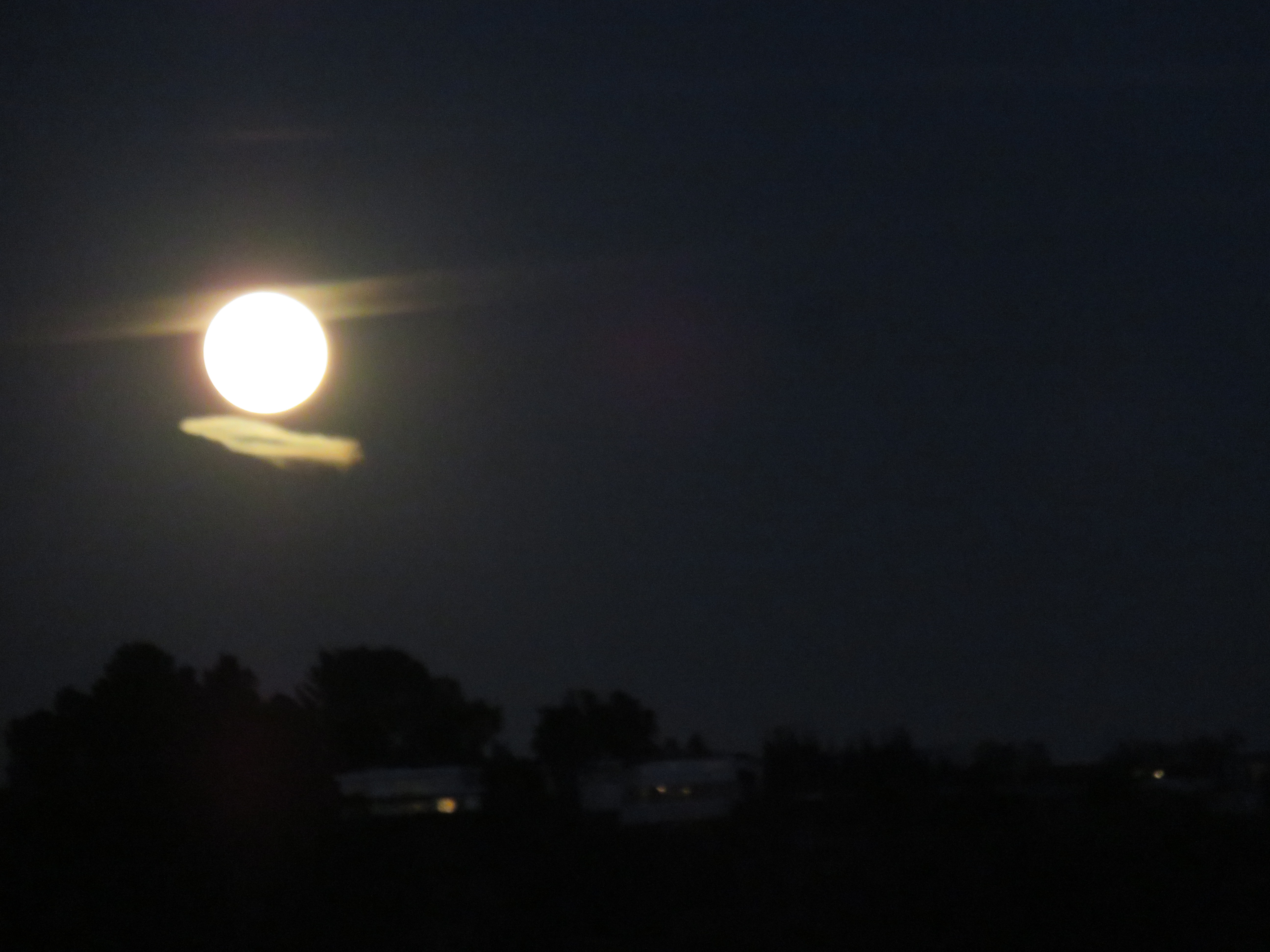
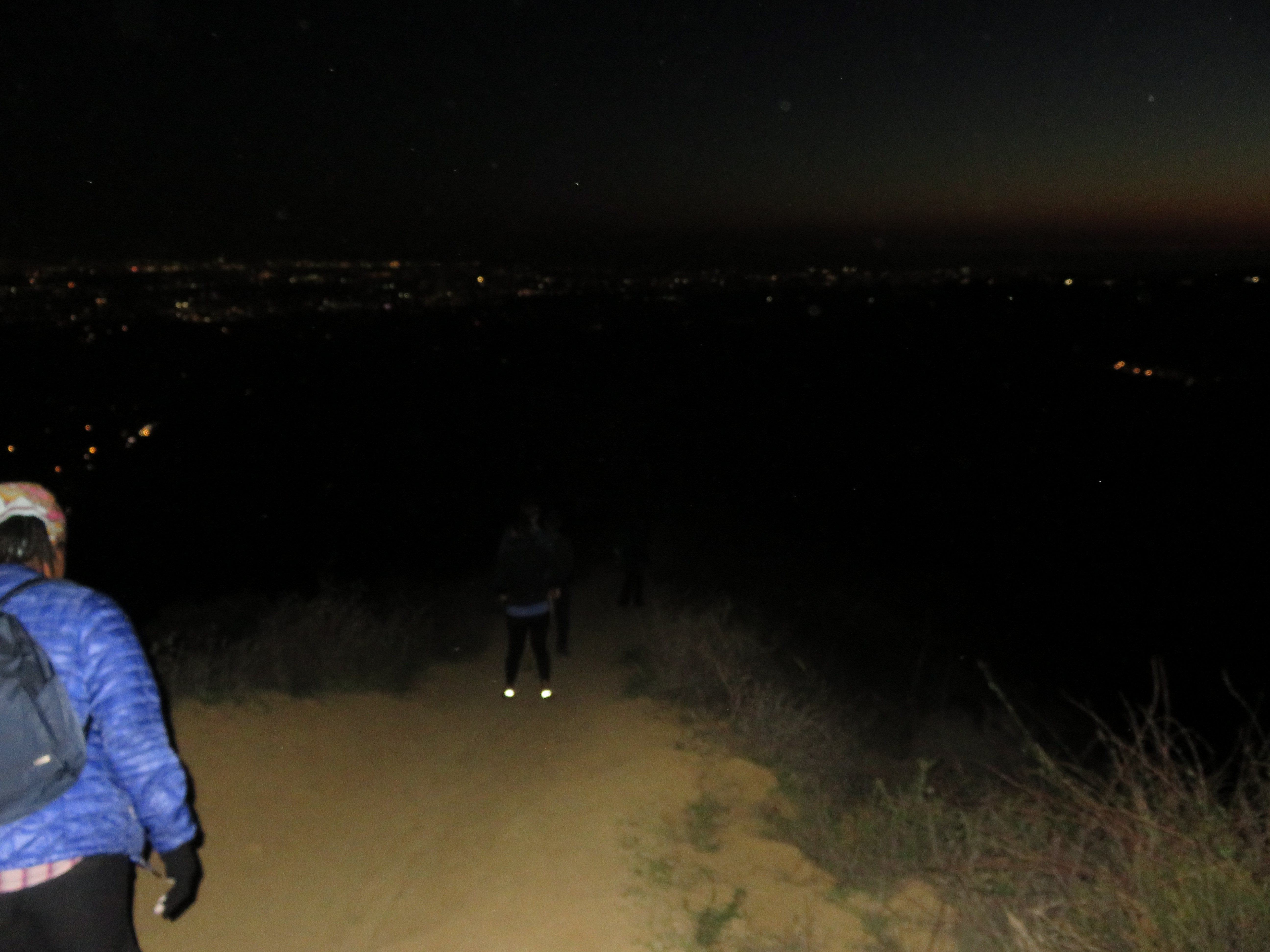
Hike number 2 for 2020 was a moonlight one on the Hastain Trail in Franklin Canyon Park and it was a beautiful full moon night.
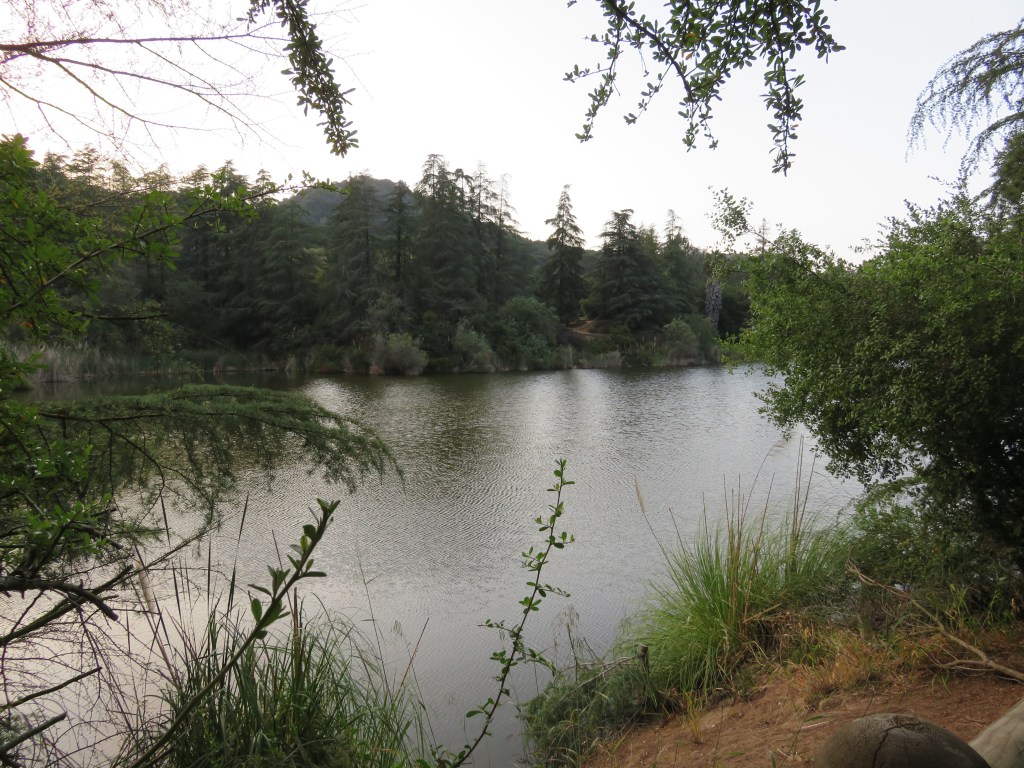
Last year Jennetta and I tried to hike with the same group we joined for this hike. However, we couldn’t find the starting point because the directions provided were lacking. So we ended up doing our own hike around the reservoir.
Franklin Canyon Park Take 1 🎬
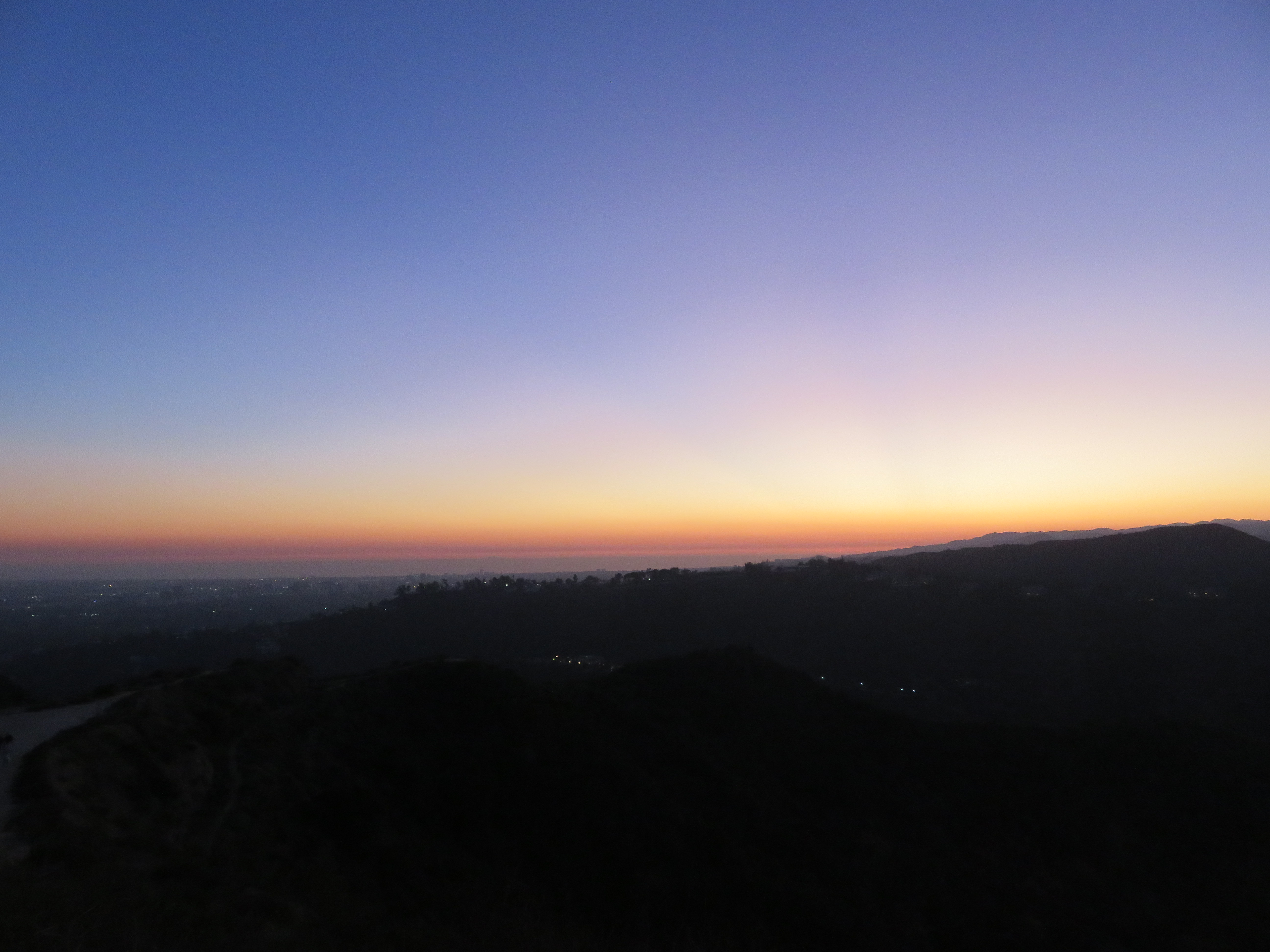
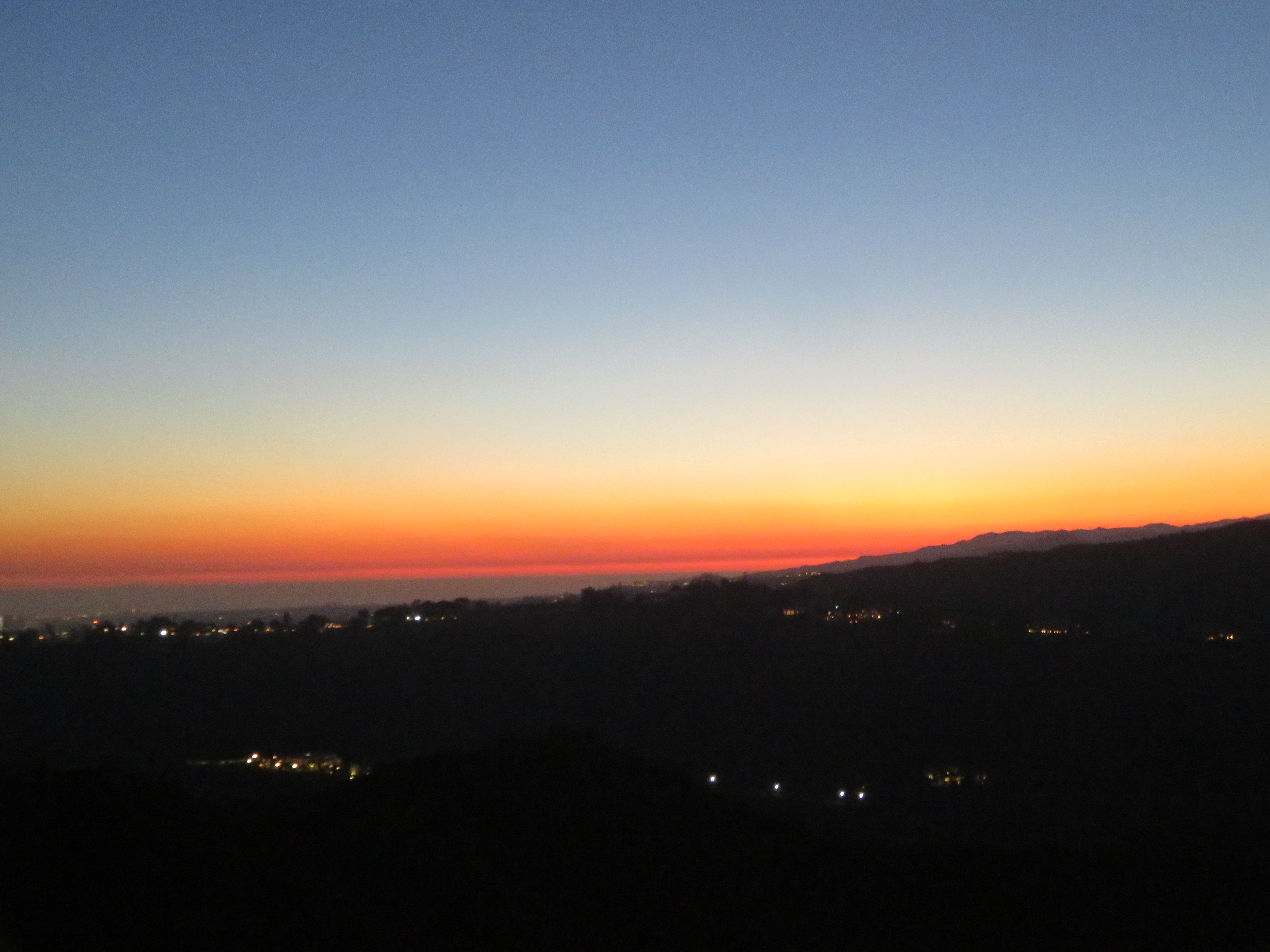
This time around the directions were better, but still lacking. Nonetheless, we persisted and made it to the group meeting point. The first half of the hike was a steady uphill, with a couple of short, steep sections. We made it to the peak in time to wait for the moon to appear. The return to our starting point was all downhill and done with limited lighting.
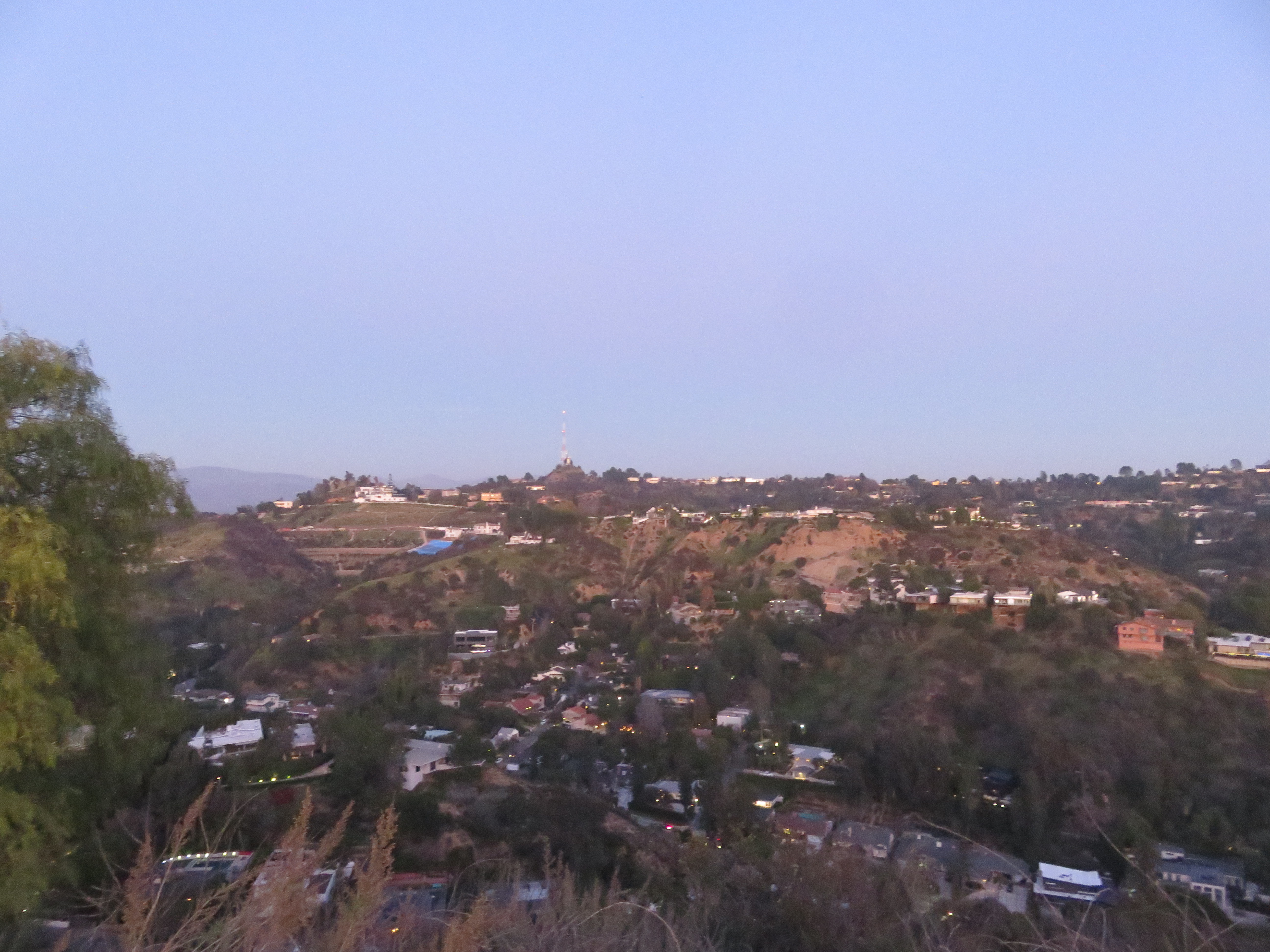
It was a good hike. Nice challenging uphill with beautiful views of L.A. The moonrise was wonderful. It was good enough that I would hike this trail again, but with SCOBA, not with the group we did it with this time.
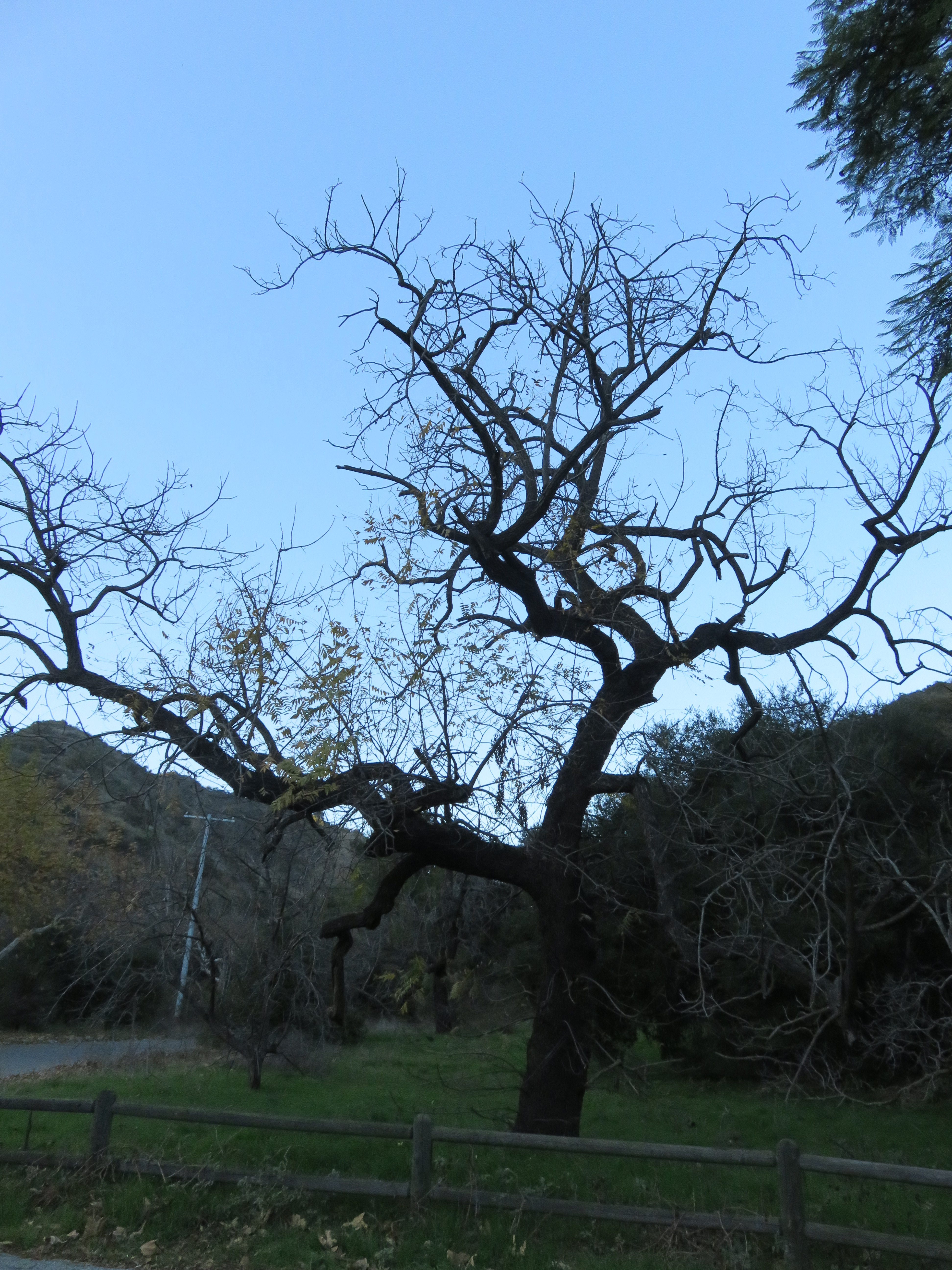
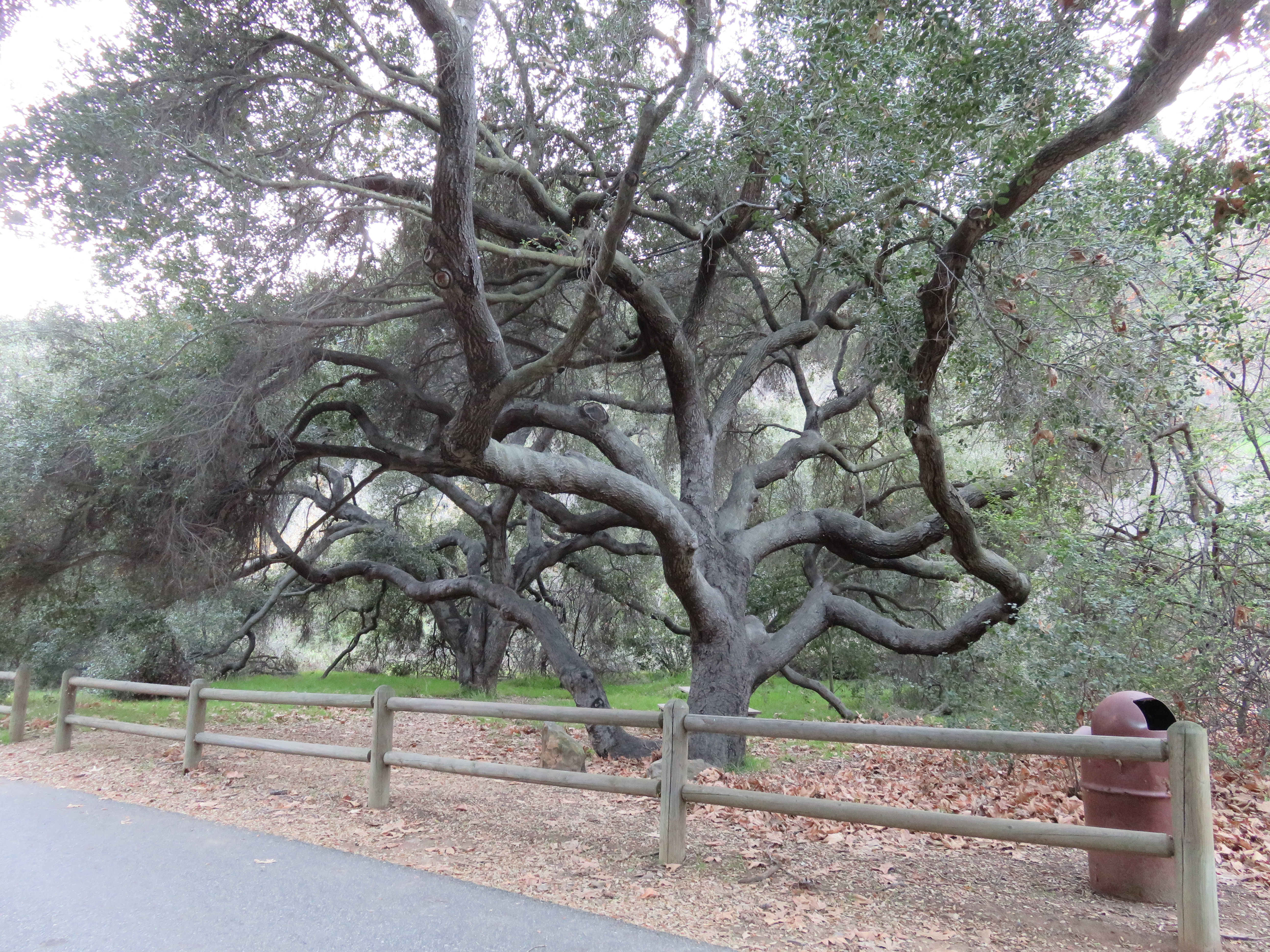
There’s just something fascinating about trees
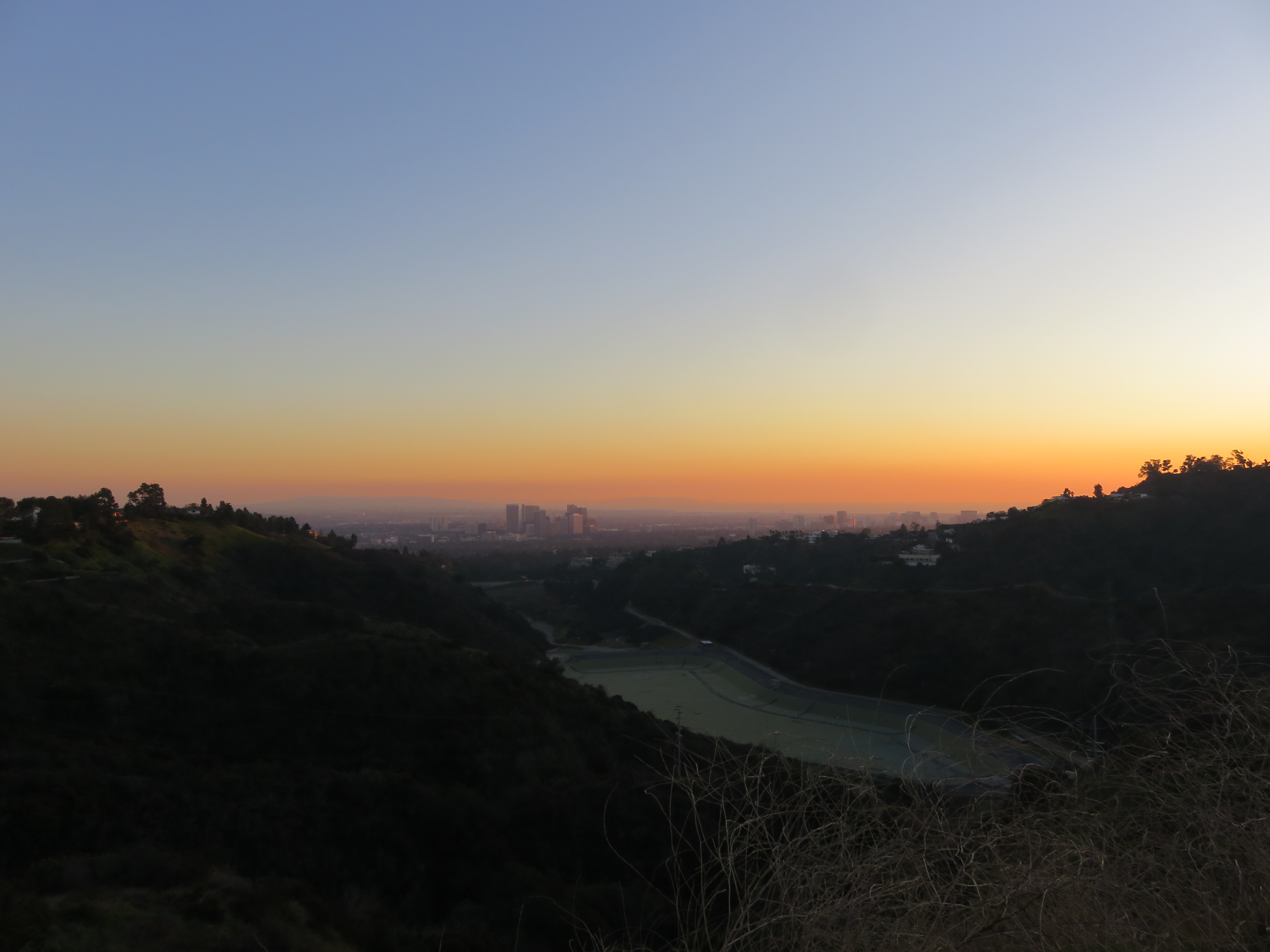
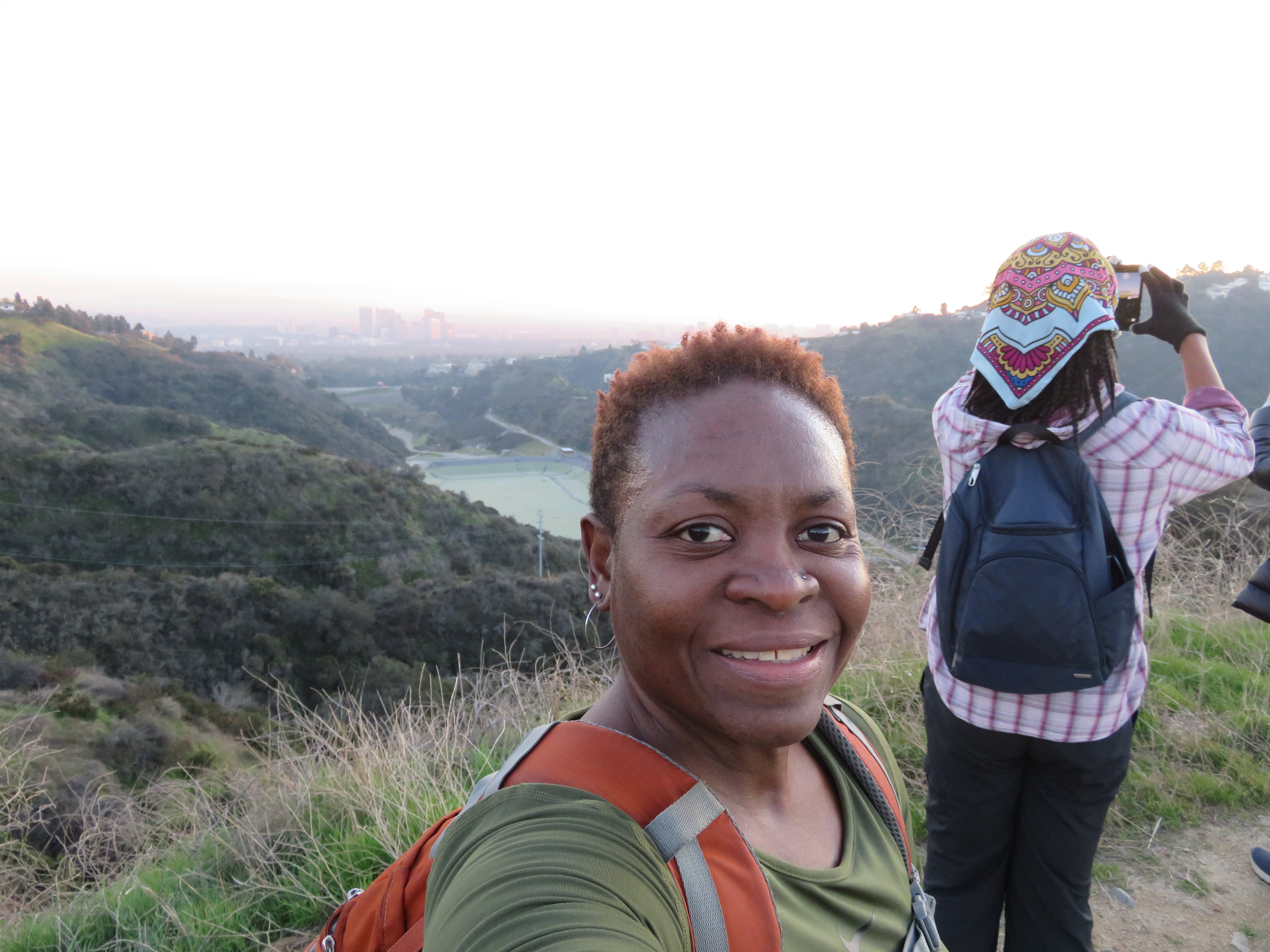
View of Century City
After the first bit uphill the jacket had to go
Last bit of climb to get to peak
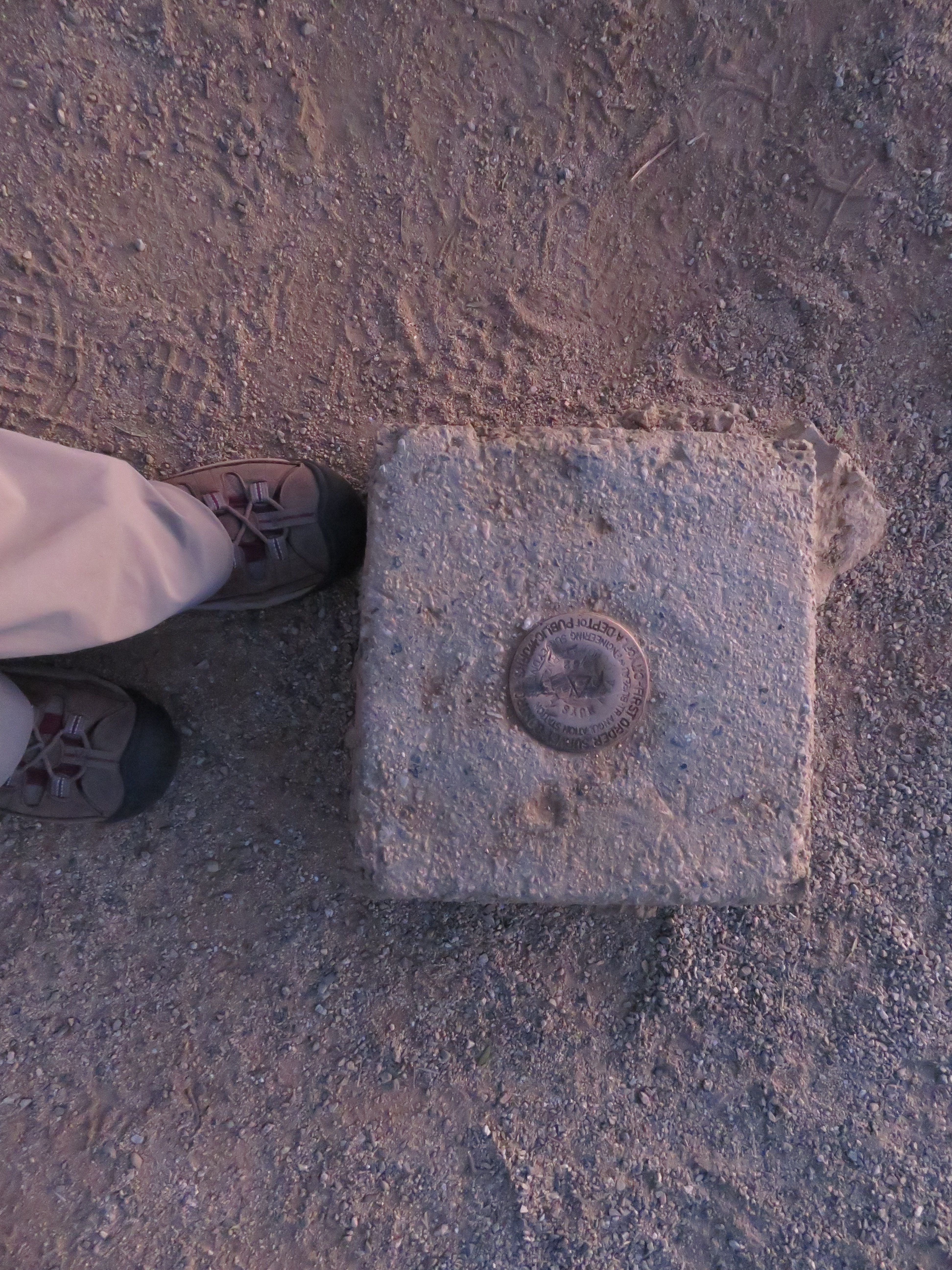
Geographic centre of L.A.?
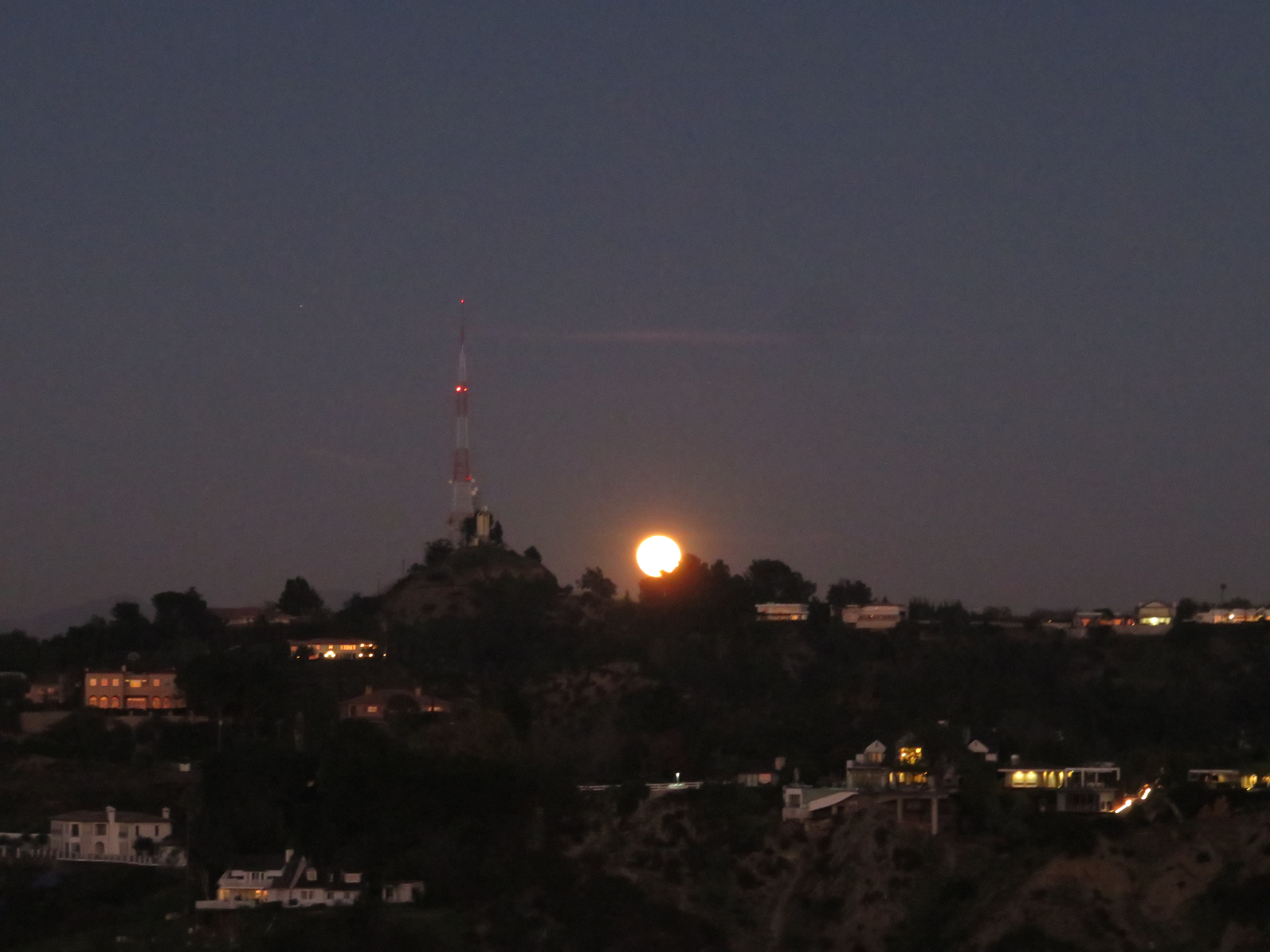
We’re expecting the moon to rise to the right of the tower
I forgot I was wearing my buff
So I had to take it again
Here she comes
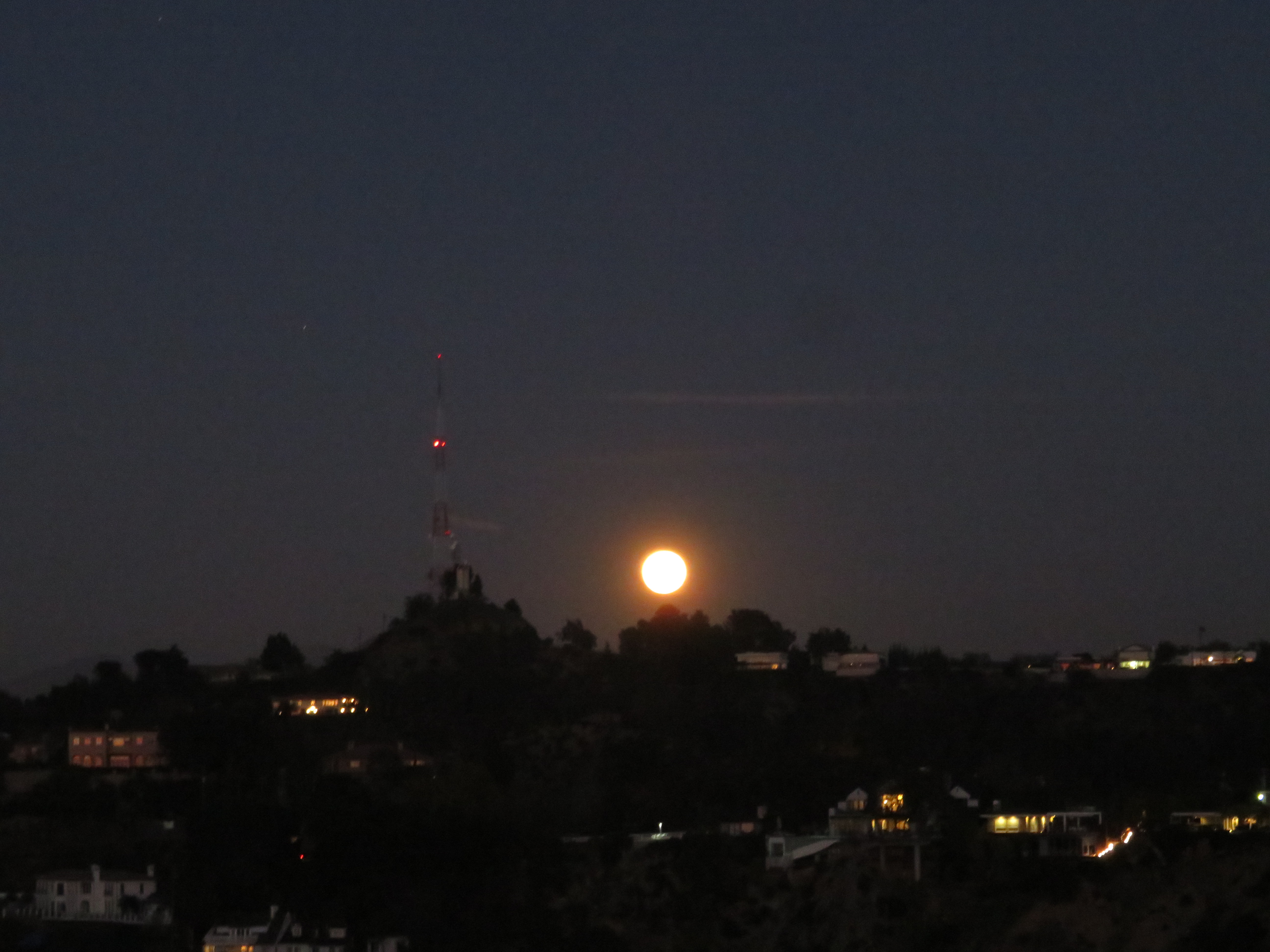
Well worth the wait
I don’t think I’ve watched the moon rise like this before
2020 is the start of a new decade with many, many possibilities. My challenge this year is to do at least 52 unique hikes. I can repeat trails as much as I want, but only the first time on each trail counts towards the challenge. This will ‘encourage’ me to get out and try new trails regularly. I look forward to hiking in many different places in California, in at least 3 additional US states, home in Bim and in at least 2 other countries 😊.
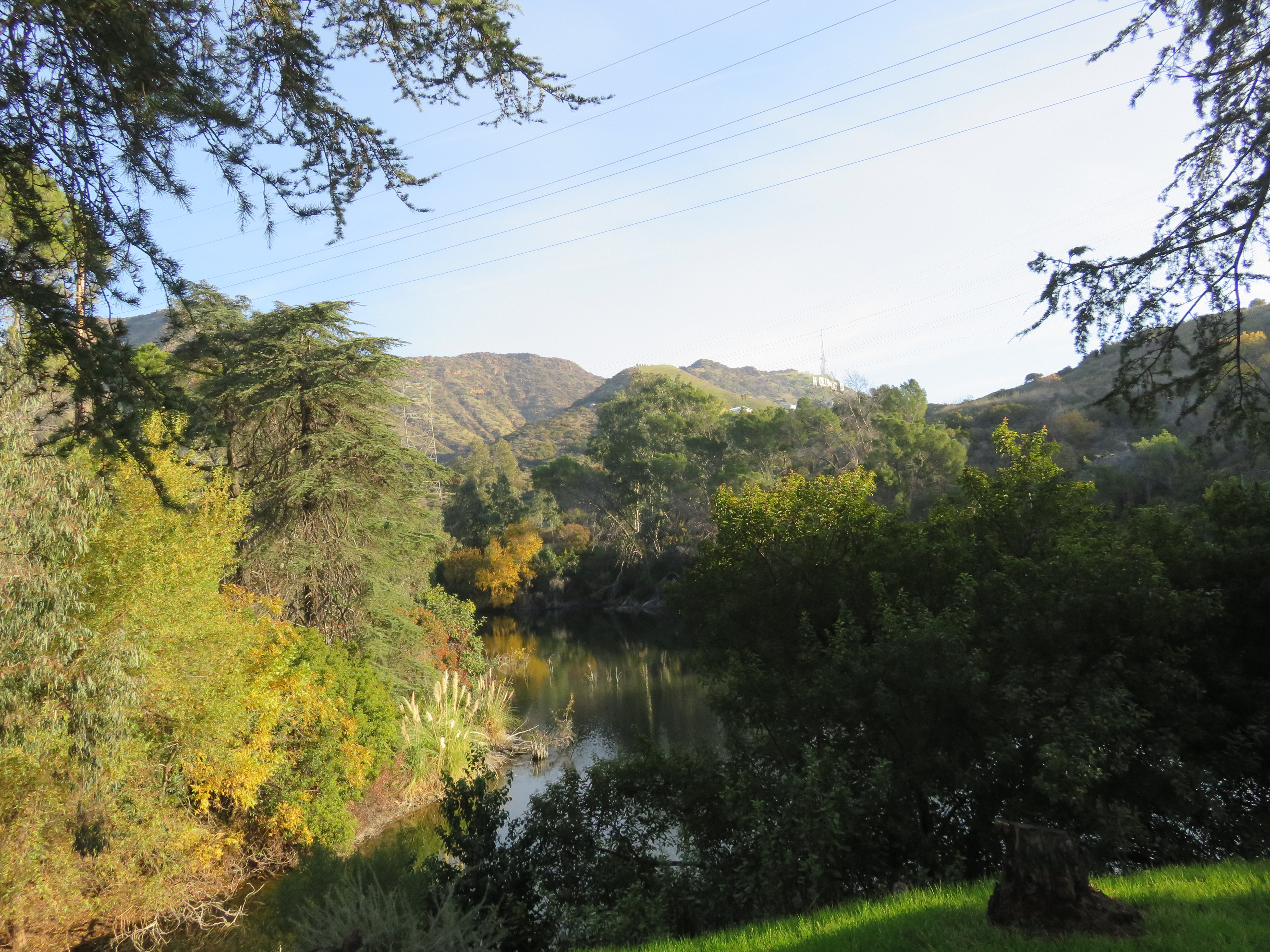
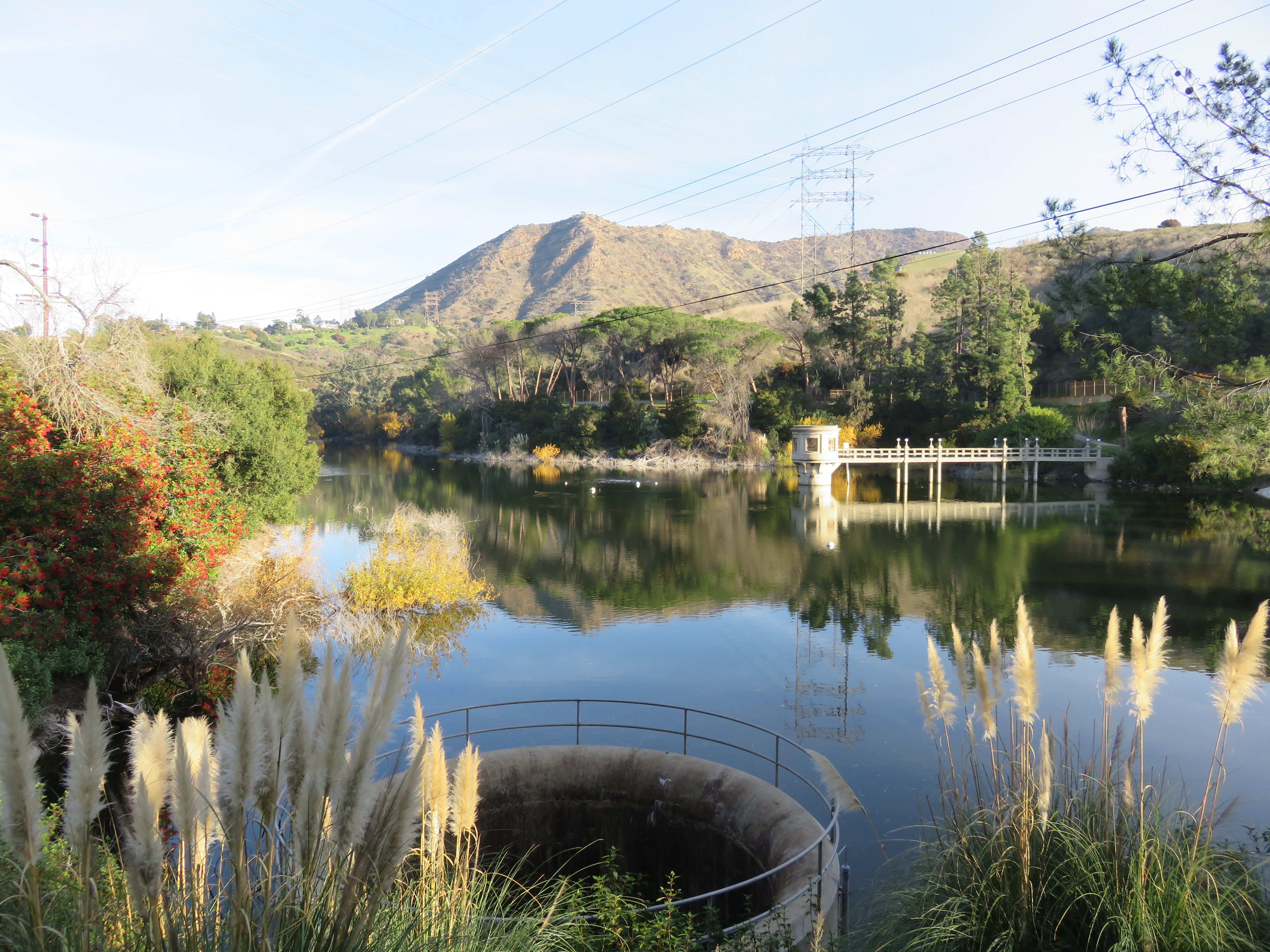
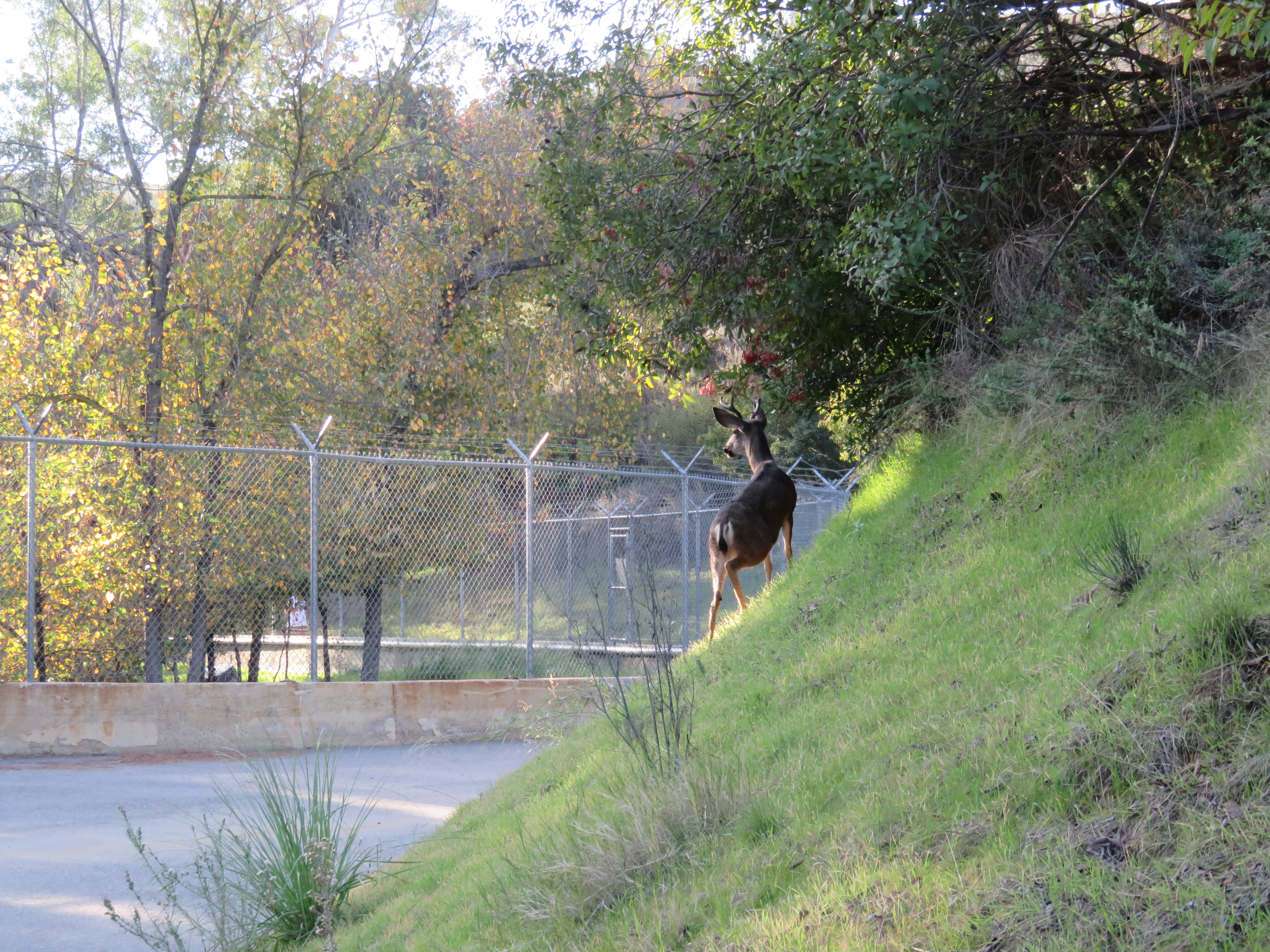
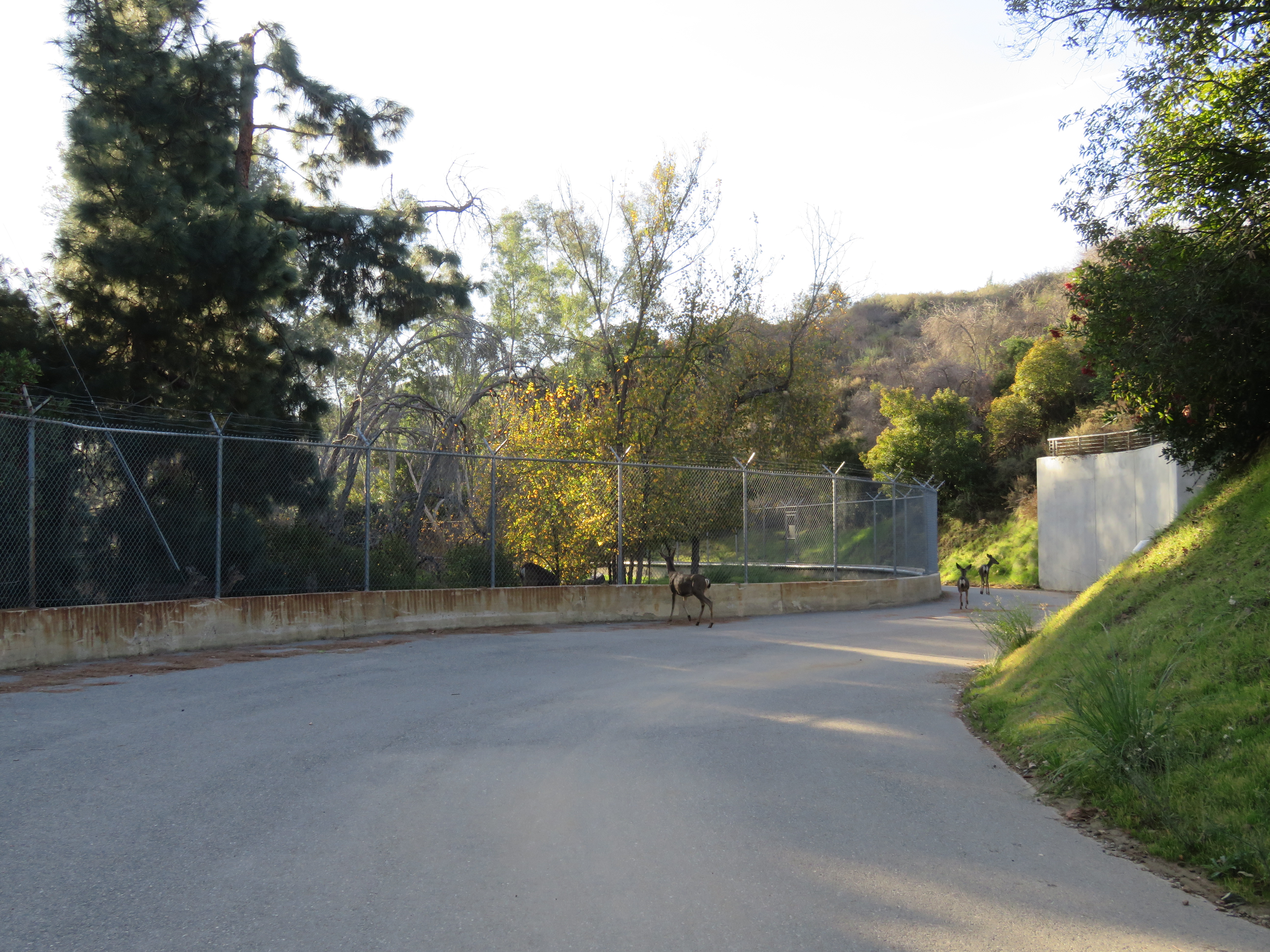
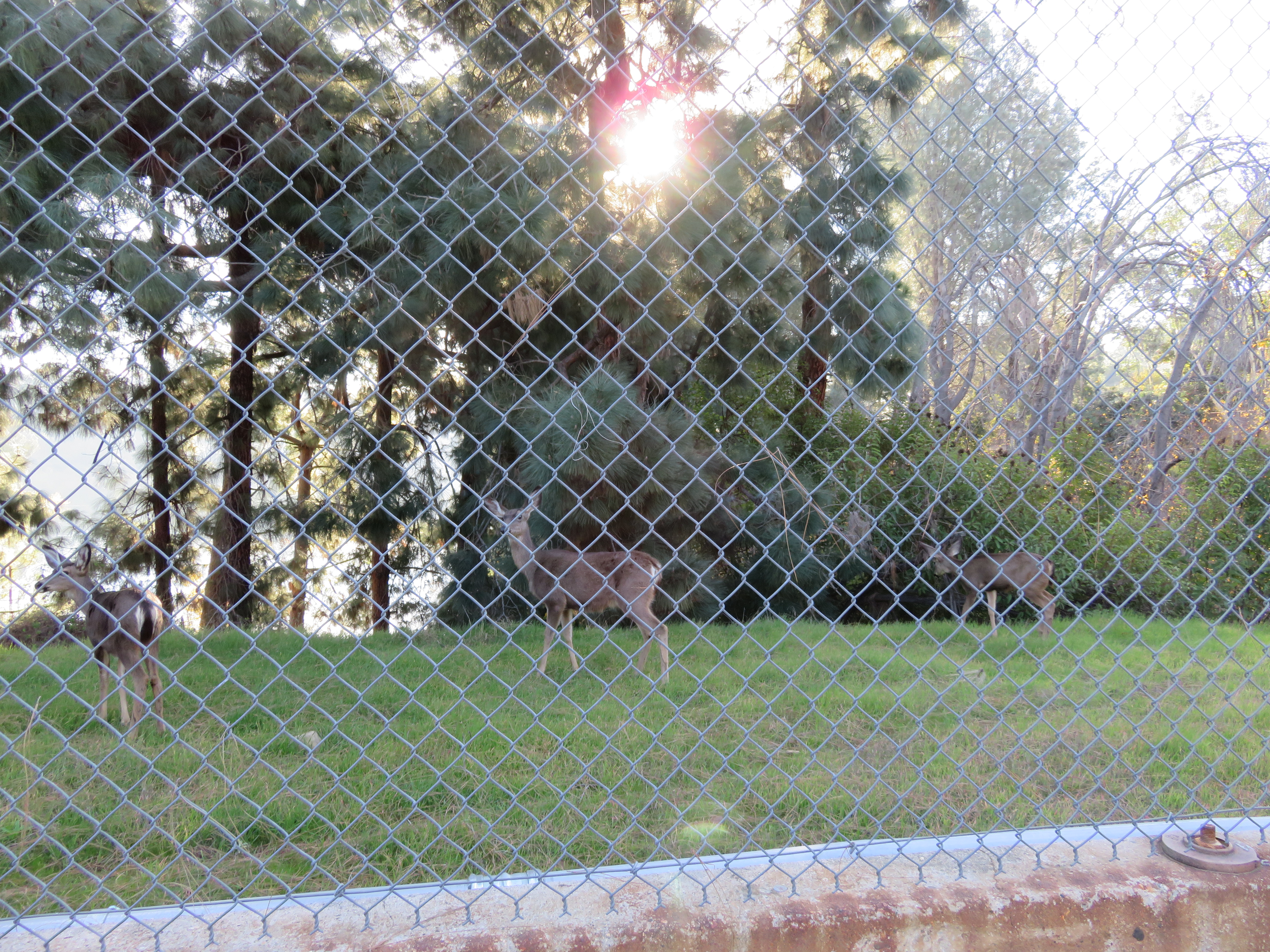
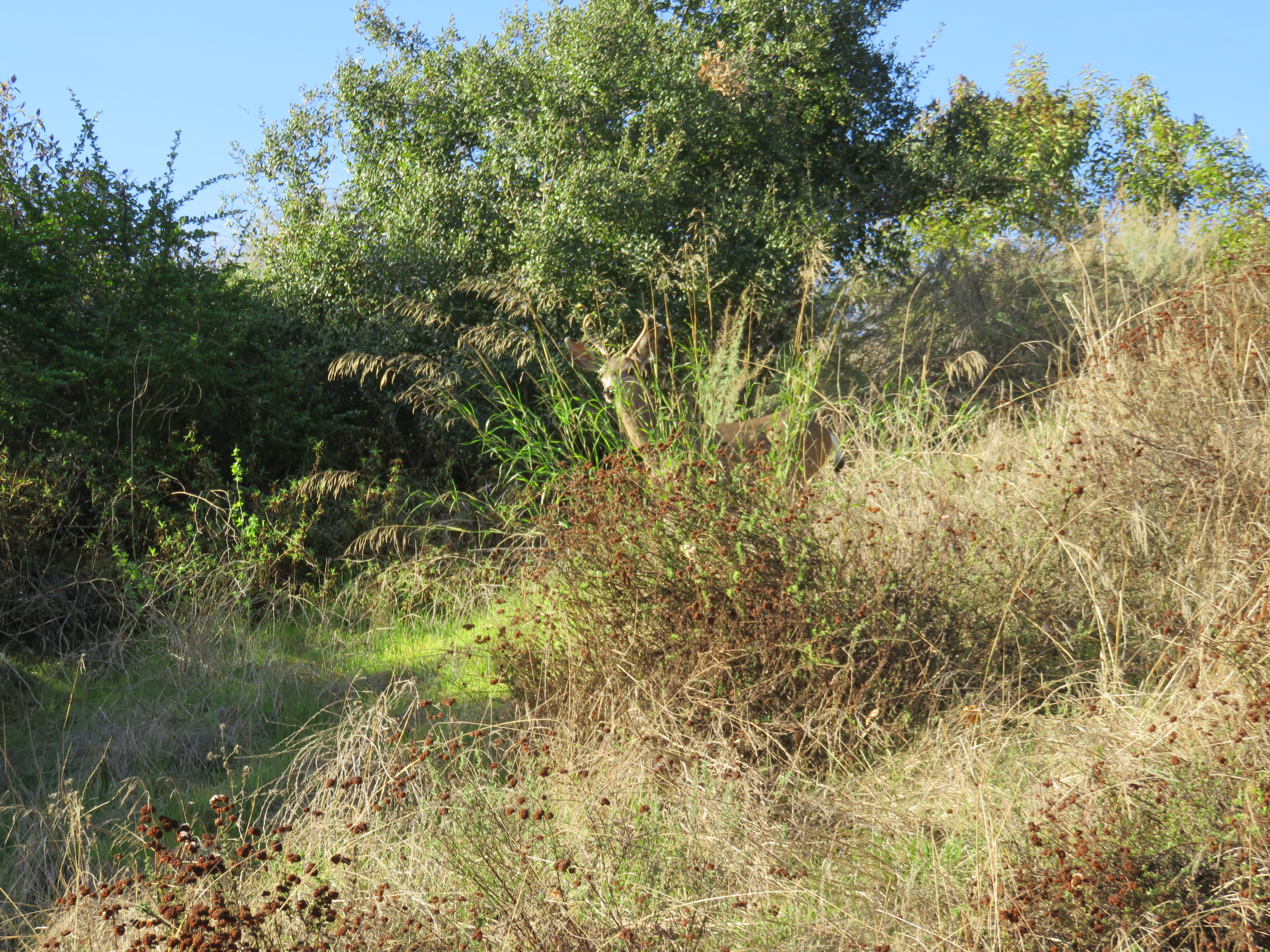
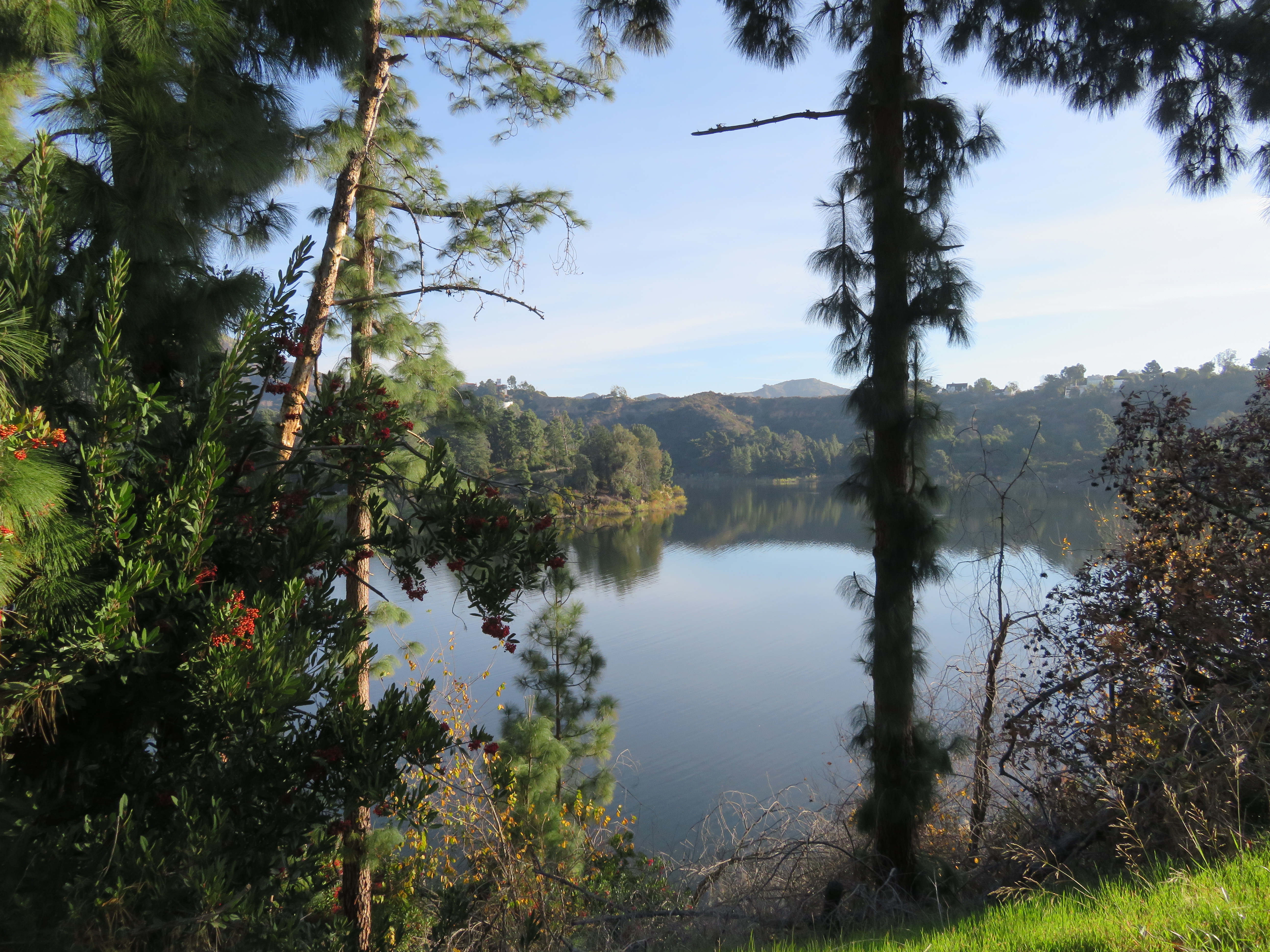
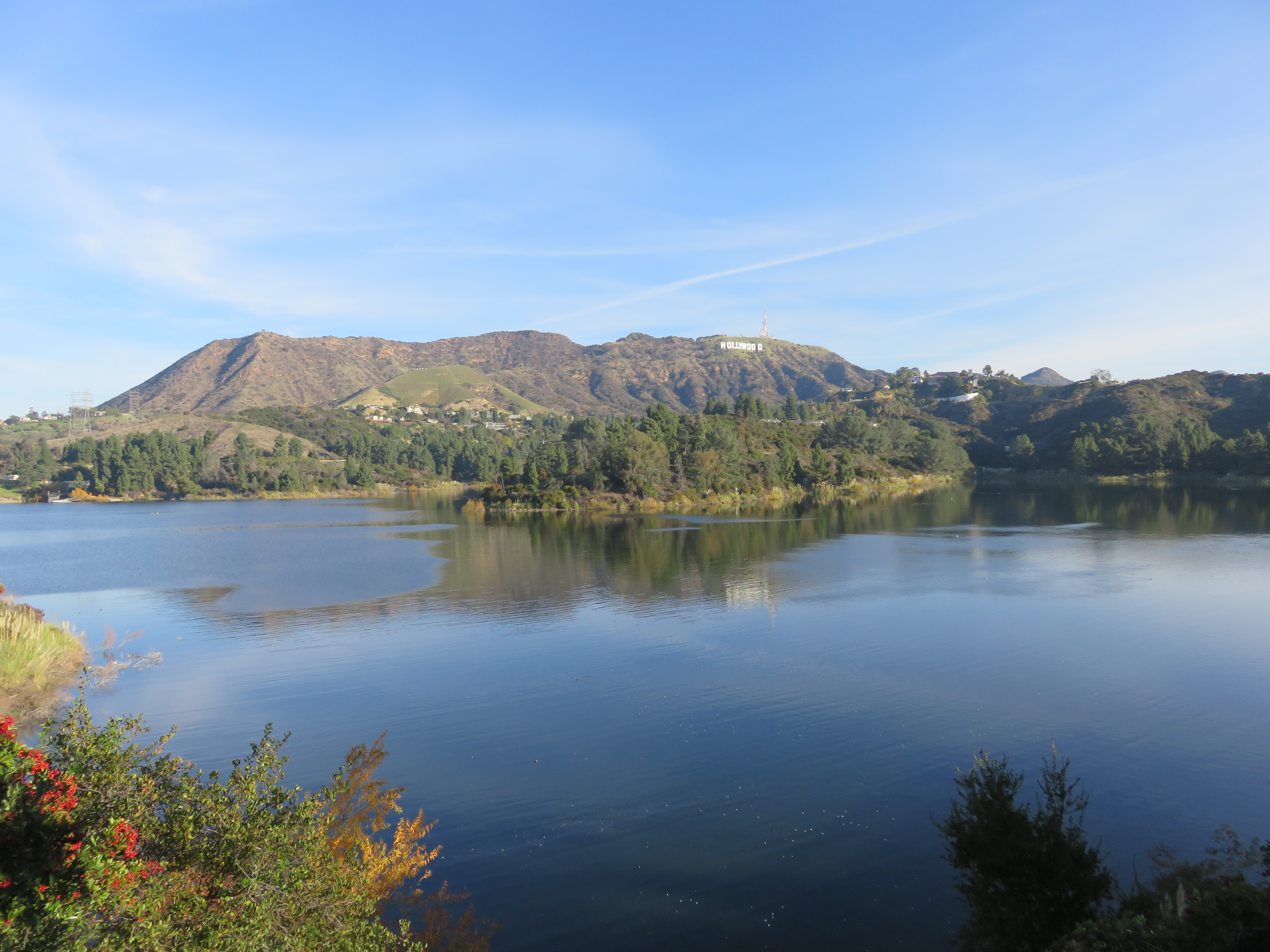
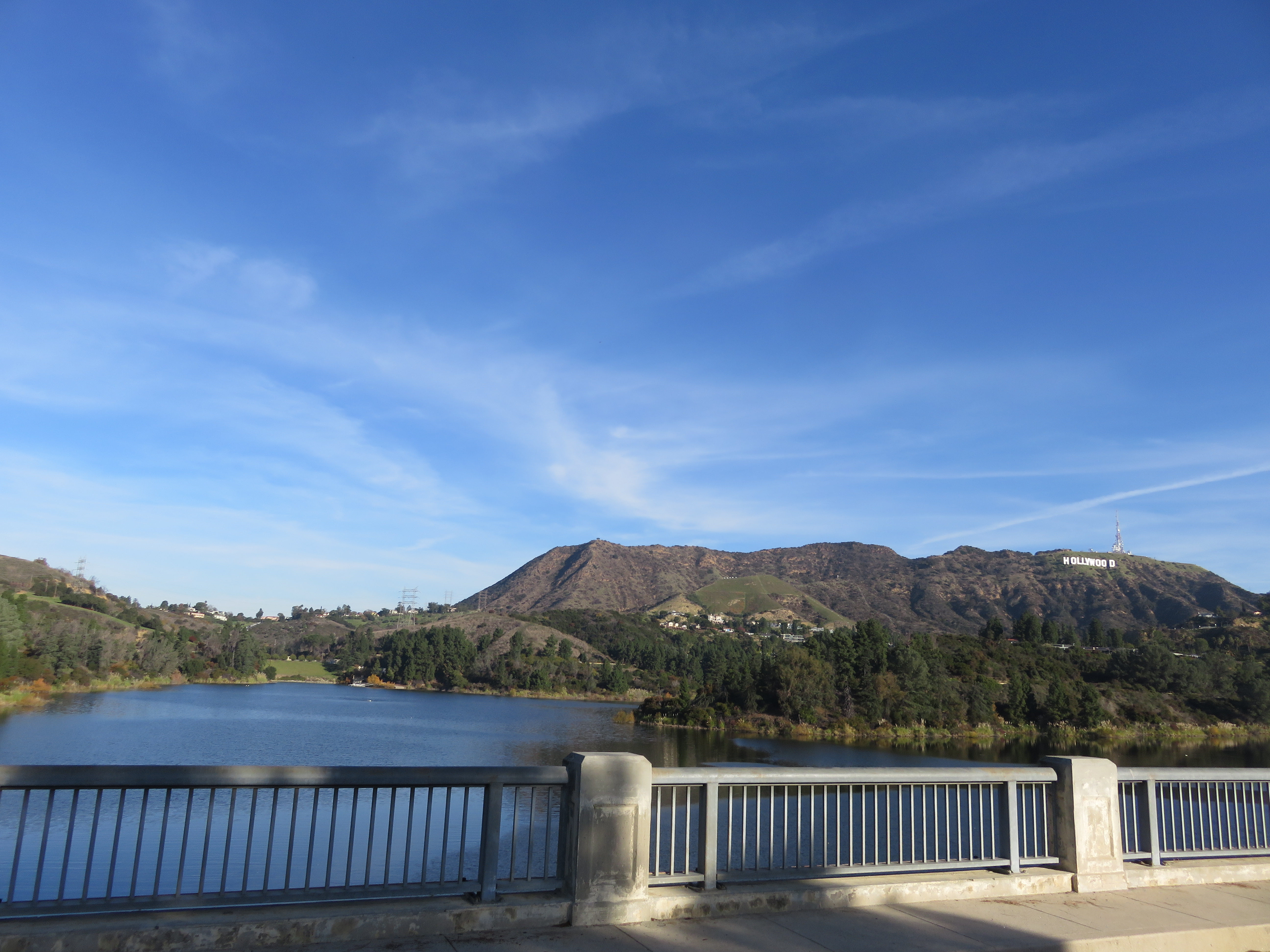
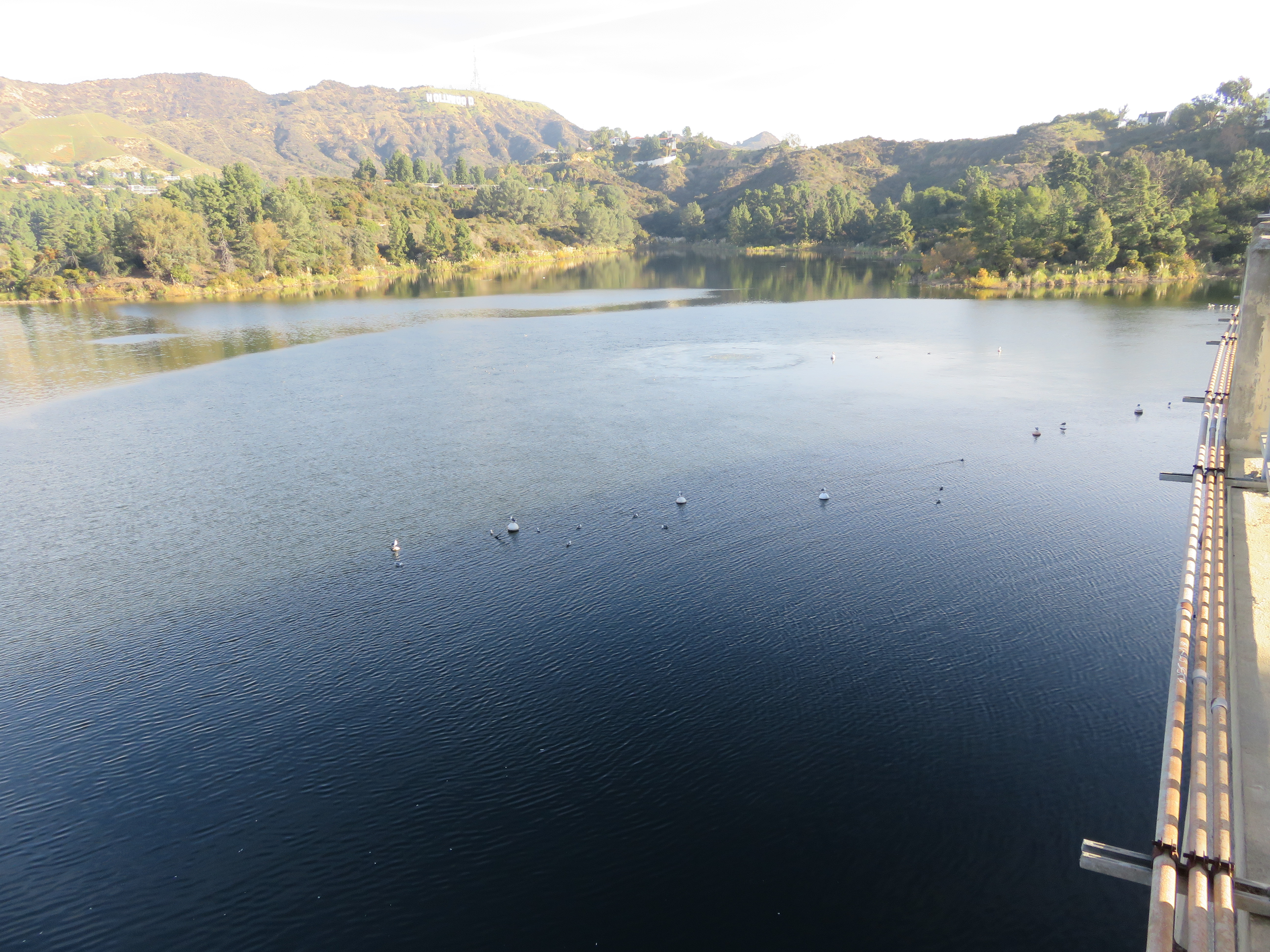
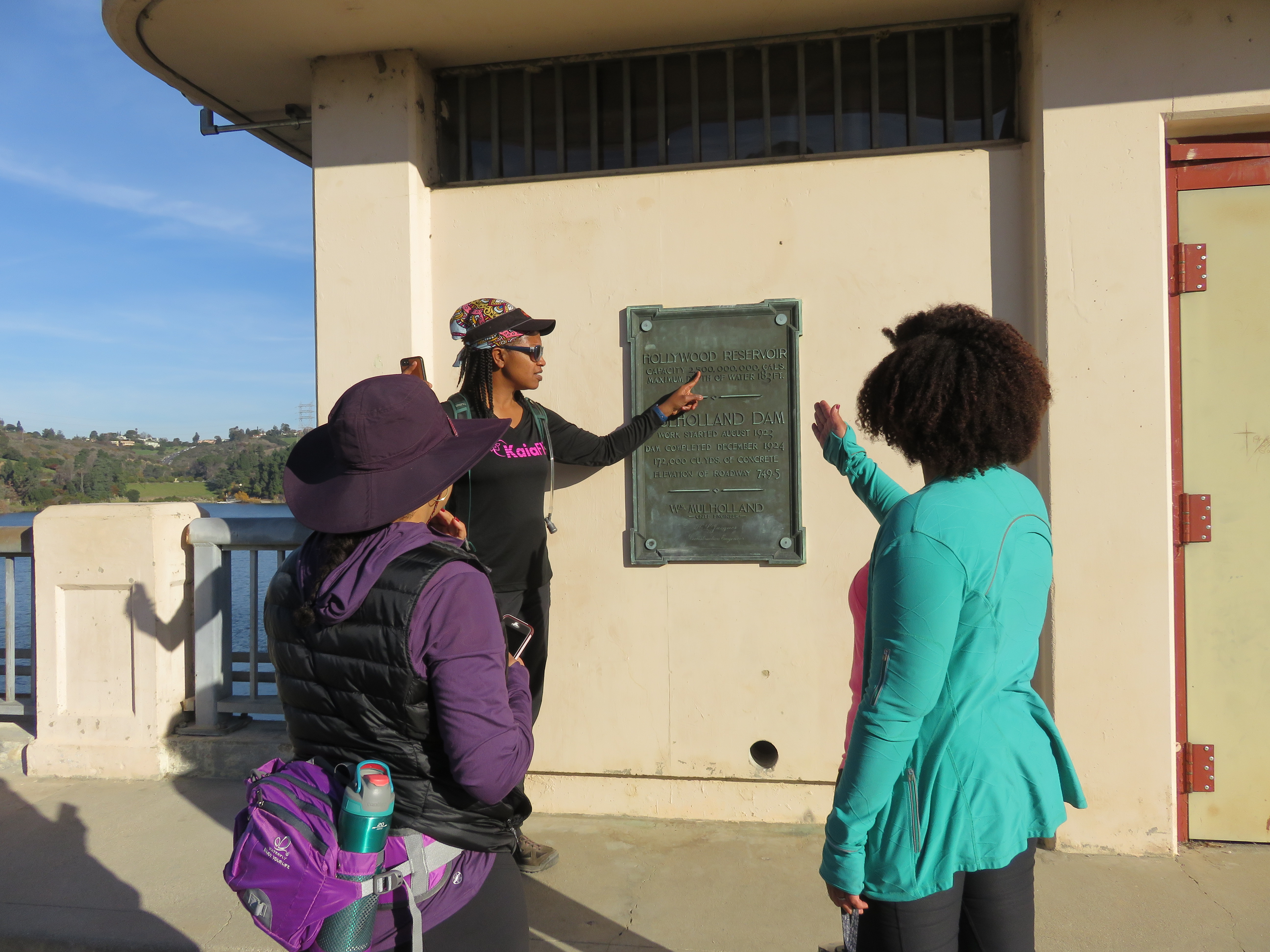
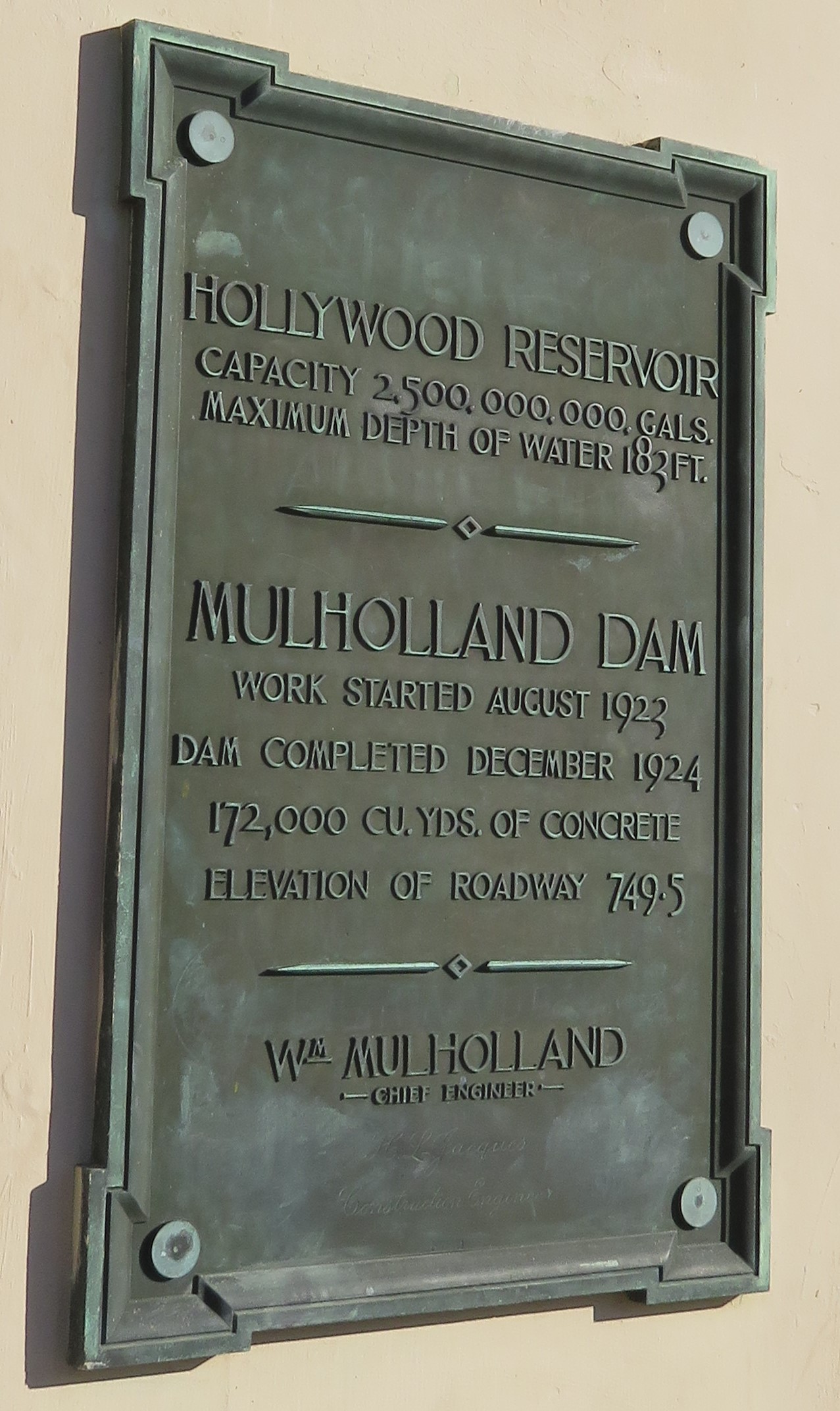
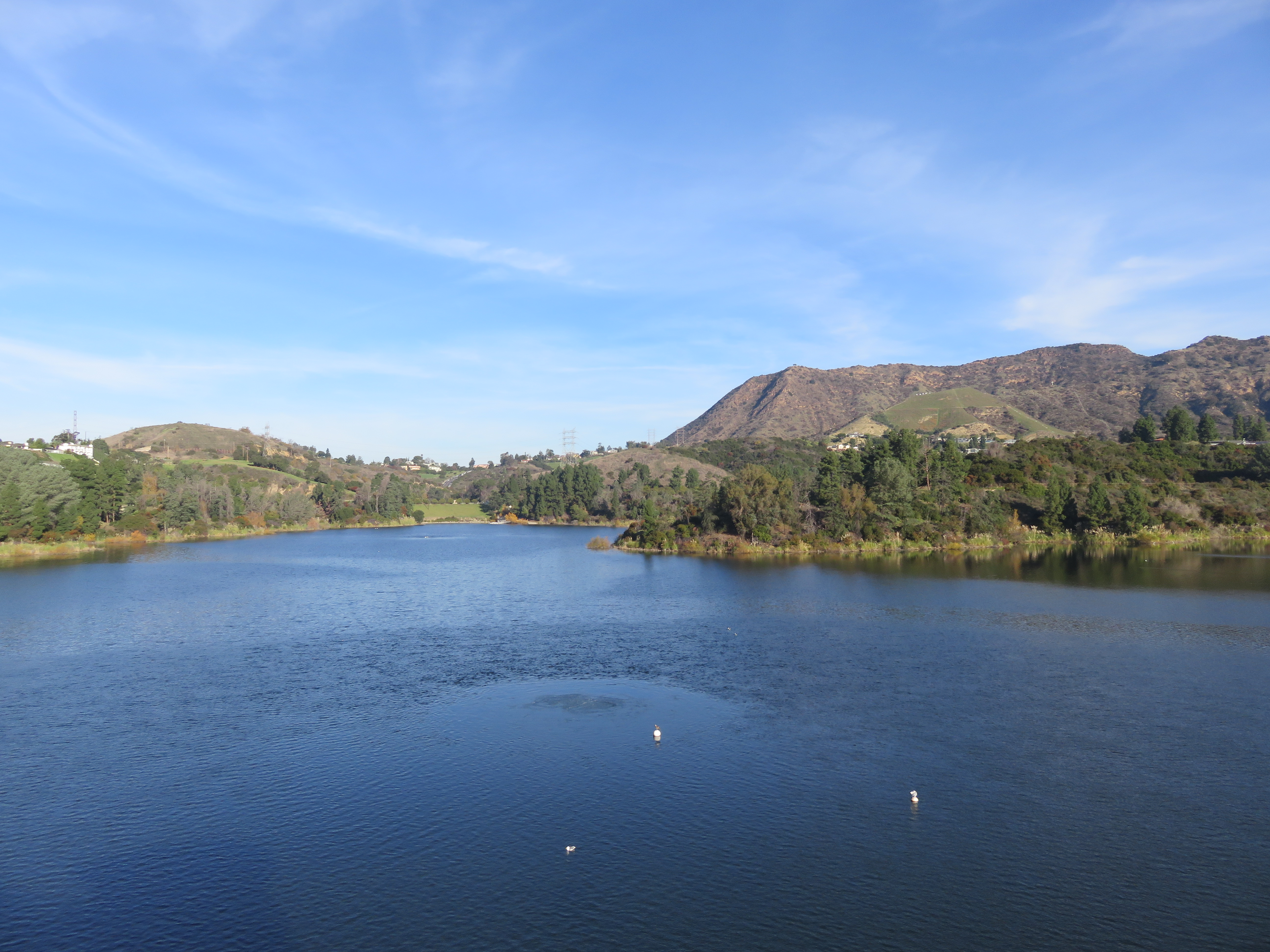
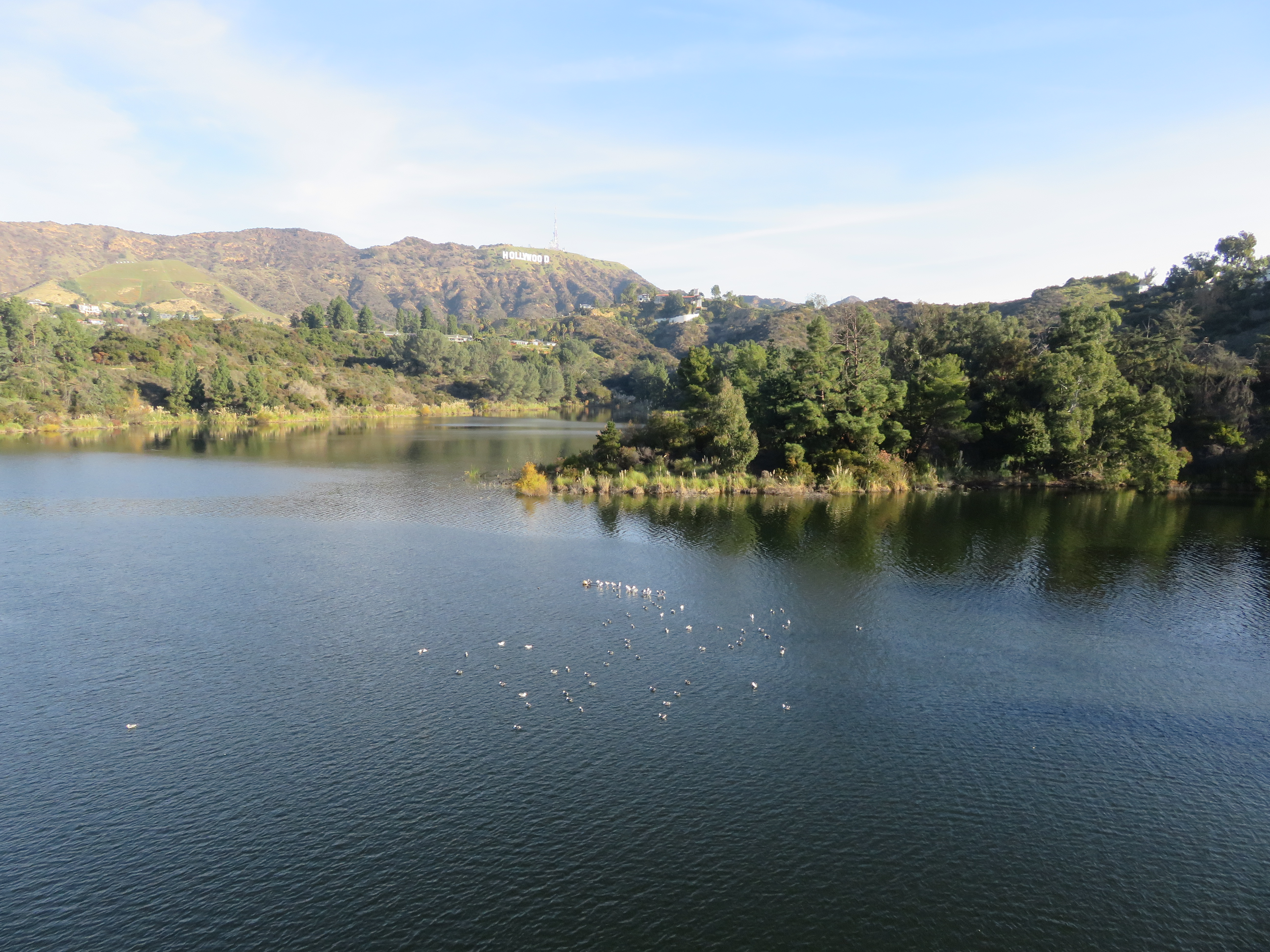
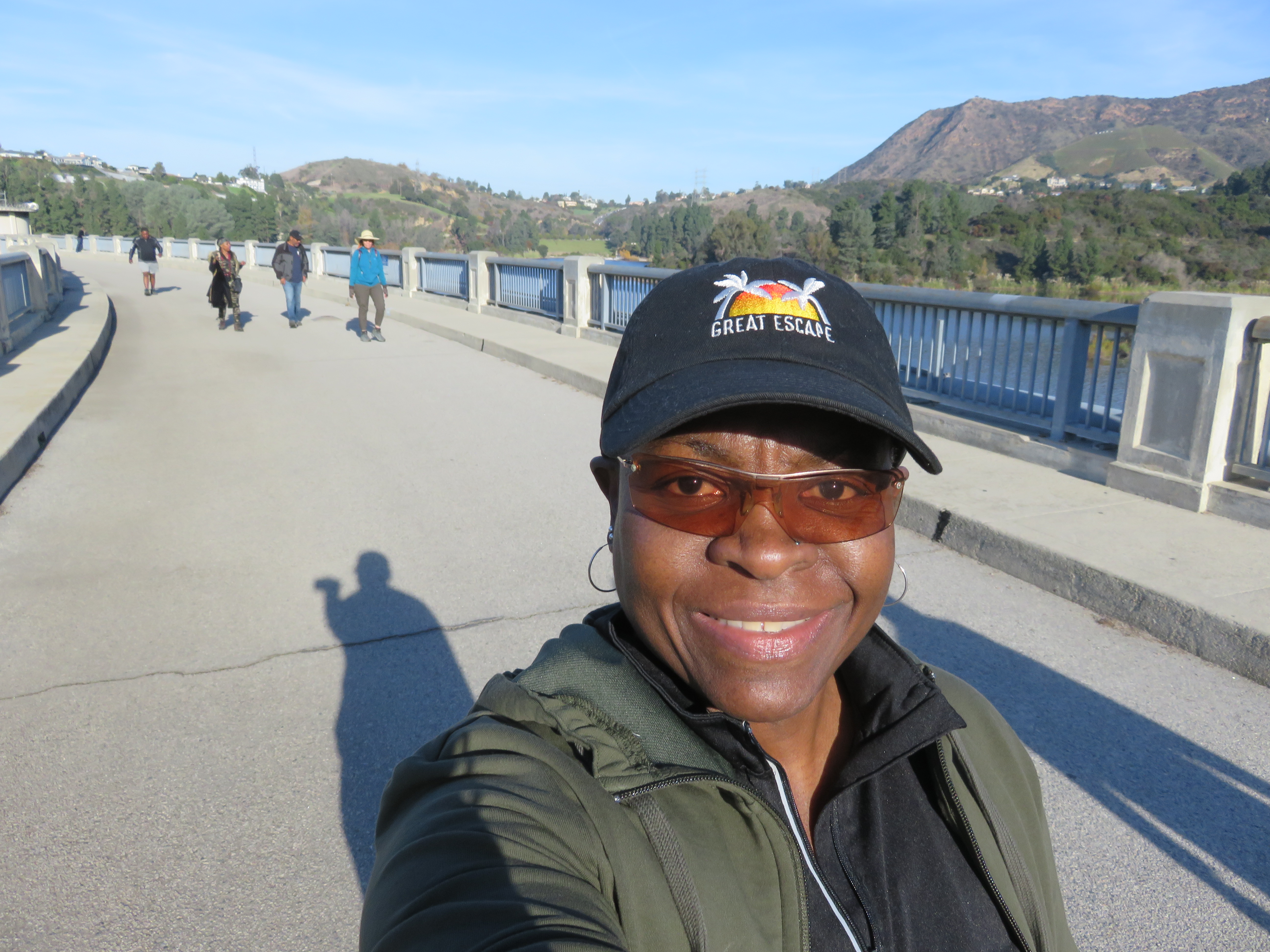
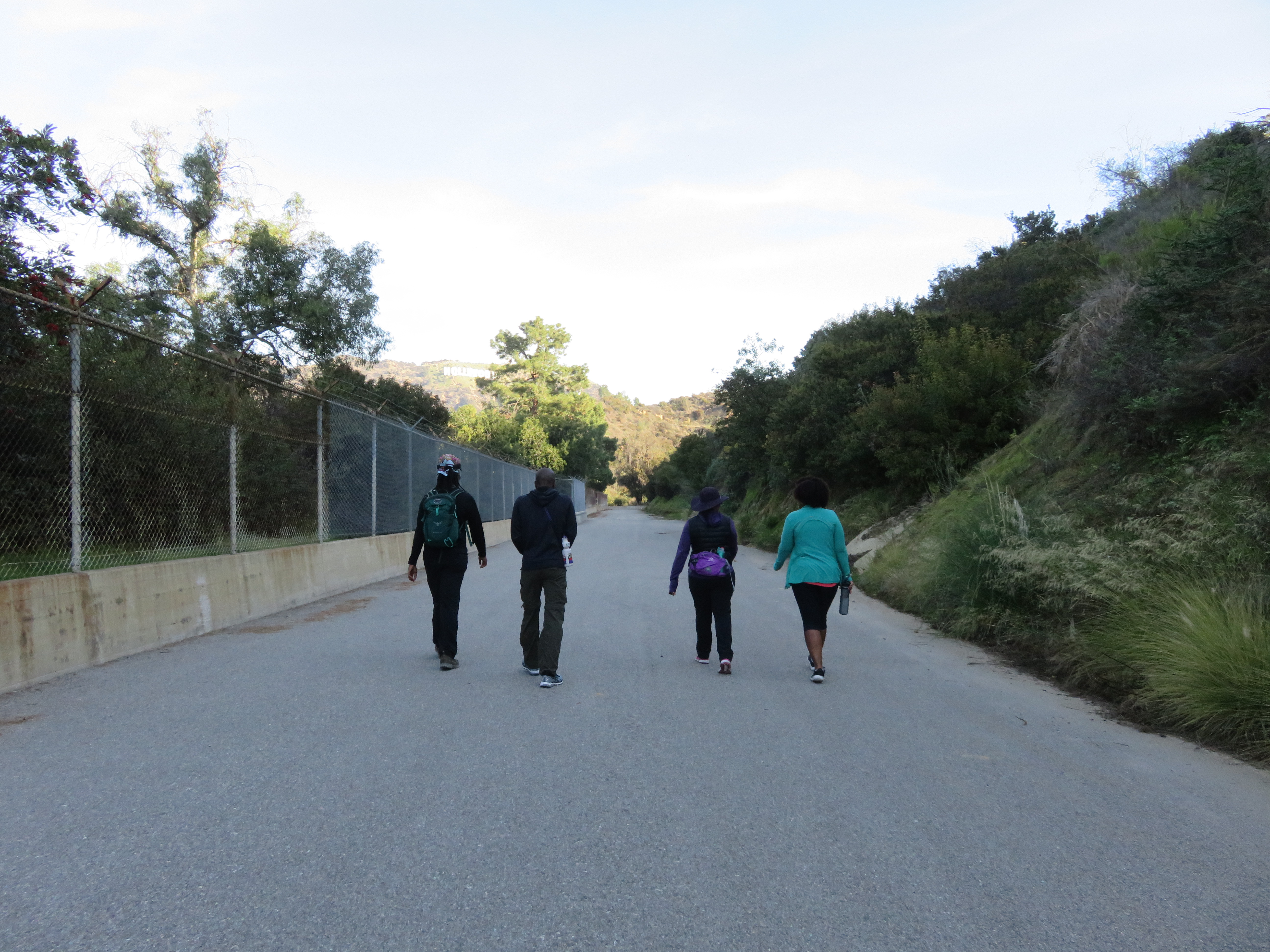
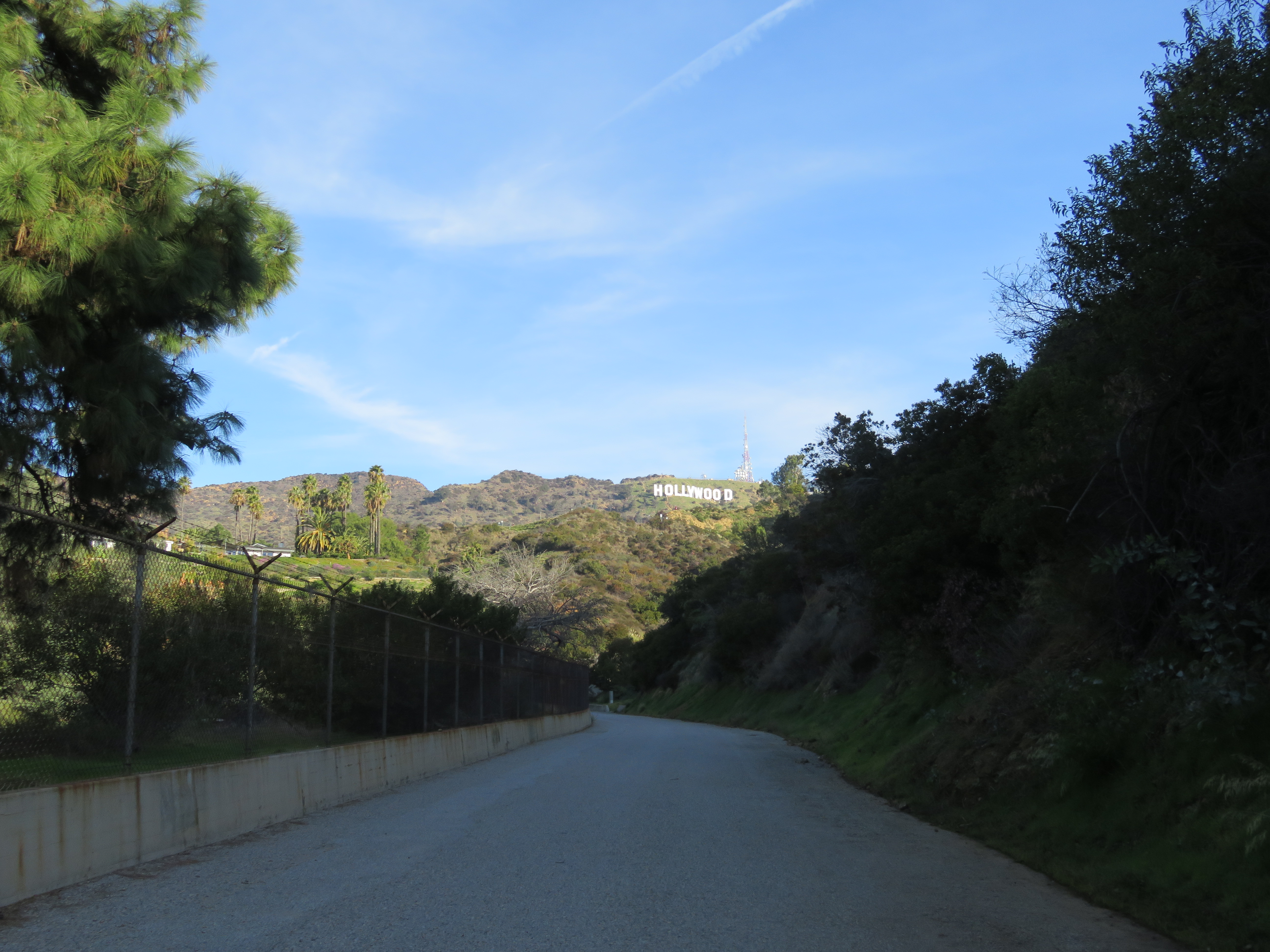
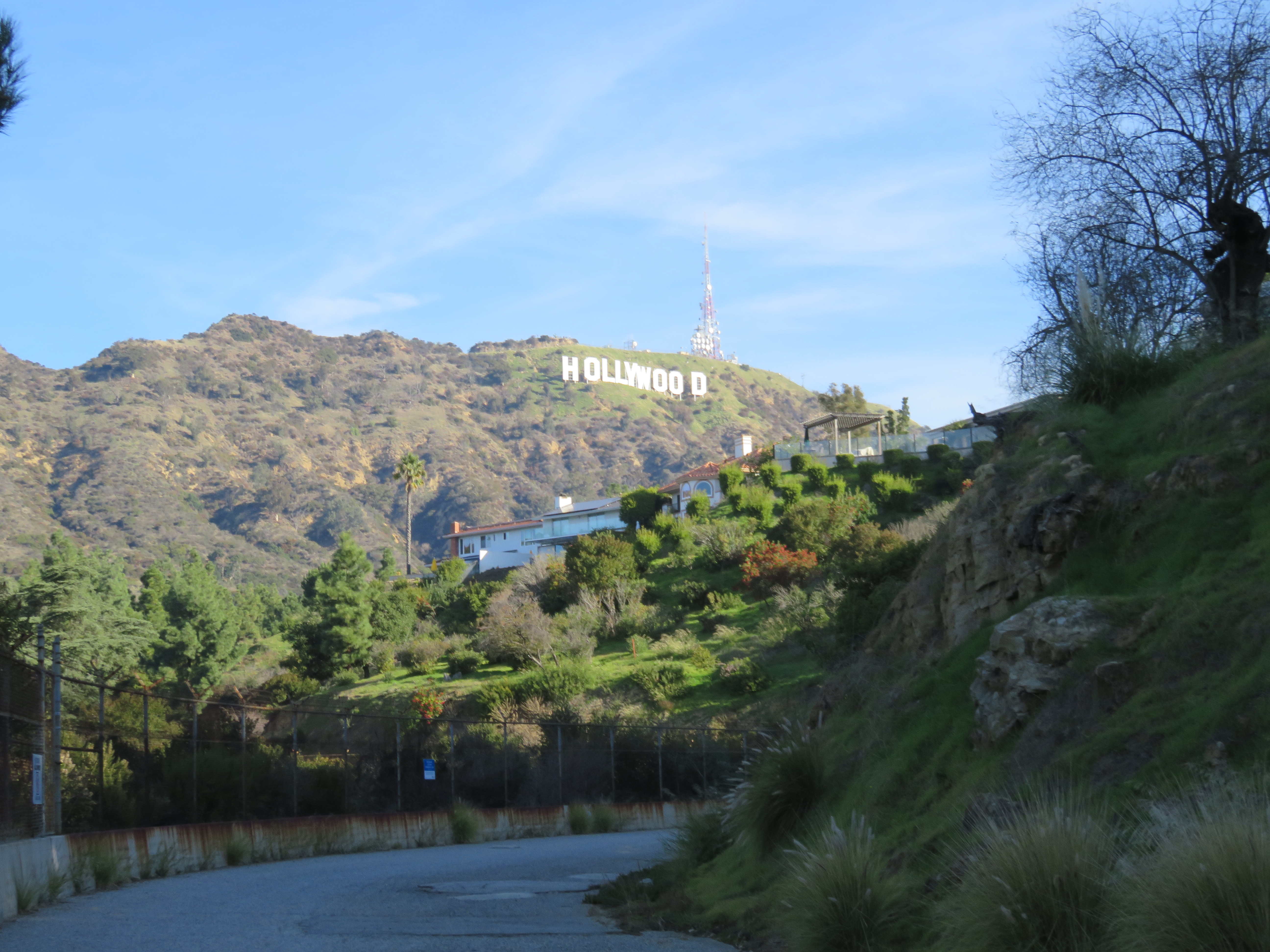
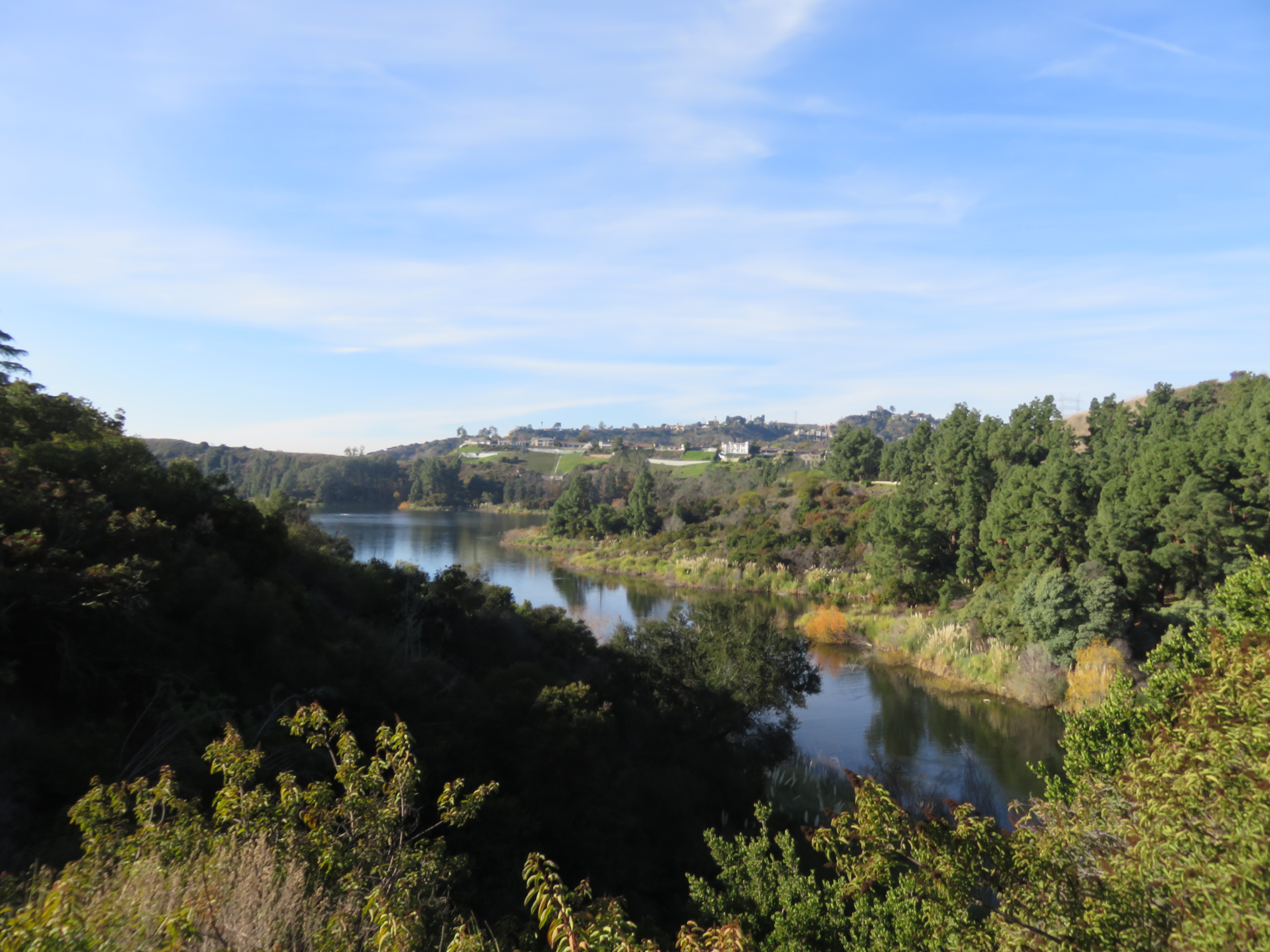
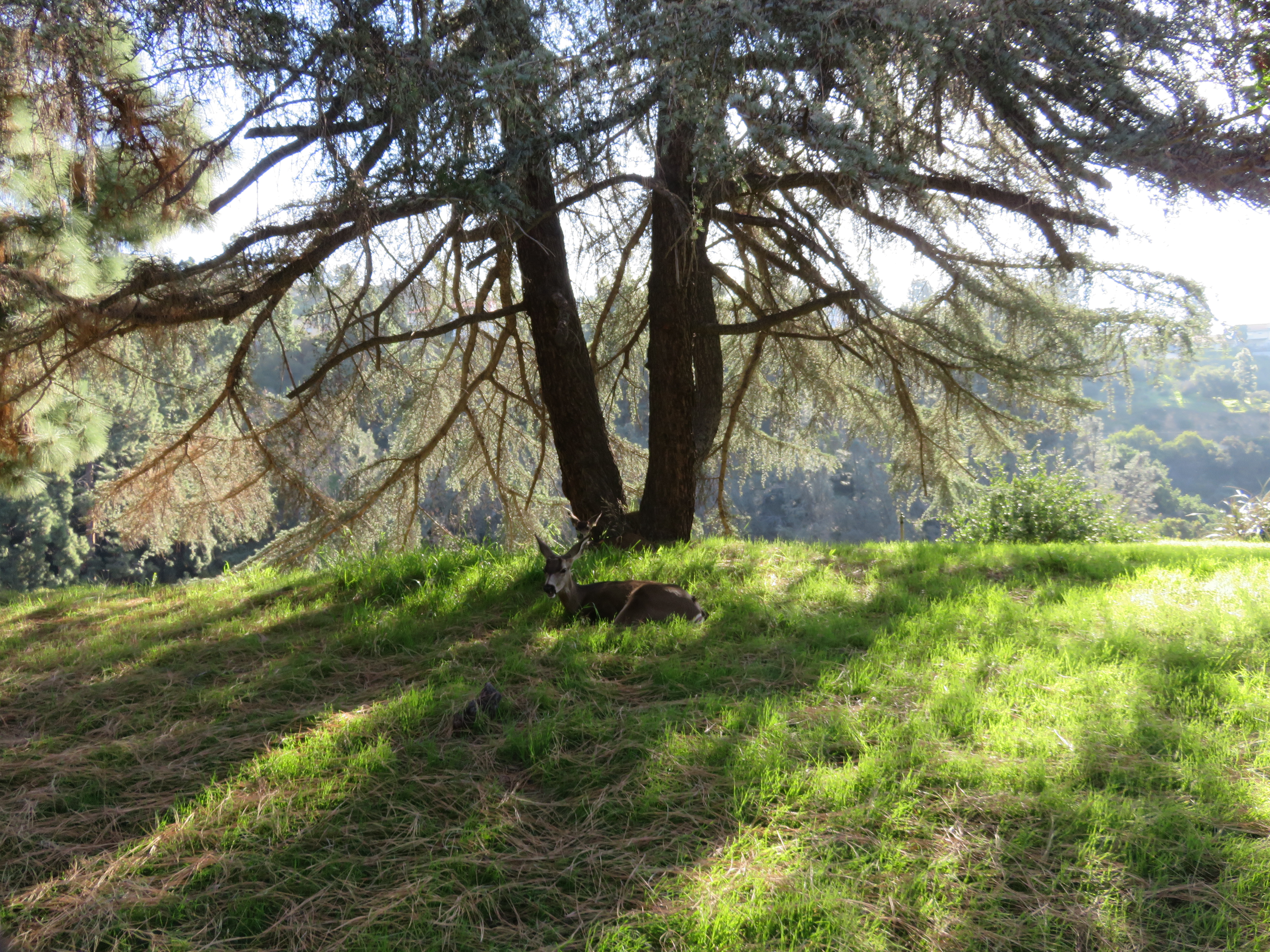
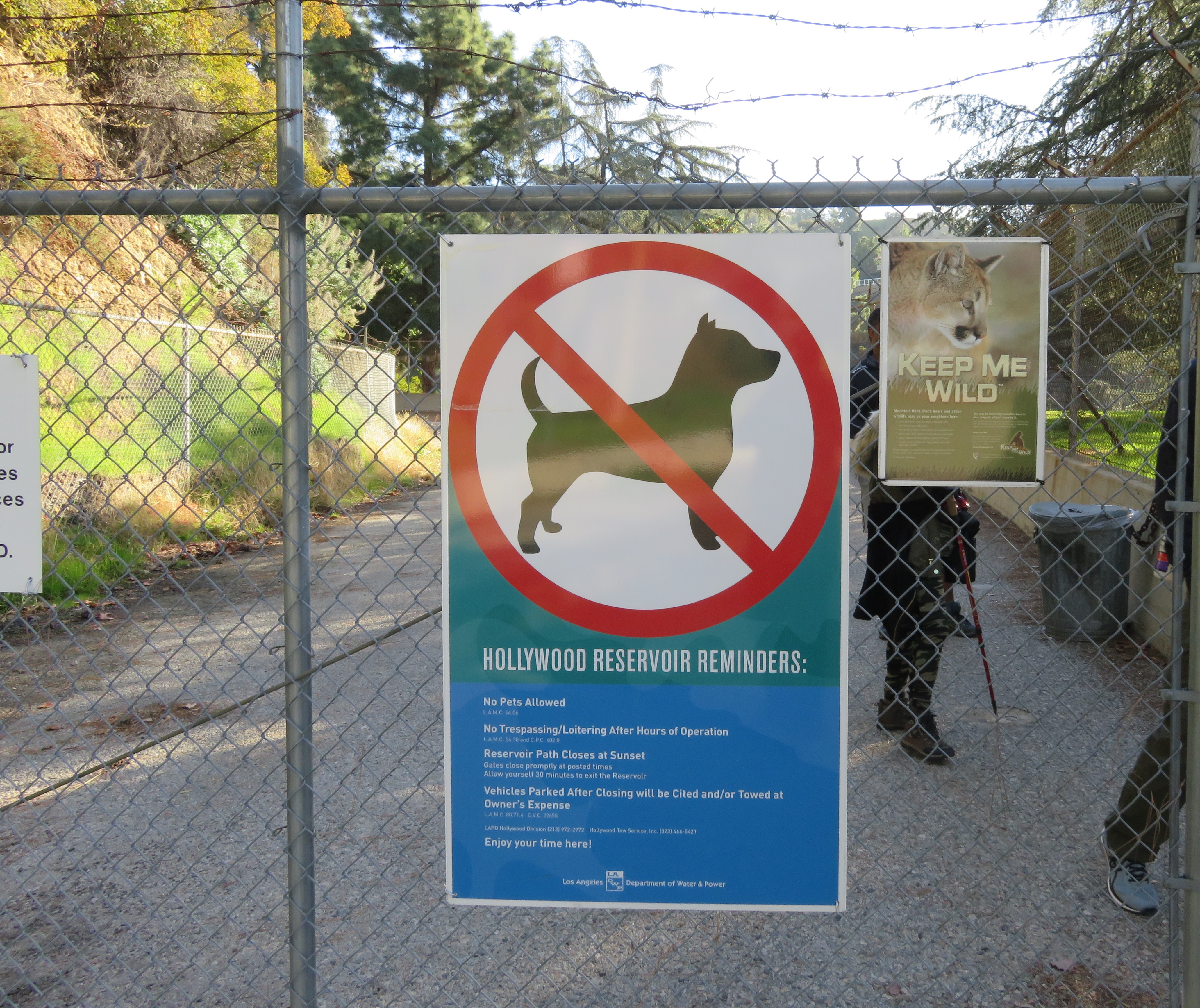
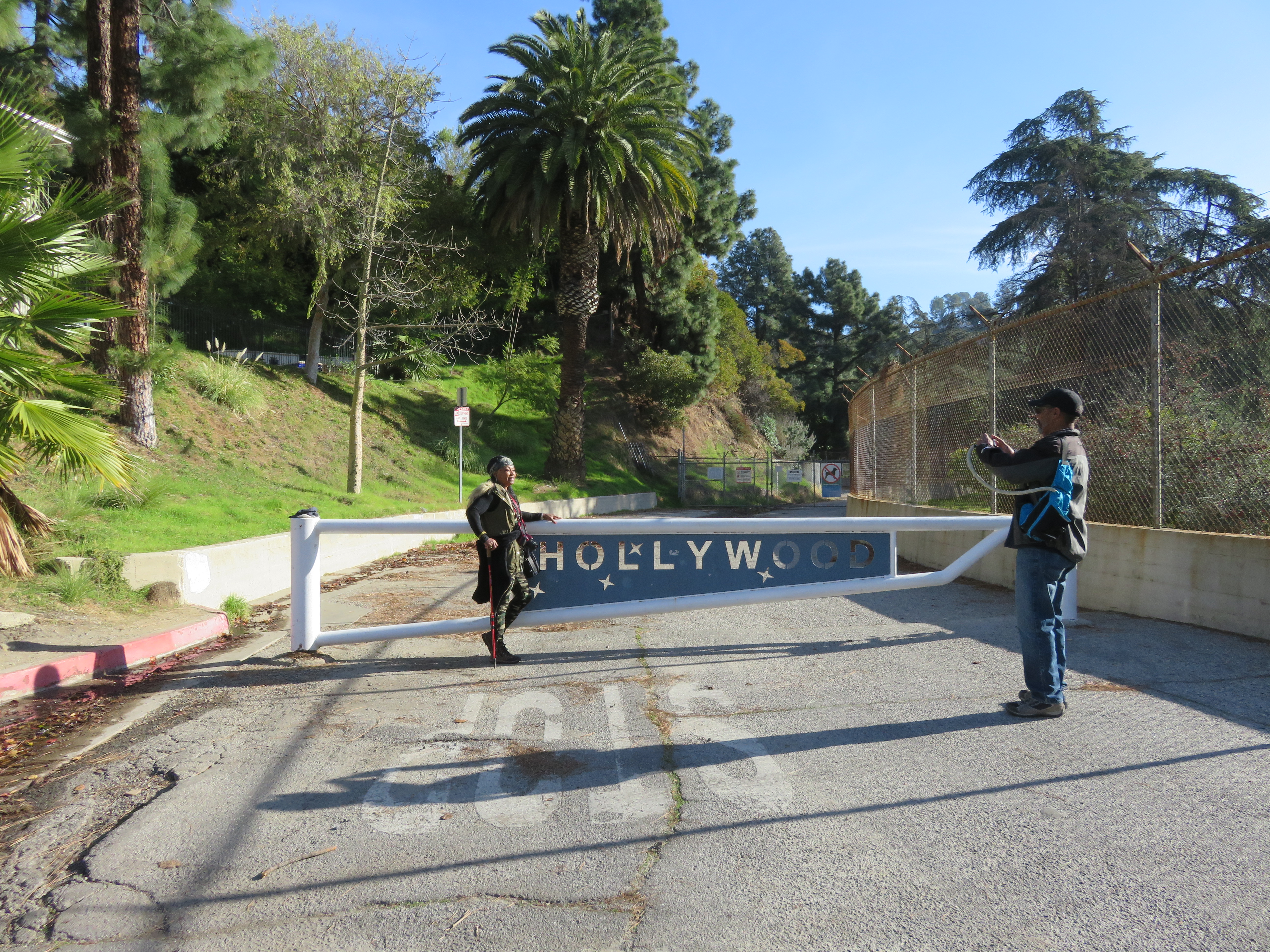
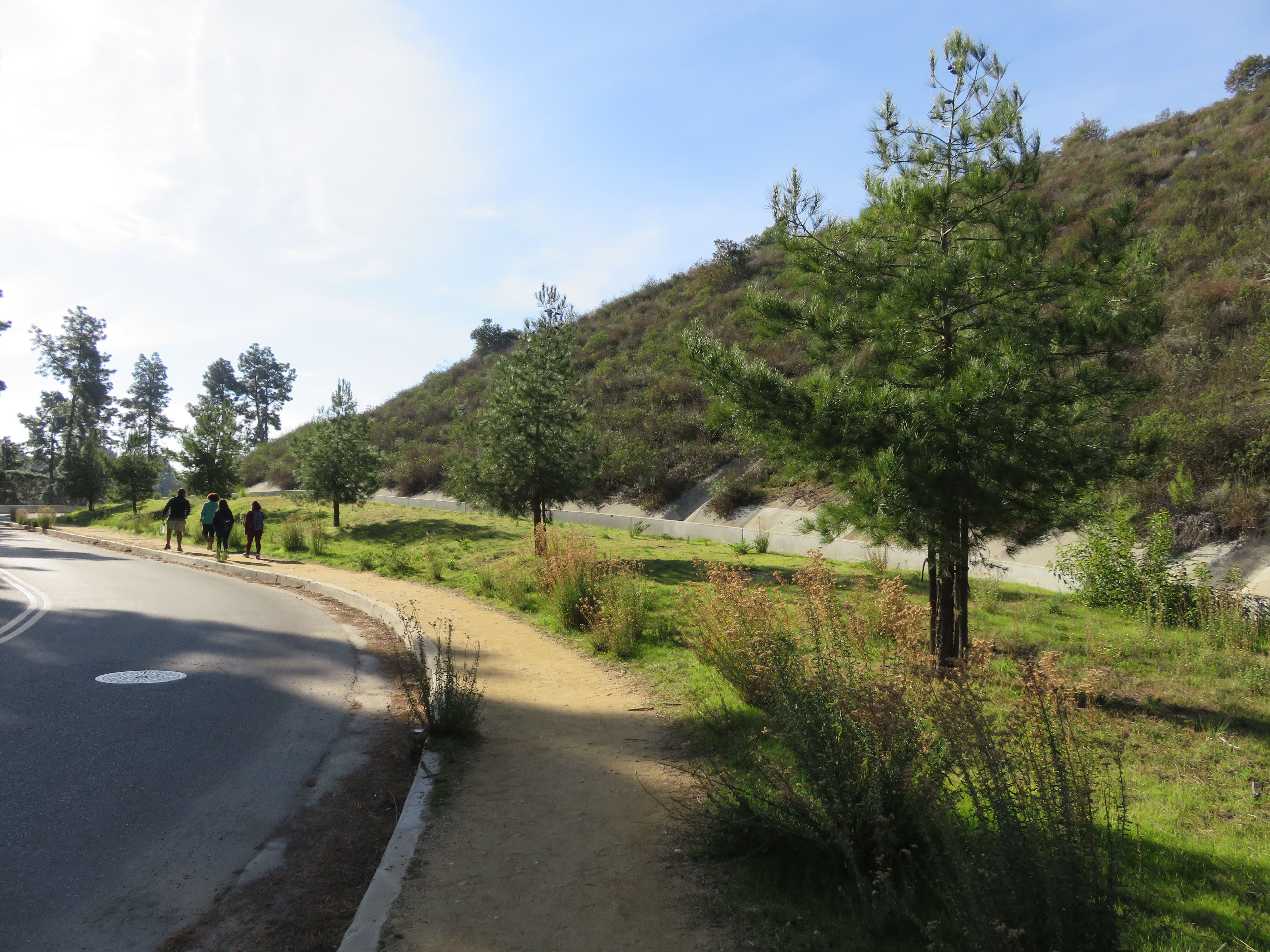
I hiked my first trail yesterday. It an easy one was around the Hollywood Reservoir with my friends from SCOBA. It was a beautiful day – bunnies, deer, birds, crisp fresh air, awesome views, conversations with friends. I couldn’t ask for more. Nature … gotta love it!
I believe in starting my year how I intend it to go. In my last blog post for 2019, I talked about some of what I anticipated doing in 2020. Included were catching up with friends and meeting new people. I did both of these on the first day of the year at the 131st staging of the Rose Parade, one event within Pasadena’s Tournament of Roses. I hung out with friends, including one whom I hadn’t seen for a few weeks and met someone new – a fellow Florida Gator (we united over disdain for the school up north, thanks Tiffany, and showed off the Gator Chomp, thanks Jennetta). Go Gators! On the first day of the year I also added some succulents to my backyard and walked almost 11, 000 steps before 5 pm. So all in all an excellent start to 2020 despite having woken up at the ass crack of dawn ☹️.
The Tournament of Roses’ History is Steeped in Tourism
The Tournament of Roses Association (TRA), the organizer of the Tournament of Roses bills it as America’s New Year Celebration®. Many people around the world have heard of the Rose Parade, but I wonder how many know that it was conceived to showcase (or brag about) Pasadena, warm, charming, and blooming while New York and elsewhere were buried in snow. Intentional or otherwise, this was a superb strategy to attract visitors to Pasadena. The first Tournament of Roses was on January 1, 1890, over 130 years later the strategy remains extremely effective. For that first event, the original organizer, the Valley Hunt Club, had contests like jousting, chariot and foot races, tug-o-war, and polo. A parade featuring carriages decorated with flowers, was added to the event to further show off Pasadena’s warm weather assets (TRA, n.d.).
(Tournament of Roses Association, n.d.)
In 1902, the Parade was paired with the Tournament of Roses football game, but replaced by chariot racing the following year. In 1916, the parade-football pairing became permanent, making the city an even more attractive destination for a new year’s trip (TRA, n.d.). Over the course of the years since, the Rose Parade and the Rose Bowl Game have become significant anchor events for Pasadena. Together they attract thousands to the city, including Californians (residents and domestic tourists) along with national and international tourists. My focus in this post is on the parade, not the bowl game.
I’ve considered attending the Rose Parade several times since moving to California and a few years ago decided I was going. That decision lasted until the night of December 31st when I determined that I did not want to wake up early to take the train and then stand in the cold to witness the event LOL. This time around, I still wasn’t sure if I wanted to make the effort, but finally decided it would be good to experience it at least once. I would be going with friends, tourism is my business, this is a major anchor event, etc. Once I paid for the ticket to sit in the stands (a bit more on this later), I was as committed as a pig is to pork or bacon 🤣, but I still wasn’t looking forward to the punishment of waking up early.
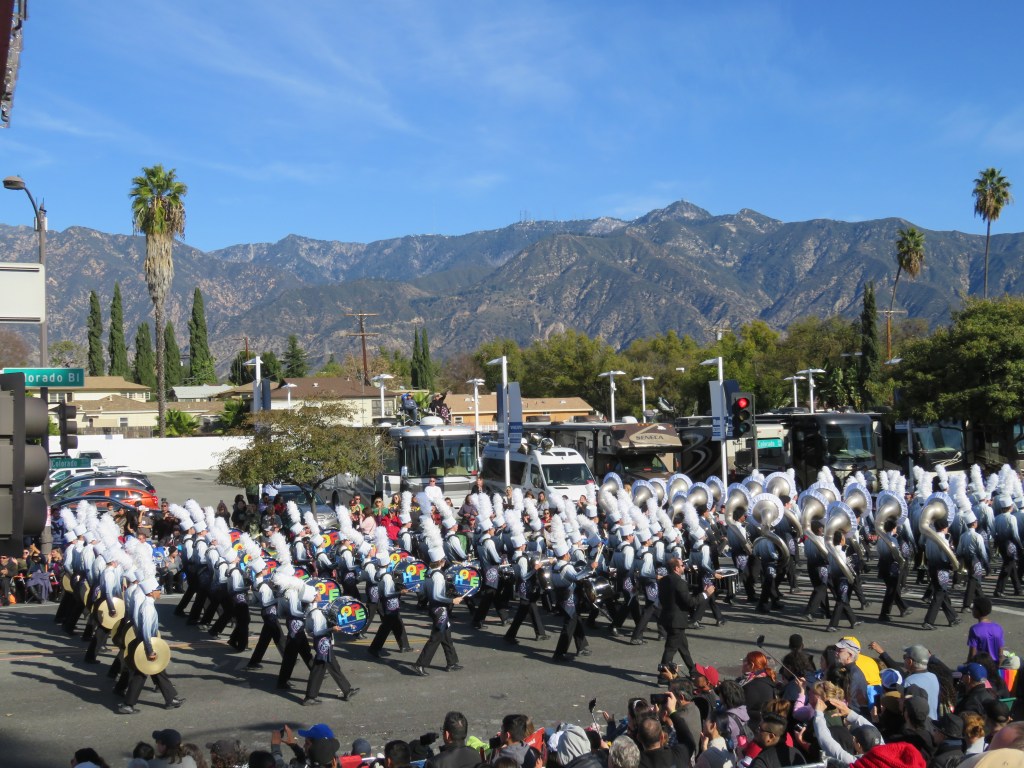
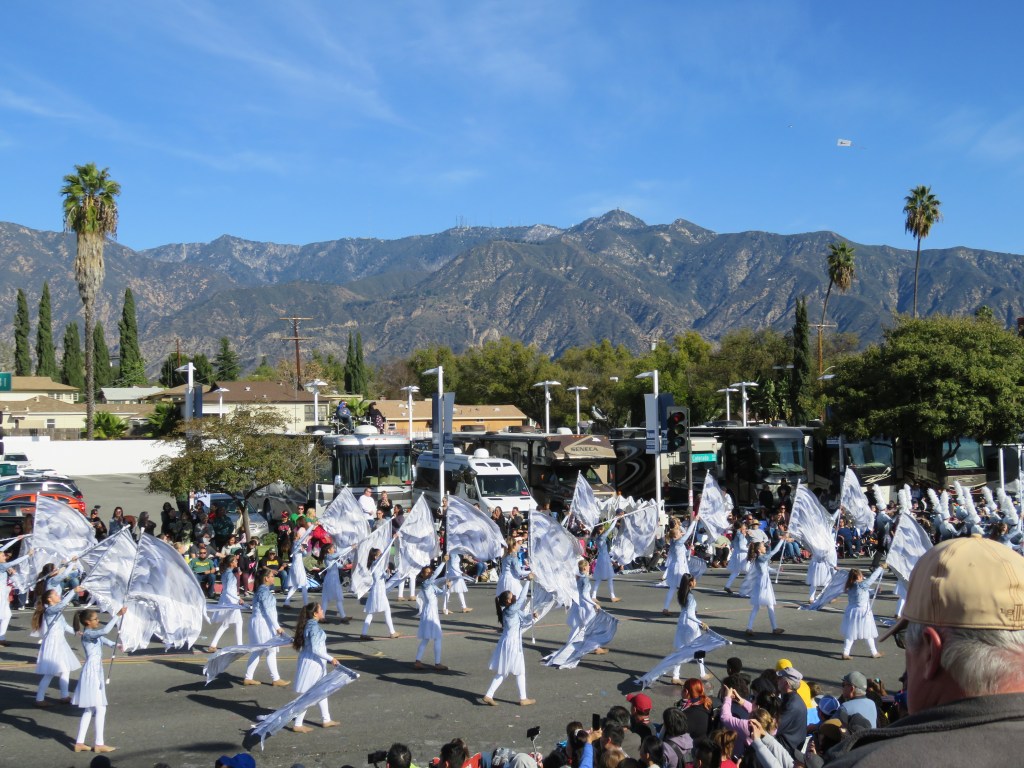
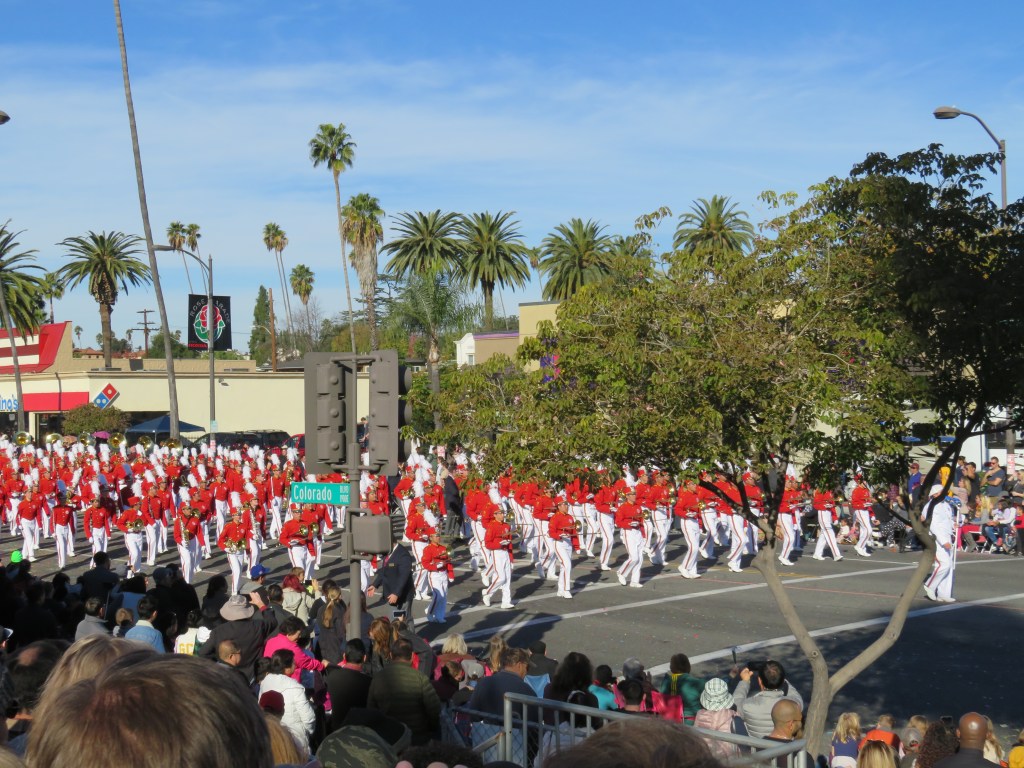
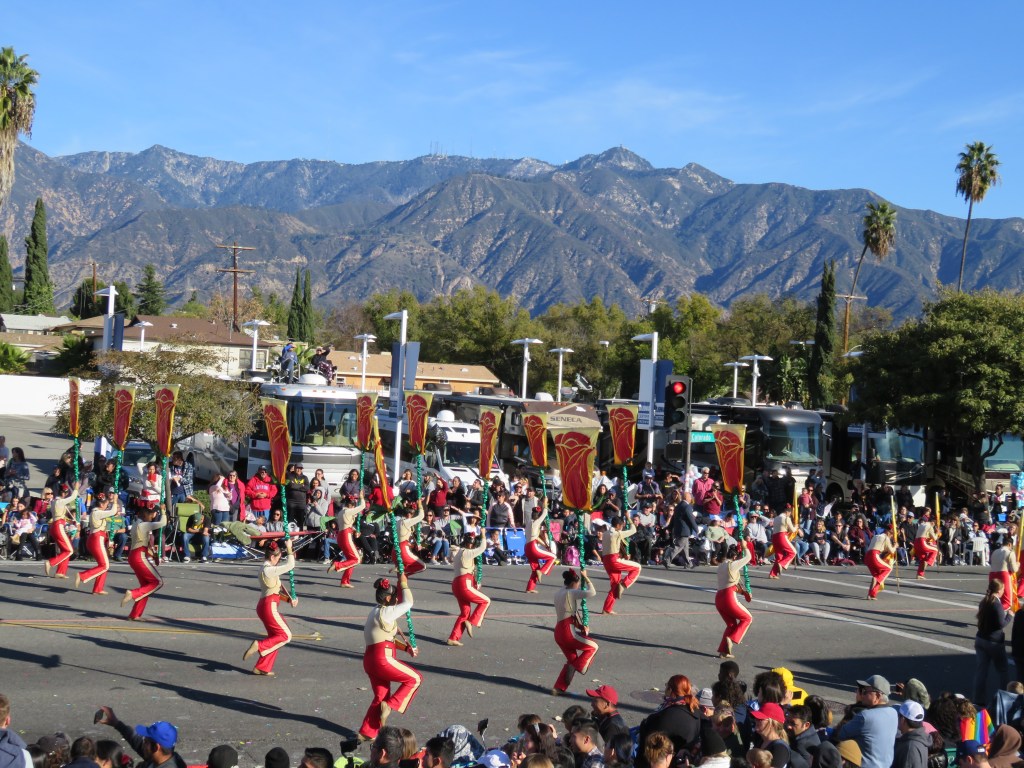
The current version of the Rose Parade is remarkably similar to the early ones in terms of the types of entries: floats with floral decorations (since 1890), marching bands (1891), equestrian units (1890) and Tournament entries. With today’s technology, I’m sure it is also distinctly different. The parade takes place along a 5.5 mile section of Colorado Ave and there is no separation of entries – floats, bands, equestrian units and Tournament entries are interspersed as they travel along the route. The parade starts at 8 am and takes 2-3 hours. This year there were 42 floats, 23 marching bands, and 17 equestrian units. From the end of the parade until January 2nd, there was another event called Post Parade: A Showcase of Floats, where one could pay a fee to see the floats close up.
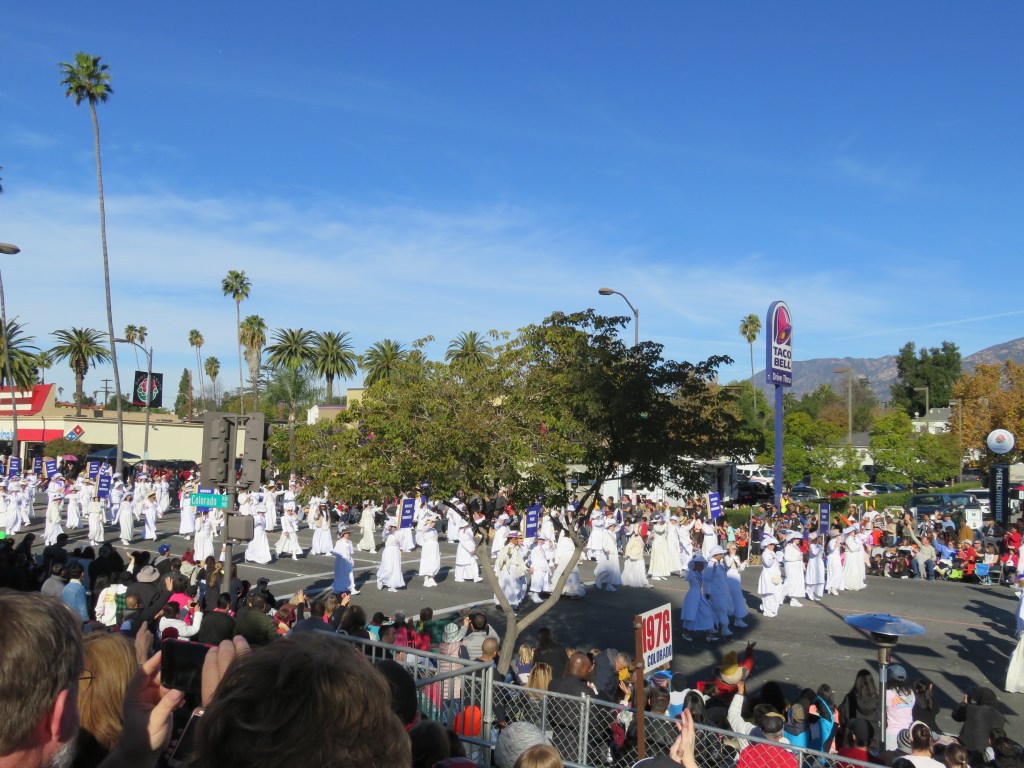
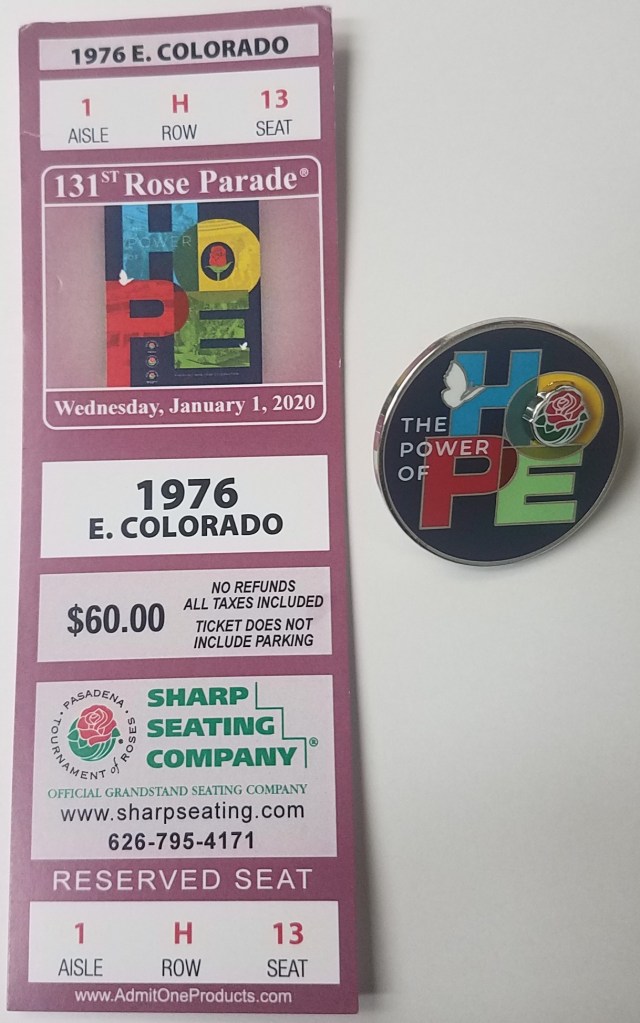
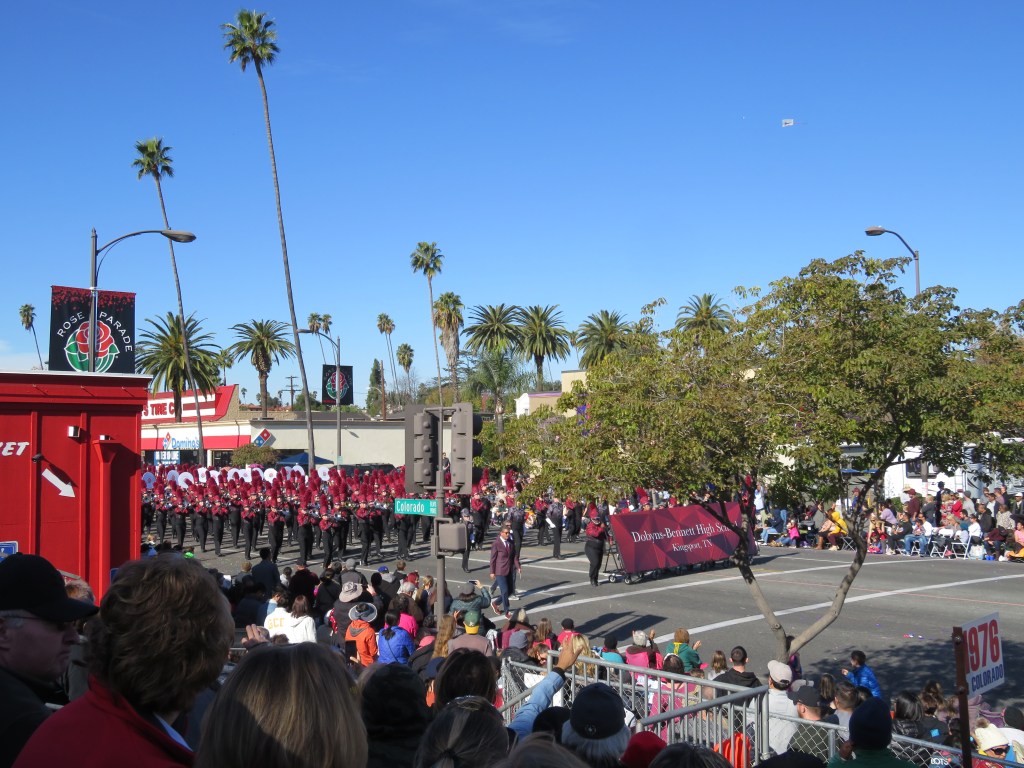
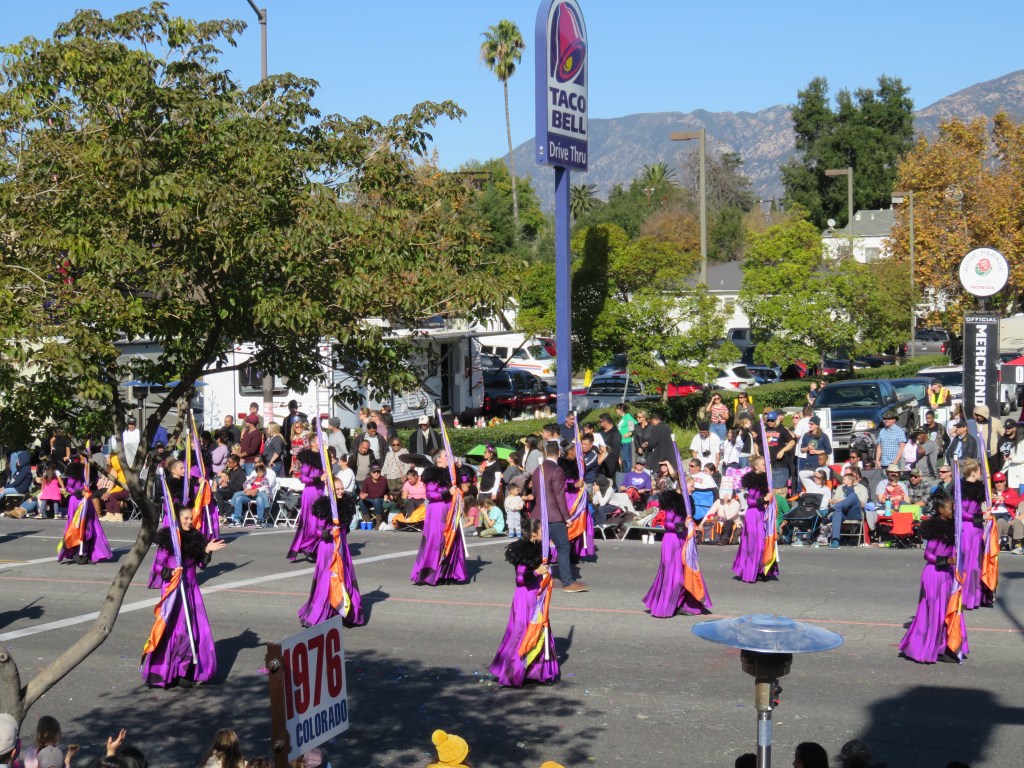
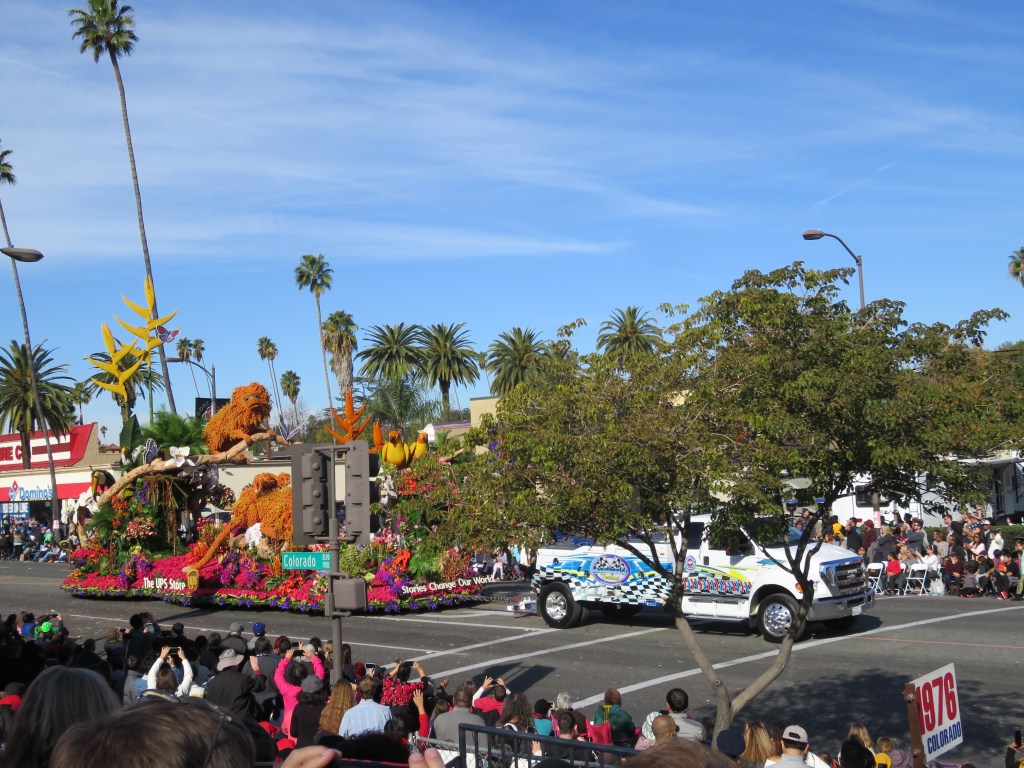
There are a few ways to view the parade: pay for seats managed by TRA (standard $60-$110, also packages); camp out from the night before or days before to get the best free vantage spot with your chairs, blowup couches, outdoor heaters, and barbeque grills; pay to park your RV somewhere and sit in front of it or on the roof; or turn up on the day hoping for the best. Restaurants and bars along the route may have had special packages as well. Our group chose to purchase TRA tickets for $60 and got in section 1976. We had decent views of the parade, but we were close to the end of the route, so by the time participants reached us the energetic dancing and musical performances were done. If I attend this event again I’ll get a seat closer to the middle of the route.
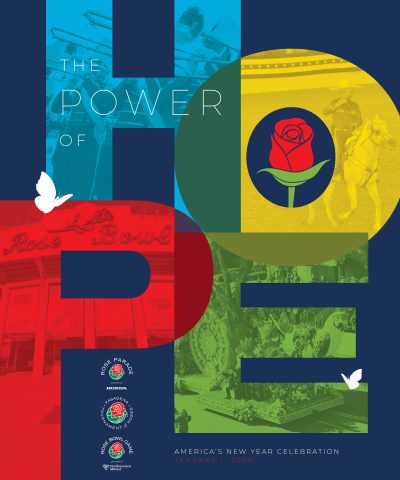
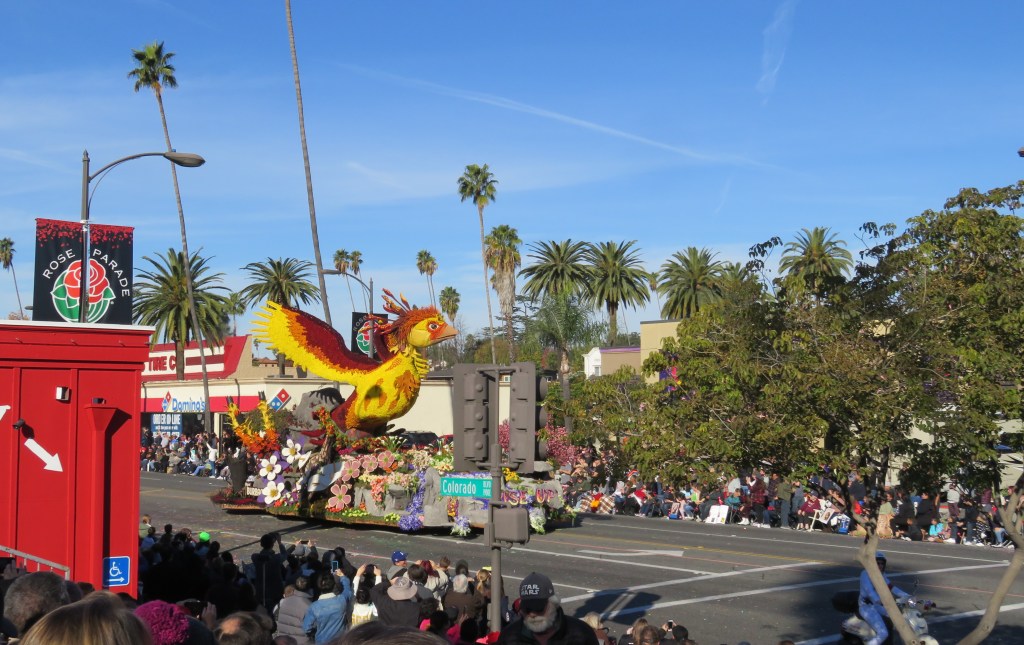
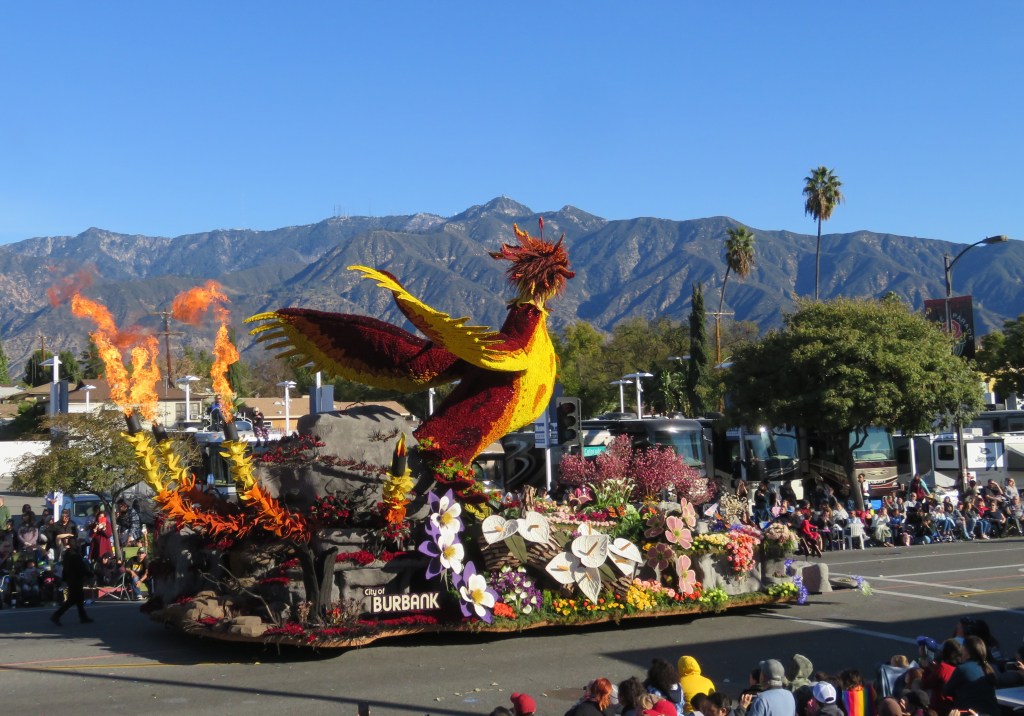
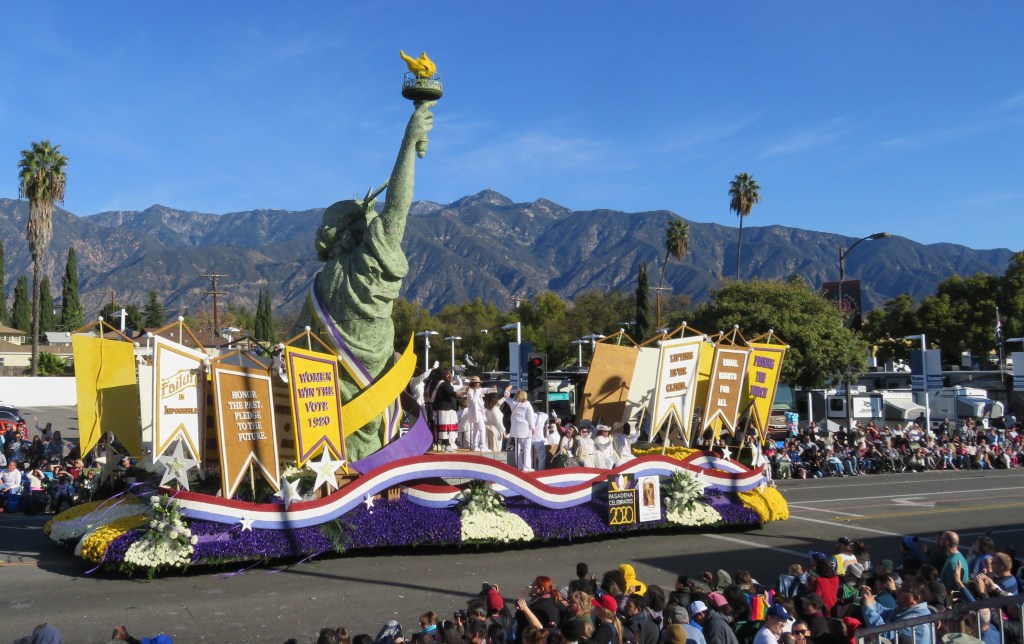
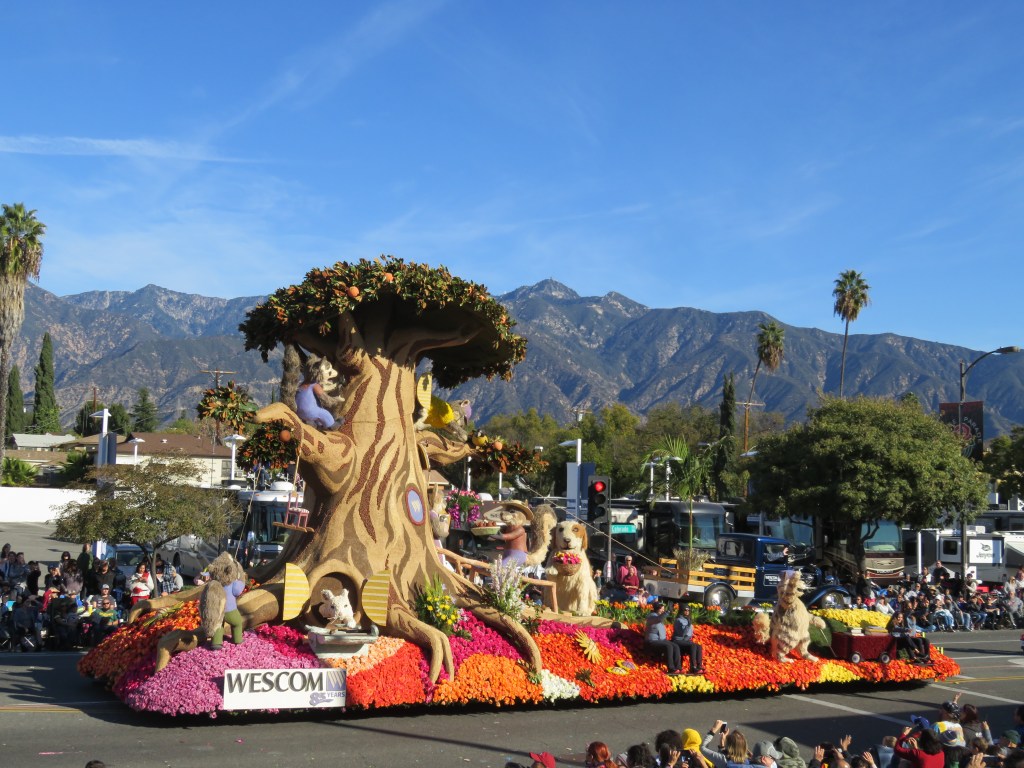
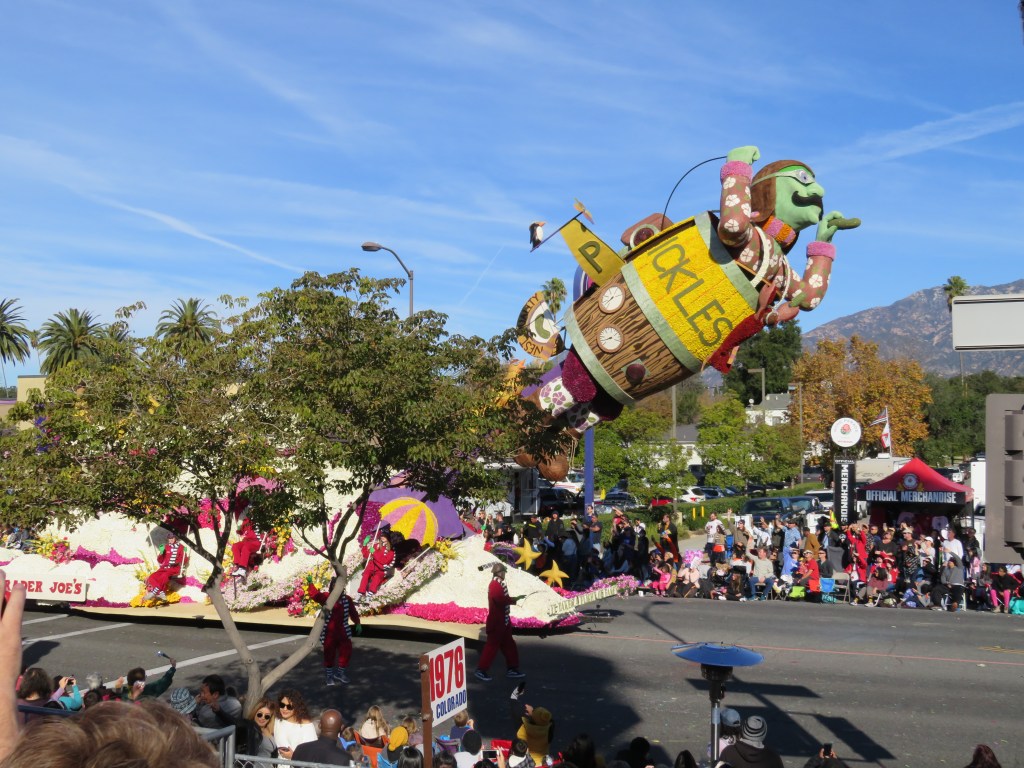
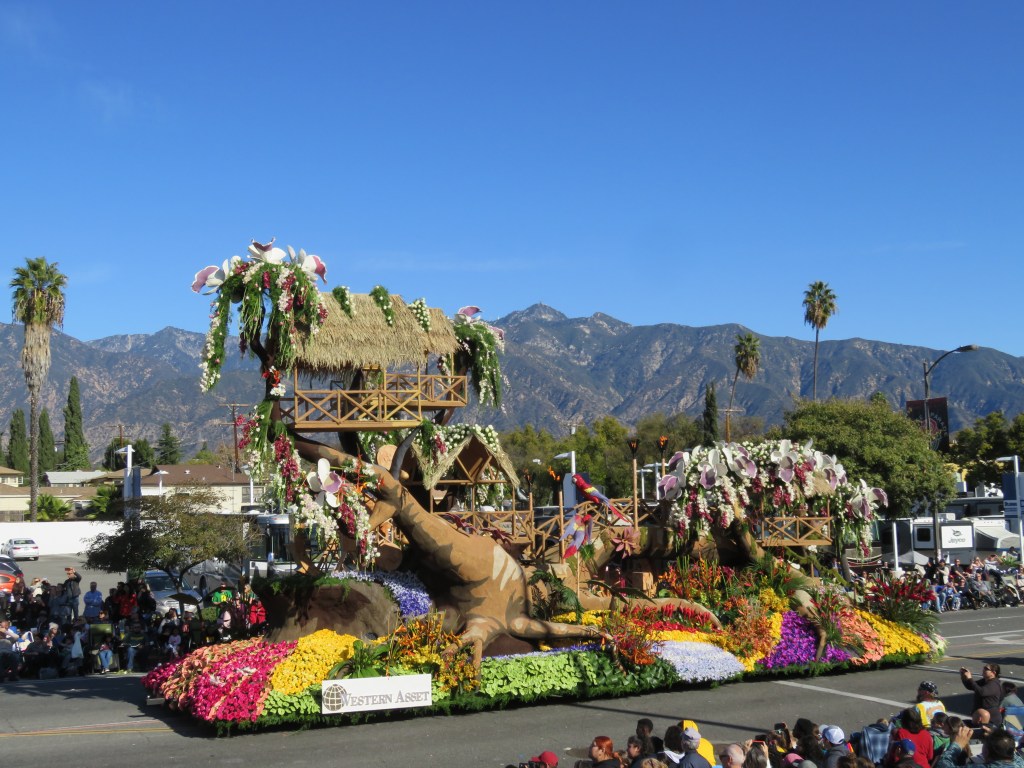
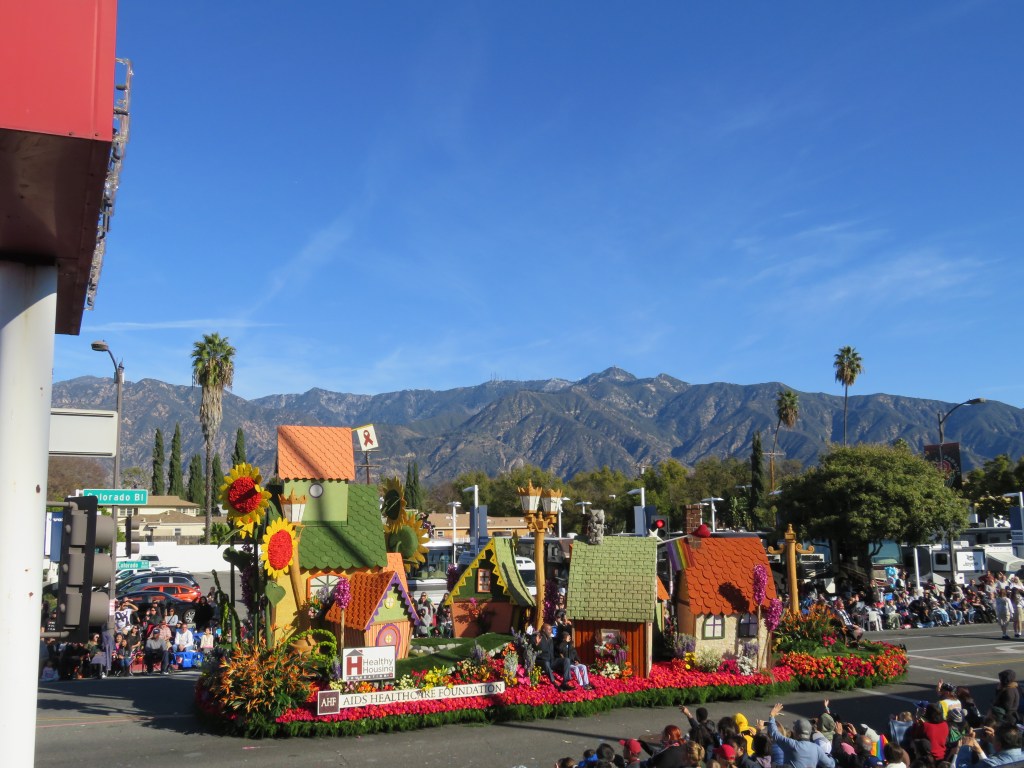
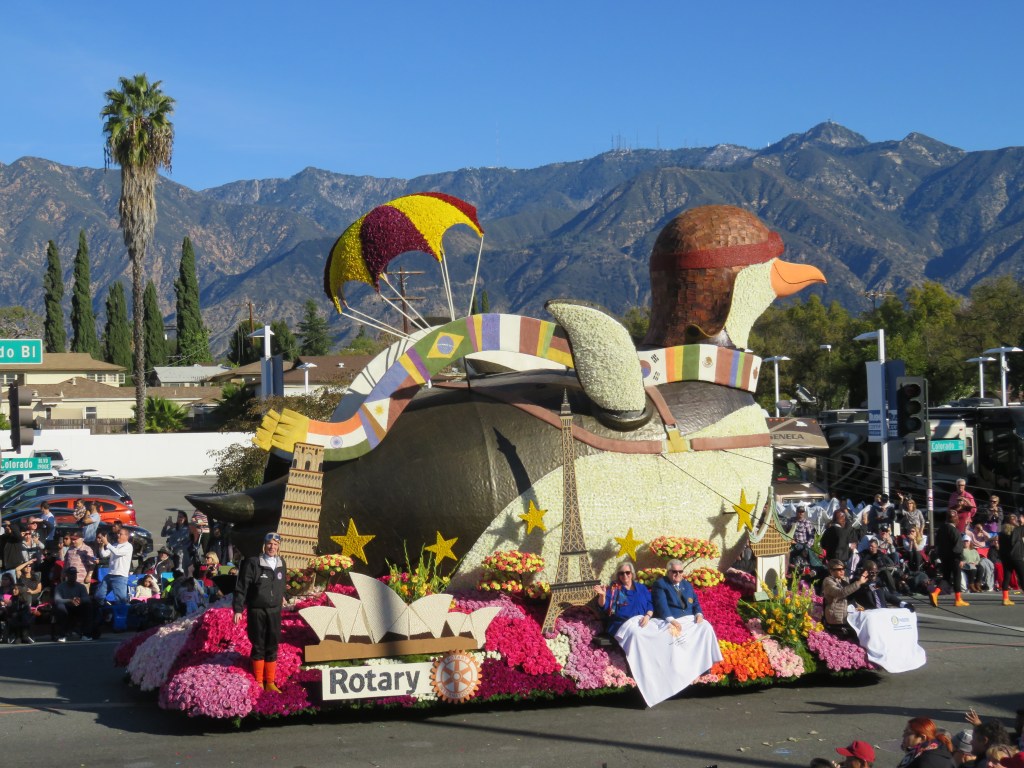
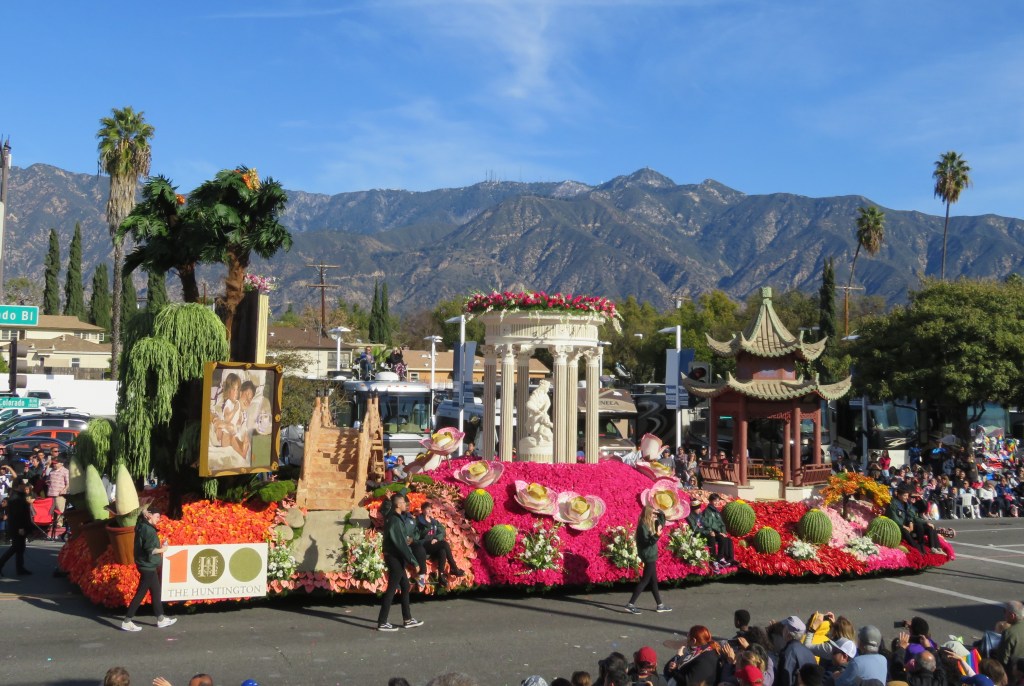
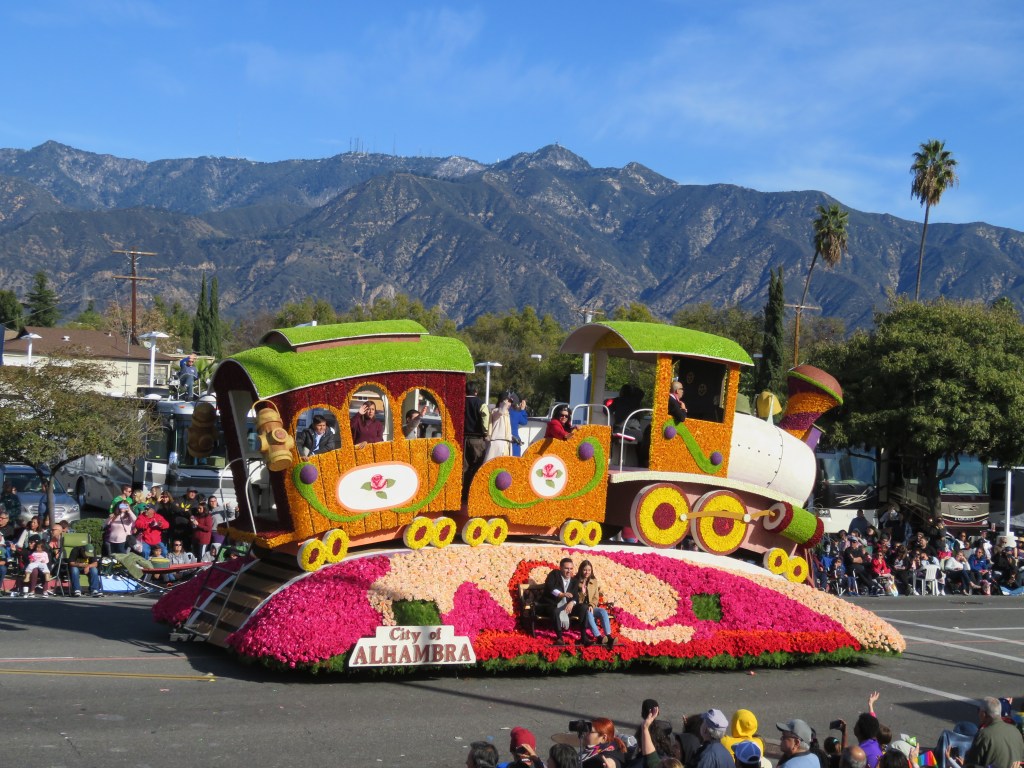
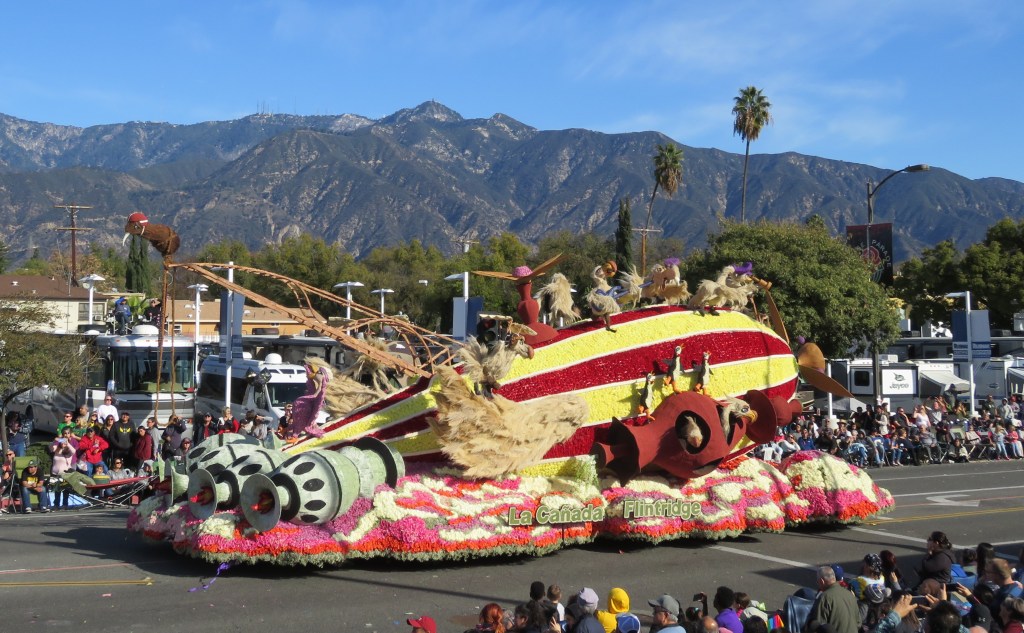
The Power of Hope was the theme for the 2020 Rose Parade and how the various float designers interpreted it through the floats was very interesting – some impressive, some not quite so.
(Tournament of Roses Association, 2020)
There were sub-themes like ‘courage to reimagine’, ‘our hope for the future’, ‘rise up’, ‘years of hope, years of courage’, ‘hope for the homeless’, ‘better together, hope creates community’, ‘stories change our world’, ‘hope knows no limits’, ‘growing a better tomorrow’, ‘spend your life living’, and ‘it takes a flight of fancy’.
Rise Up
Years of hope, years of courage
Better together
it takes a flight of fancy
Growing a better tomorrow
Hope for the homeless
The Tournament of Roses is Immensely Impactful
I tend to view life and tourism through a sustainability lens and that is always sharpened for major events like the Rose Parade. If one defines sustainability in a very simple way, it is about whether a thing/event/activity can continue to exist over a period of time. From this perspective, at iteration 131, the Rose Parade is clearly sustainable. However, sustainability is much more than persistence over time. For me it coalesces around natural and cultural resource concerns, but economic and community impacts are critically important as well.
For many events, one has to hazard guesses about the three broad components of sustainability. For the Tournament of Roses, TRA provides some information about the economic and basic community impact elements. I’ll start with the economic perspective because simple statistics on the economic ‘benefits’ tend to be more readily available and more frequently touted to generate support for the creation, development and/or expansion of any event or initiative.
What Economic Impact of Parade?
In 2017, some 3.2 million people visited Pasadena, booked 42,059 room nights, and spent $496.2 million in hotels, attractions, and restaurants (Pasadena Center Operating Company (PCOC), 2018). In 2019, visitors booked 46,048 room nights (PCOC, 2019) and given its minimally higher revenue per available room (revpar), revenue from room nights was probably around $500K higher.
With the popularity of the Rose Parade and the Rose Bowl Game, the city’s two biggest anchor events, Pasadena welcomes a significant number of tourists to the city for the first few days of the year, contributing to the aforementioned room nights, spending, etc.. These tourists buy parade and game tickets, stay in hotels, dine in restaurants, drink in bars, visit other attractions, spend on souvenirs, and in various other ways contribute to tourism’s overall impact to the city. Non-tourist attendees also spend money on parade and game tickets, in restaurants and bars (my friends and I had lunch in a local restaurant), on souvenirs (we bought commemorative pins), and more.
According to TRA (2019), around 700,000 individuals attended the 2019 Rose Parade (it also had a TV audience of 37 million national and 27 million international viewers). Beyond Pasadena, other Southern California destinations from Los Angeles to Palm Springs and beyond also benefit from Pasadena hosting these anchor events.
Based on some of the conversations I heard in section 1976, it was evident that for this year’s parade there were domestic tourists from various parts of California and other states, as well as international tourists whose primary purpose for the trip was the Tournament of Roses. Additionally, there were American marching bands from Oregon, Wisconsin, Hawaii, Louisiana, Mississippi, New York, Oklahoma, Puerto Rico, Tennessee, and Texas, along with international bands from El Salvador, Costa Rica, Denmark, Japan, and Mexico. There were also equestrian units from Texas, Missouri, Nebraska, Oklahoma, and Michigan. The band and equestrian unit members with all of their support personnel also fall into the category of tourists. Together they could account for upwards of 2,000 tourists.
University of Oregon
University of Oregon
The Pride of Pearland Marching Band (Pearland, Texas)
Pride of Pearland
Dobyns-Bennett High School (Kingsport, Tennessee)
Dobyns-Bennett
Banda Municipal de Zarcero (Alajuela, Costa Rica)
In a study of the 2018 Tournament of Roses done by Enigma Research for TRA, the researchers estimated that the combined economic impact of the two events was $198.2 million (combined impact for Pasadena 29%, L.A. City 29.5%, other L.A. County 30%, Greater L.A. area 9%, rest of California 3%). The parade alone had an impact of approximately $142.8 million. The level of spending for the Tournament was the equivalent of 2,062 year round full-time jobs, primarily in accommodation and food service; retail; and arts, entertainment and recreation. Tax revenues were around $38 million. Around 133,000 of the 700,000 parade attendees were resident outside of the greater L.A. area, with most being from outside of California (Enigma Research, 2018).
Community
Events on the scale of the Tournament of Roses should generate immediate, mid- and long-term positive impacts beyond the direct economic benefits. The TRA established the Tournament of Roses Foundation in 1983 (TRA n.d.). The foundation awards grants yearly the Pasadena area. These grants help the awarded non-profit organizations to support activities and programmes in performing arts, visual arts, education, recreation and sports. Since the foundation’s establishment, more than 200 organizations have received upwards of $3 million (TRA, n.d.).
In their 2018 Community Impact Report, TRA (2019) described its partnerships with Pasadena City College and the Pasadena Unified School District to support education from elementary to tertiary levels. TRA also hosted tours of several college campuses in southern California for high school students in two school districts. The report also noted that TRA offered training for board members of local non-profits and supported organizations working to reduce food insecurity, among other initiatives. Similar activities were described in their 2016-17 report (TRA, 2017). In 2019, TRA hosted #ThisGen2019, a one-day youth empowerment forum featuring speakers such as Google’s Global Head of Strategic Partnerships, an Olympic bronze medal winning figure skater, and a UCLA gymnast.
Though TRA has a small core staff of employees, volunteers make a significant contribution to the organization’s work. In 2019, 935 volunteer members contributed 80,000 hours in a range of areas for the year. Community volunteers and visitors also assisted decorating the floats (adding flowers, seeds, bark, etc.) in the last few days before the parade.
The parade is also a major way for cities, civic organizations and corporations to support the community in a way that is meaningful to community members. Floats were organized/sponsored by various cities, organizations and businesses including City of Alhambra, City of Torrance/Torrance Rose Float Association, Huntington Library, Art Museum, and Botanical Gardens, Kiwanis International, Sikh American Float Foundation, Rotary Rose Parade Float Committee, Inc., Chinese American Heritage, Trader Joe’s, Mrs. Meyer’s Clean Day, Kaiser Permanente, and City of Hope.
Interviews with attendees reported in the L.A. Times indicate that community members generally enjoy the parade and some attend each year as a part of their family’s tradition. Interviewees also expressed the pride they felt in seeing the diversity of participants and spectators. In section 1976 I heard extra loud cheers when the bands from El Salvador, Mexico, Puerto Rico and Costa Rico were passing. I was also moved when I saw these marching bands and in particular the renowned Southern University ‘Human Jukebox’ though we didn’t see their main performance because we were close to the end of the route.
Aguiluchos Marching Band (Puebla, Mexico)
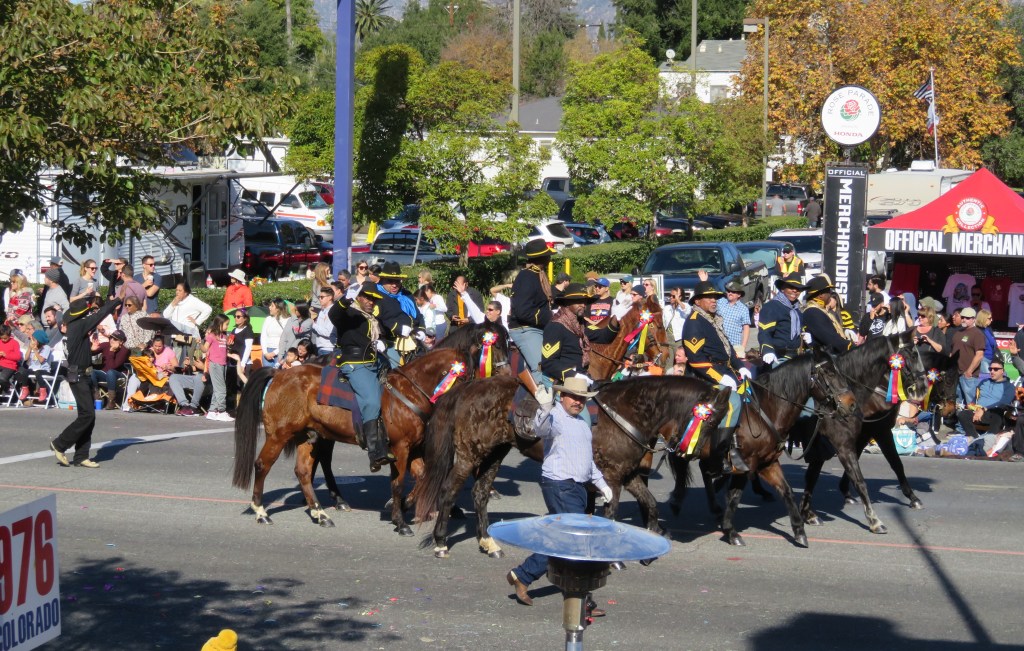
The Buffalo Soldier Mounted Cavalry Unit from Three Rivers, California was also special. The Buffalo Soldiers were the first national parks rangers. Three Rivers is one of the gateways to Sequoia National Park, the second oldest national park in the US, and the first to be headed by a Black Superintendant, Charles Young. At the time of his appointment to Sequoia National Park, Young was the Captain of a black company (Buffalo Soldiers) stationed at the Presidio of San Francisco.
The Buffalo Soldier Mounted Cavalry Unit
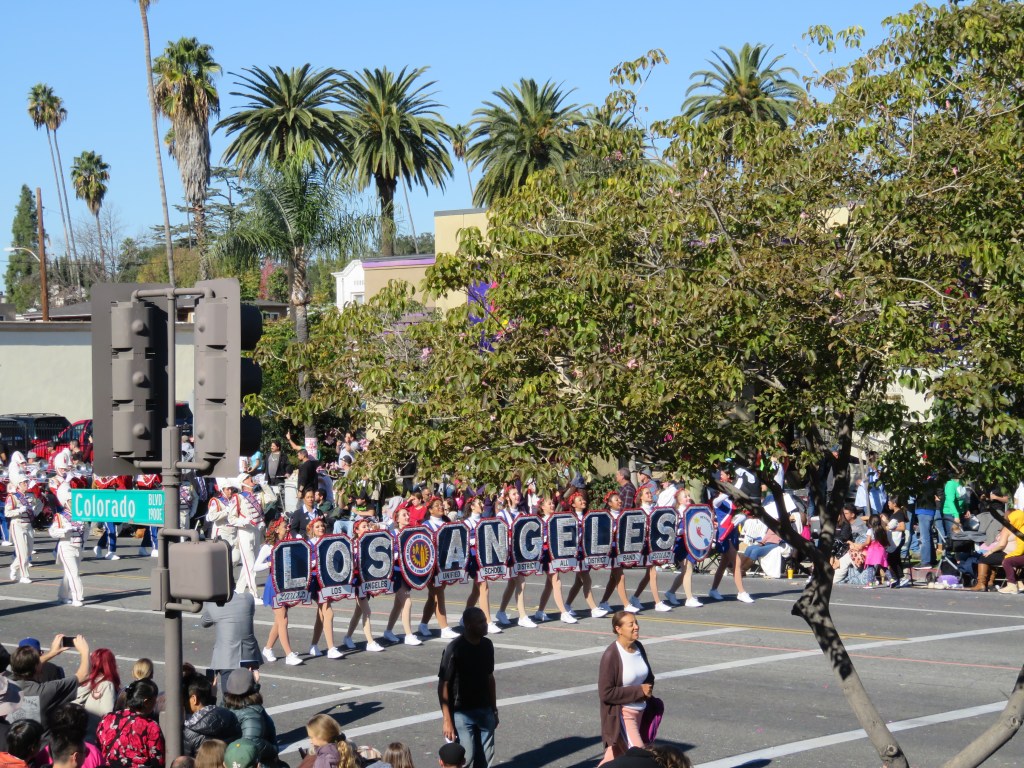
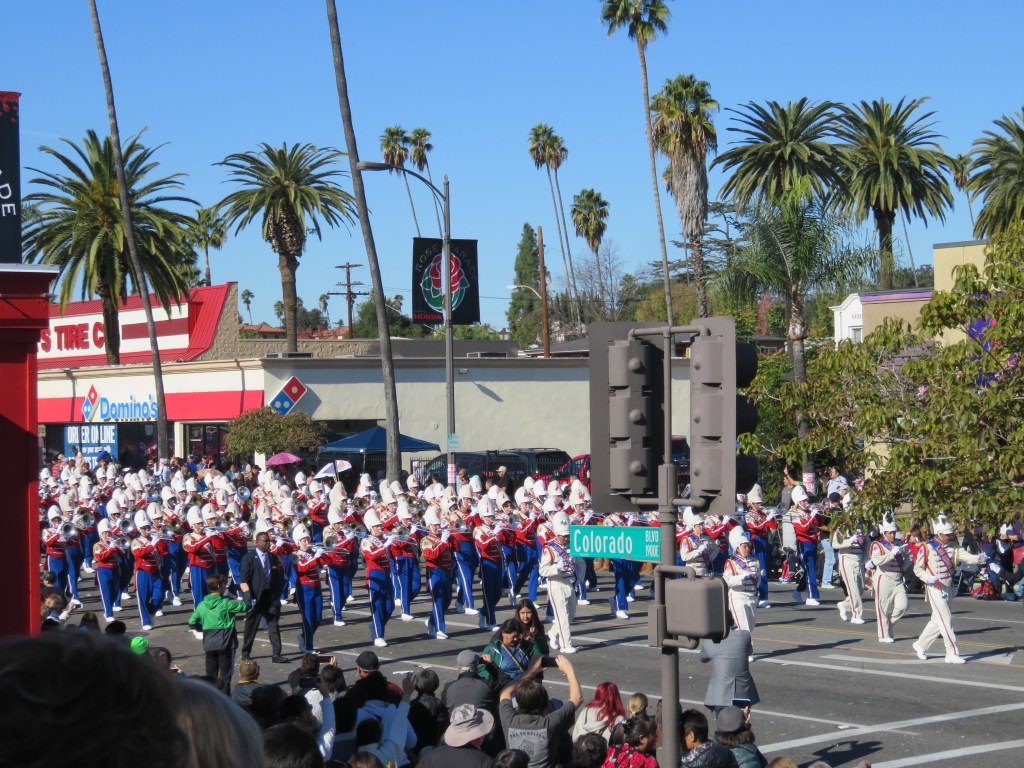
There were marching bands from Pasadena City College; the Los Angeles Unified School District (I heard there were four band members from Saugus High, Saugus Strong) and other school districts from around the state; a float from the California Polytechnic Universities (I was happy to see the CSU campuses represented); and the Tournament of Roses Salvation Army Band from Pasadena. All of these helped to give more of a community feel to the parade.
Pasadena City College Tournament of Roses Honor Band
Pasadena City College
Los Angeles Unified School District All District Honor Band
Los Angeles Unified School District
Tournament of Roses Salvation Army Band
Los Angeles Unified School District All District Honor Band
Natural Environment
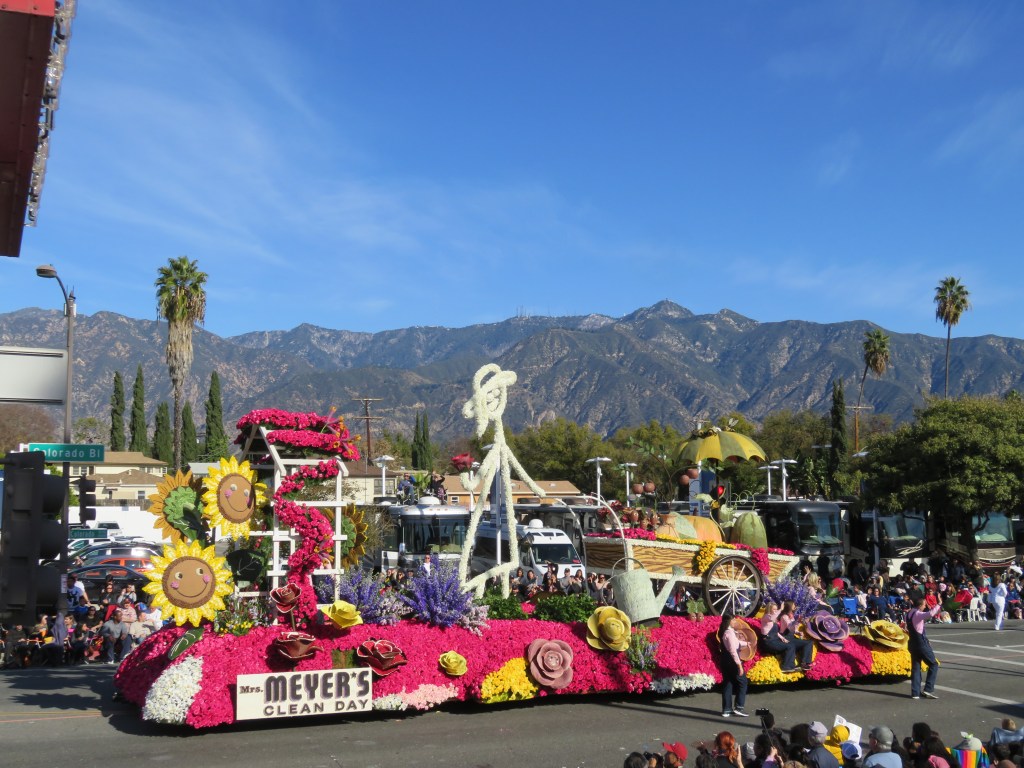
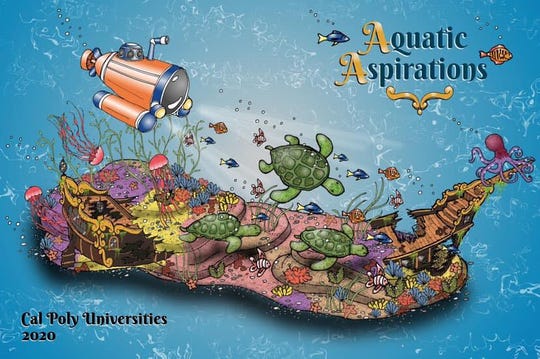
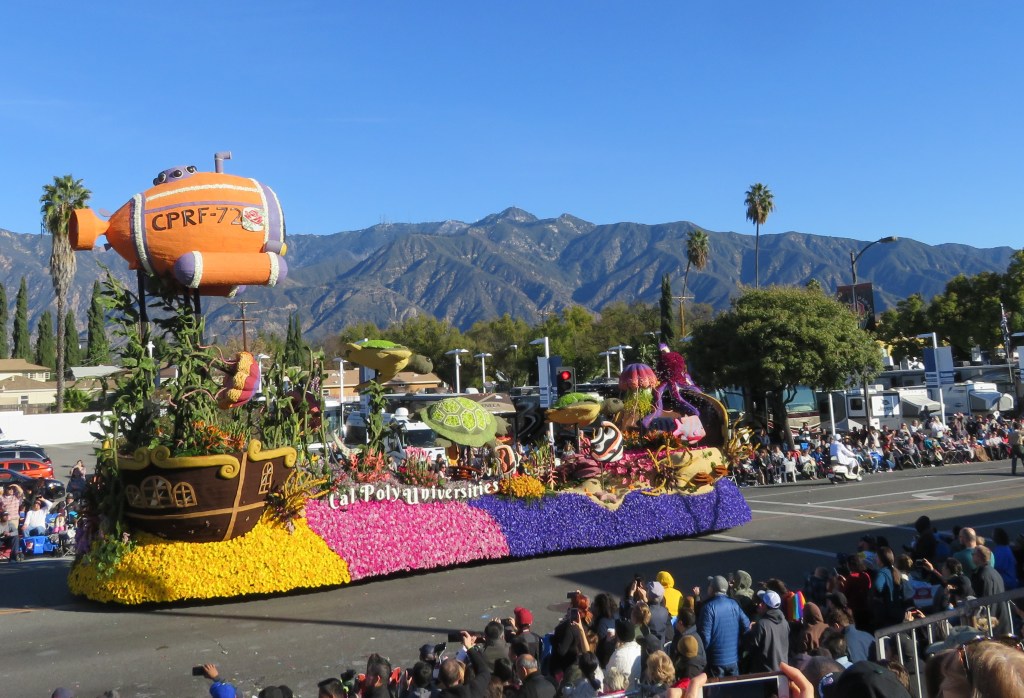
While watching the parade I wondered about its impact to natural resources and the ideas floats depicted (or could have) about natural resources and associated issues. I was surprised that there was no float focused directly on climate change (perhaps I missed it). One float was sponsored by Mrs. Meyer’s Clean Day, a company that produces biodegradable plant-based household cleaners. Chipotle’s float focused on agriculture, while the Cal Poly Universities’ float ‘Aquatic Aspirations’ focused on the marine environment. Produced by a combined team from Cal Poly San Luis Obispo and Cal Poly Pomona, Aquatic Aspirations was the only float produced by students.
Mrs. Meyer’s Clean Day
Artist rendering of Cal Polys’ ‘Aquatic Aspirations’
Aquatic Aspirations on parade
‘Cultivate the future of farming’
In another vein, I wondered about the materials used to build the floats. Other than the organic components, what materials are used? What happens to the floats after the Post-Parade event? There were 40 floats decorated with millions of flowers, fruits, seeds, pieces bark, etc. Where are these natural items sourced? Are they all from the local areas where the floats are built? Shipped from afar? If natural materials are affixed with glue, can those items still be composted? How are the materials, organic and non-organic, repurposed, recycled, discarded? On TRA’s website, there is a page focused on its sustainability initiatives, which are laudable, but seem to pertain to the association’s direct operations, not the participants in the parade. I found answers to some of my questions about the floats elsewhere.
There are two types for float builders: commercial float builders and self-built float organizations. The Cal Poly Universities and La Canada Flintridge Tournament of Roses Association are examples of the latter (TRA, n.d.). Both types of builders use volunteers to assist with building and break down. Builders use millions of flowers and thousands of pounds of fruit, vegetables, seed, bark etc. for the floats each year. Thousands of individual flowers are added to each float in vials. After the parade, float builders recycle these vials or save them to reuse (Henry, 2018). Likewise, they send some of the metal components from the frames to recyclers and save some pieces for reuse. However, there is minimal reuse because of the uniqueness of each float design. Some flowers, fruits, vegetables and other organic materials are composted. In the past, some self-builders like the Cal Polys have invited their communities to take any flowers they want (Henry, 2018). I hope that the majority of the organic materials are actively composted or set aside to break down on their own. Maybe this is research that TRA would be interesting in conducting.
Other Things That Jumped out at me
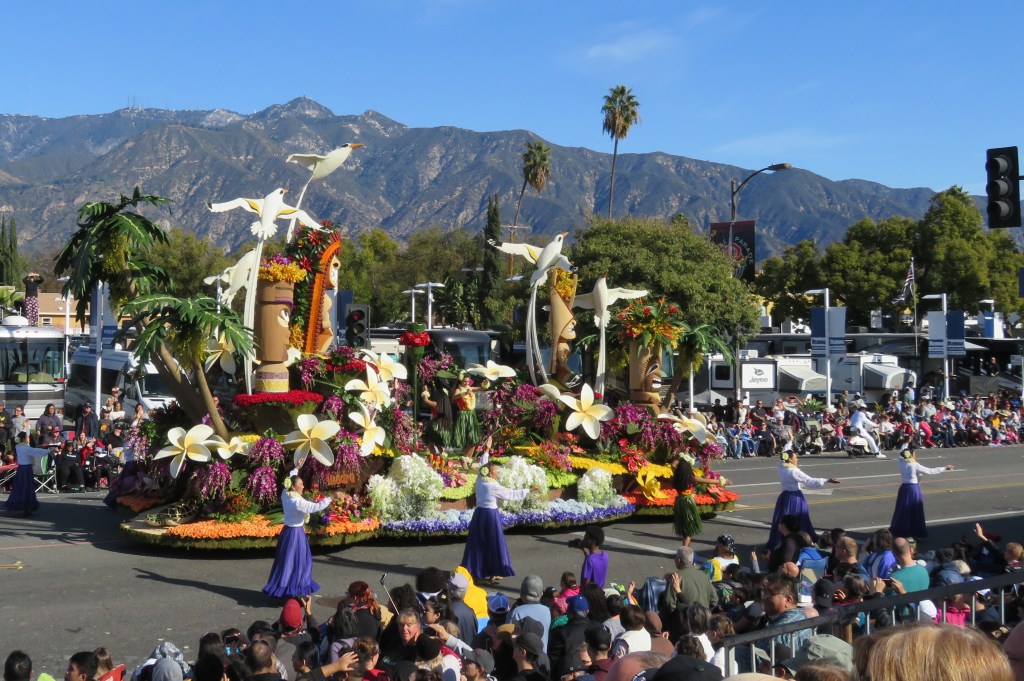
Flowers that immediately made me think of home – Frangipani (Hawai’i float), Heliconia, Bird of Paradise, Anthurium, Red Ginger. Watching the parade also made me think of carnival, cropover, and Junkanoo. Junkanoo in the Bahamas is perhaps the most similar in terms of the full live bands, but the atmosphere is completely different for that event.
Stiltwalkers and music played by bands of El Salvador and Puerto Rico also reminded me of home.
Stilt walkers from Banda El Salvador: Grande Como Su Gente
Few men dancing and in flag section of bands; few women playing instruments
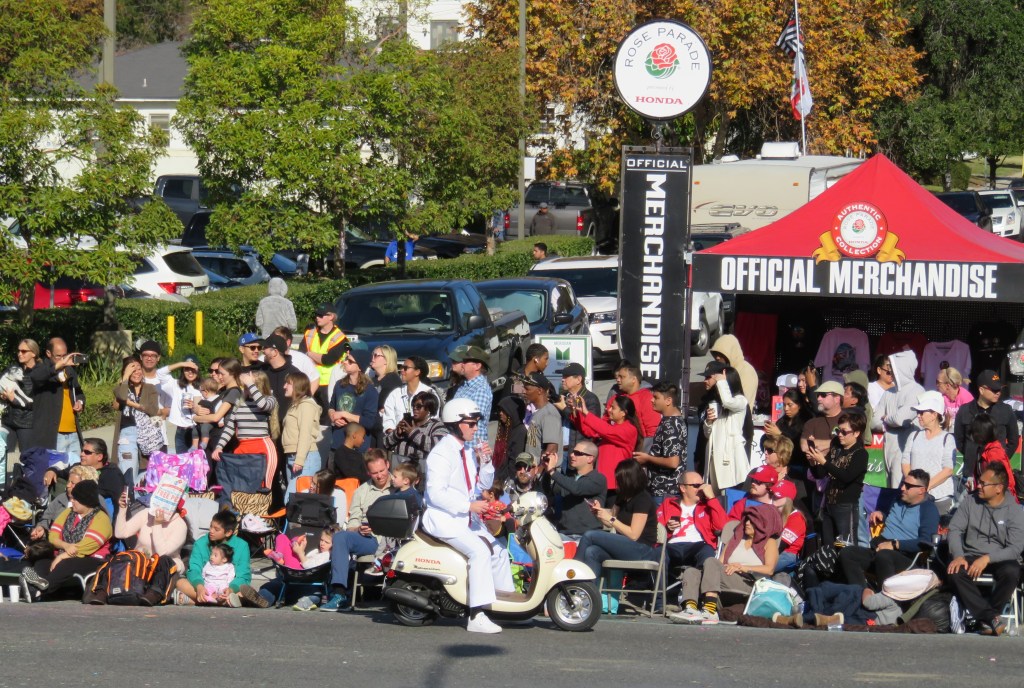
Parade marshalls “white suiters” on Honda cycles that looked kinda small.
When you turn up expecting to tow the float into position, but not pull it in the parade … but then you’re on parade!
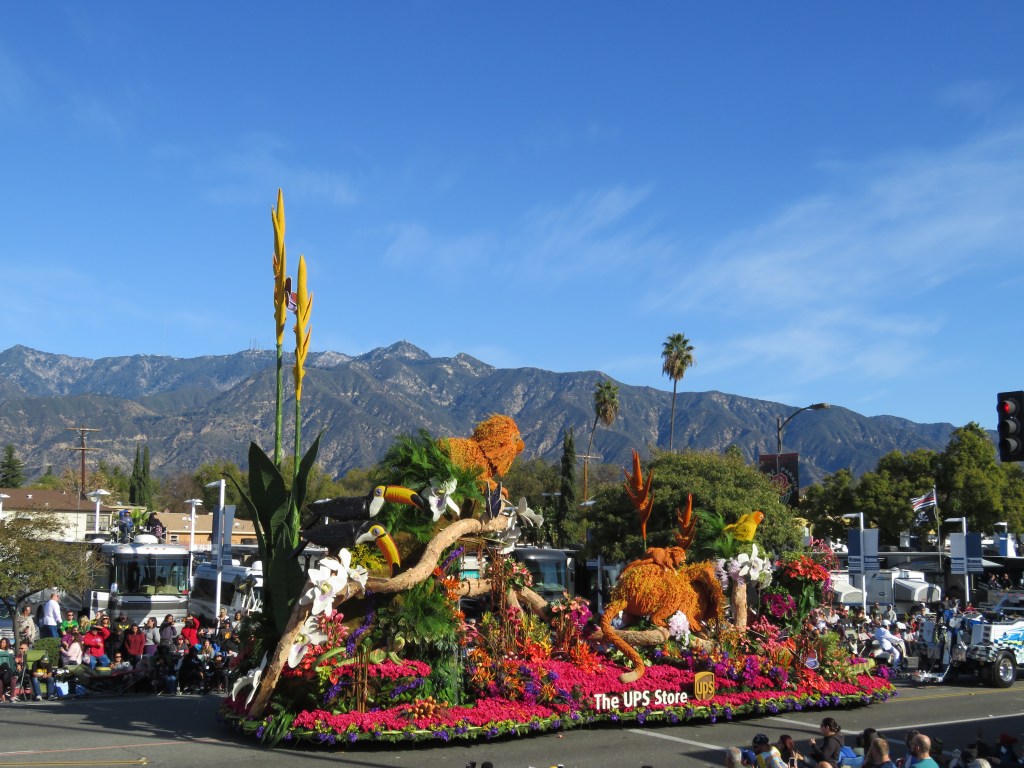
The golden lion tamarin (2nd photo above) did not look excited by the float or the parade 😂.
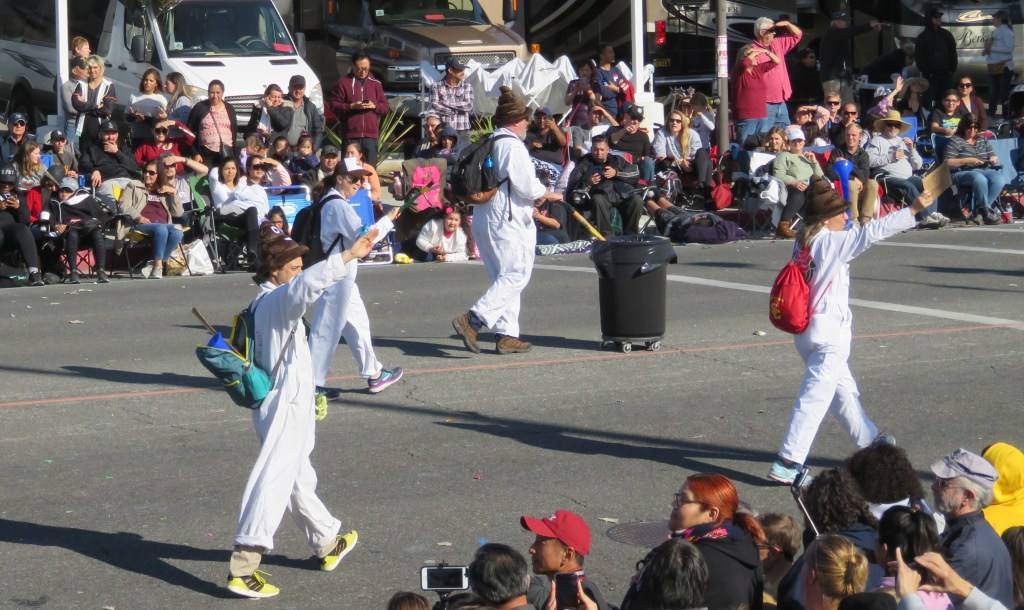
Volunteer pooper scoopers who followed the equestrian units. I saw at least two teams scooping. The team pictured below were appropriately hatted 😁. A necessary service with some comic relief.
I Enjoyed the Parade but my Intellect Wasn’t Sufficiently Engaged. Should it Have Been?
The floats that presented ideas about homelessness, healthcare, inclusiveness, food security, the natural environment, and recognizing the centennial of the women’s suffrage in the US (for the first group of women to gain the right to vote) gave a nod to important societal issues, but just a nod. Is it too much to ask for more depth or provocation in the displays at this type of event? Perhaps. Perhaps parade is merely an opportunity for people to disengage and be entertained by a beautiful event while leaving the hard thinking for another time, a different event. Yet my impression of the parade is based on just one experience of the event. Maybe there were more thought-provoking or controversial floats at previous events. While I know there are critiques of the parade in academic journals, I may need to experience the event a few more times to do a proper evaluation.
What a year indeed! For the most part, 2019 was a wonderful year of me living my best life. I started the year with family and friends and ended it with friends.
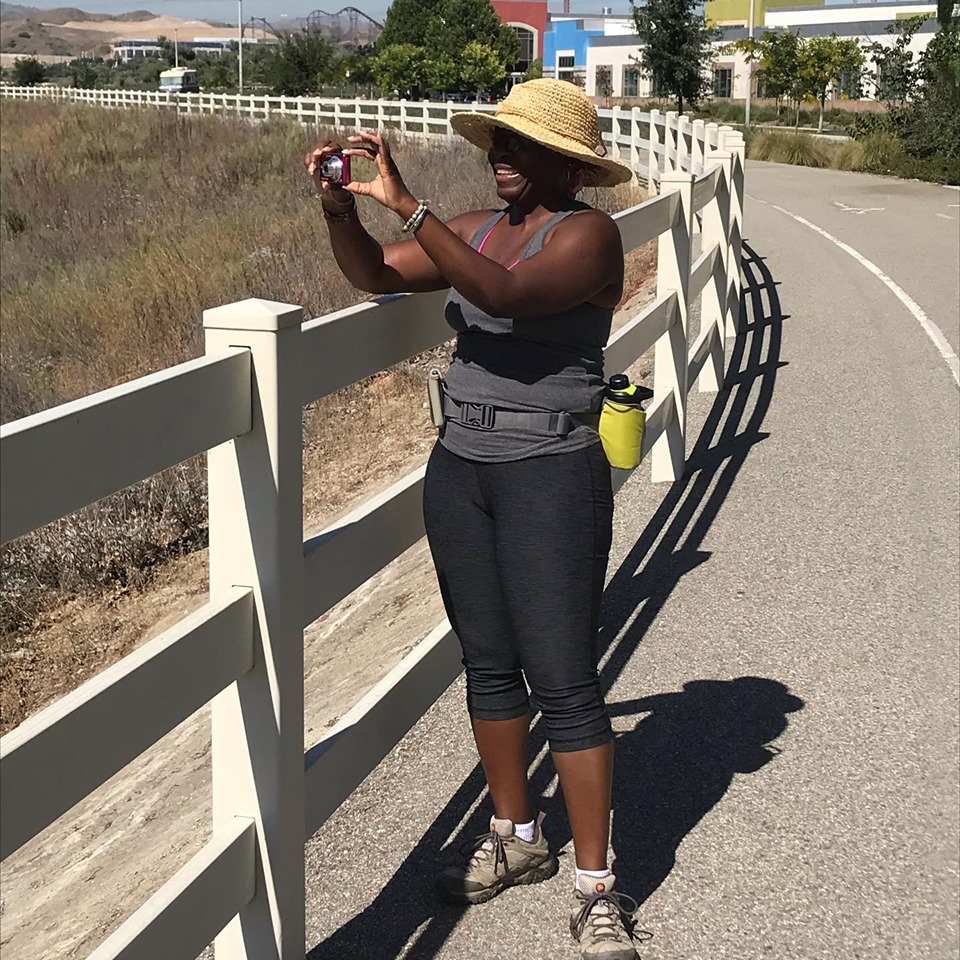
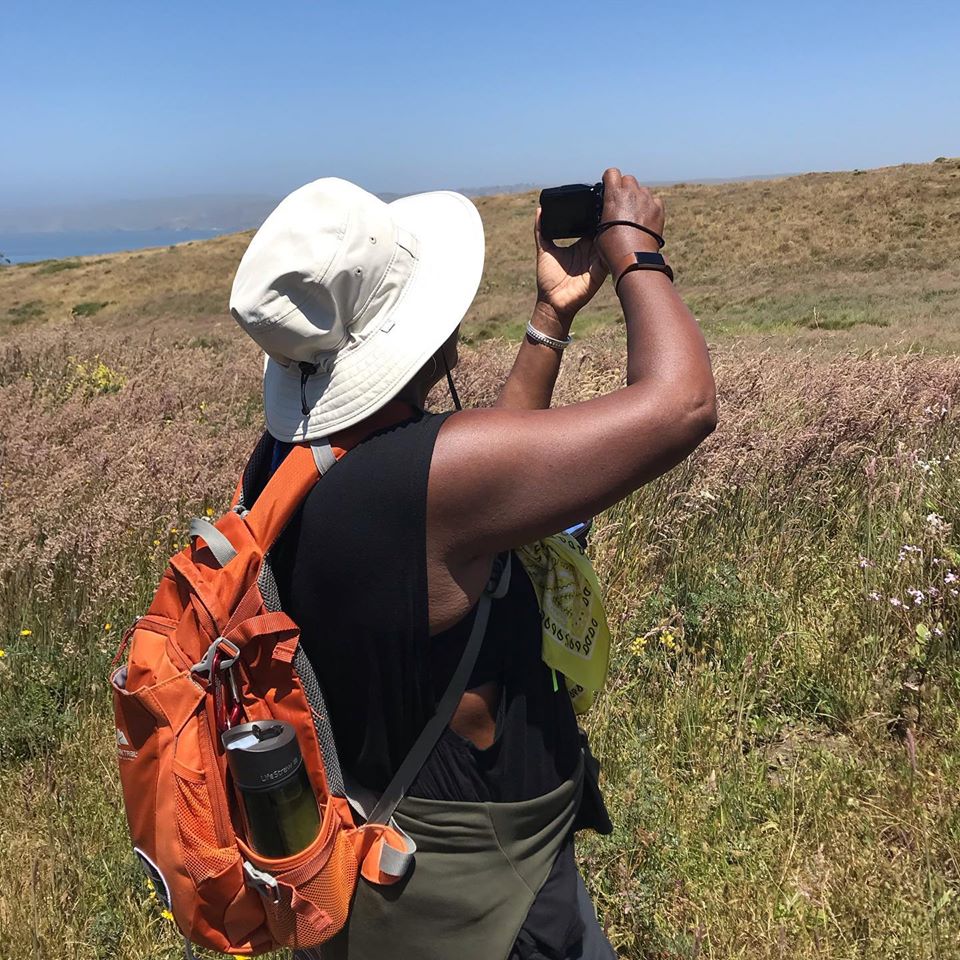
Hiking, taking photos, and loving life
I first thought about blogging a few years ago, but kept pushing the thought aside. I finally committed to the blog in March, spurred on by a promise I made to my students to blog while they journalled during our Greece trip. After my first few posts, I decided to try to post at least once per week. That ambitious plan did not quite materialize, but at blog 27, I think I’m close enough. I also took about a month off to write a journal article, so I’ll give myself a break 😊.
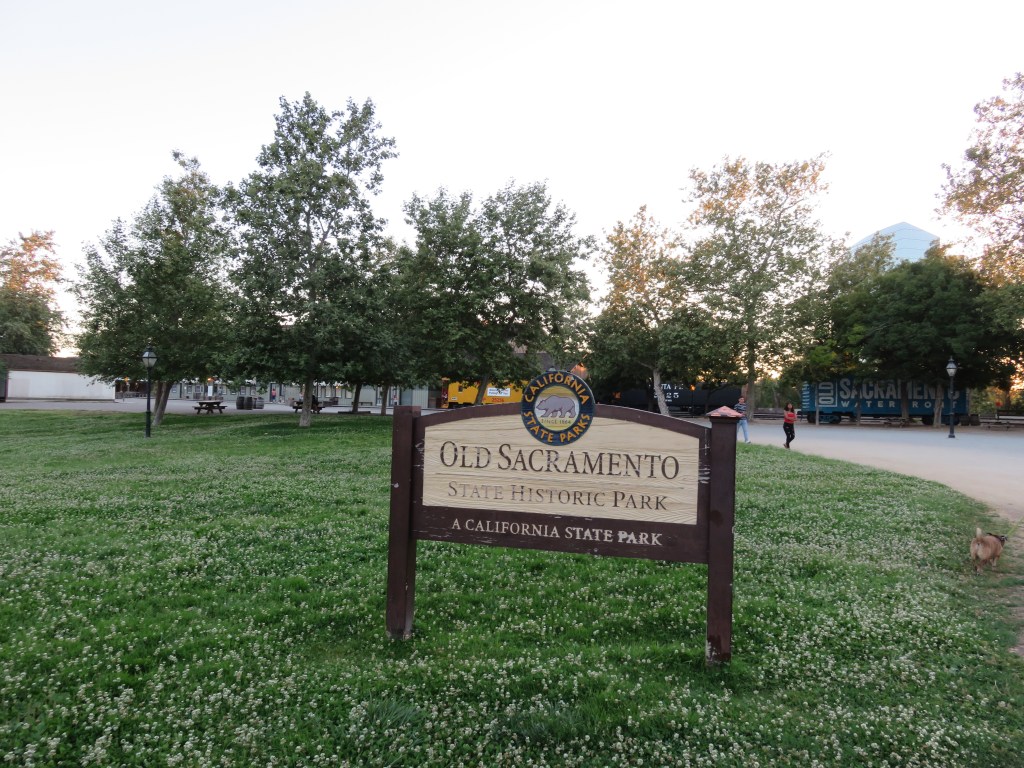
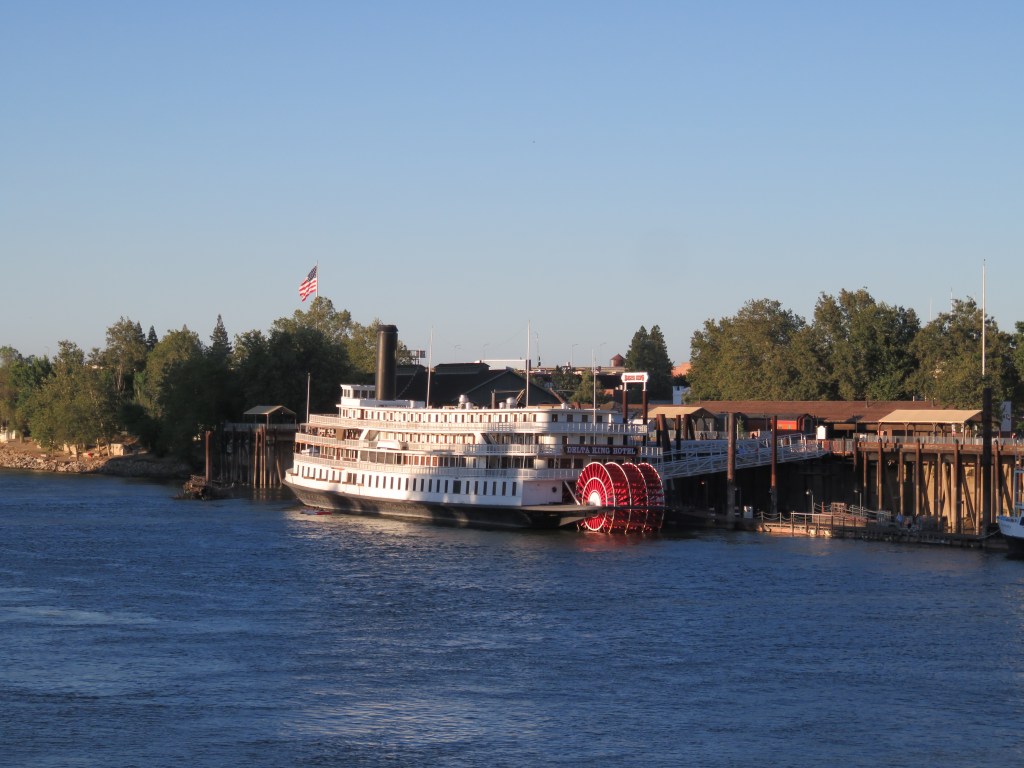
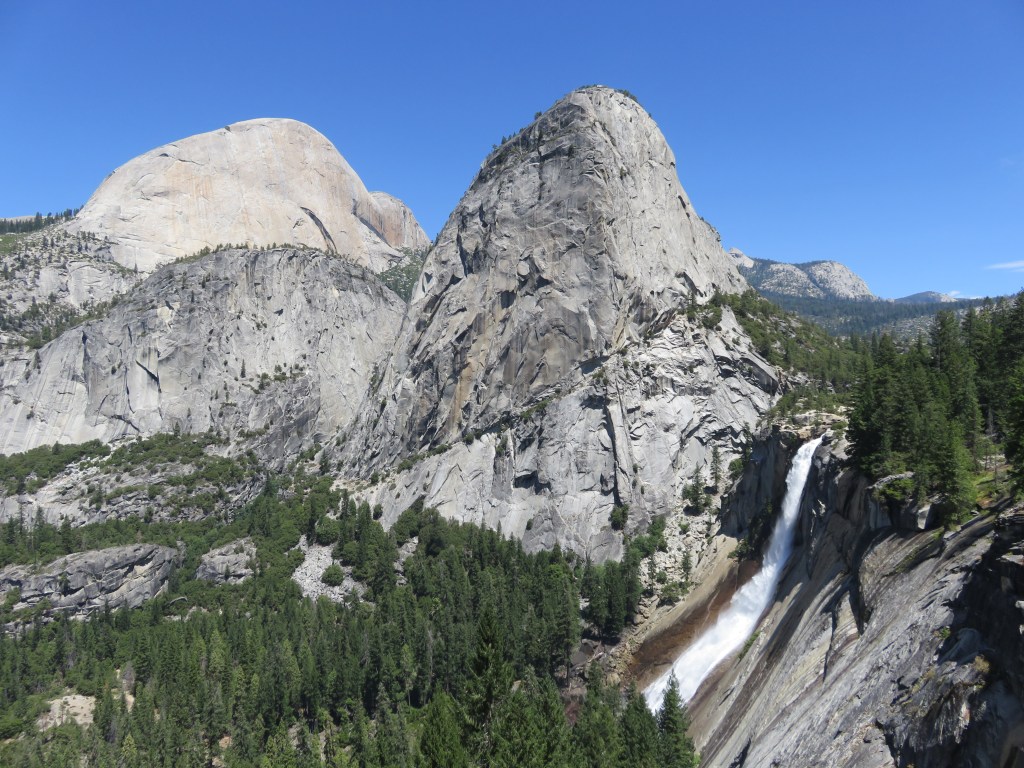
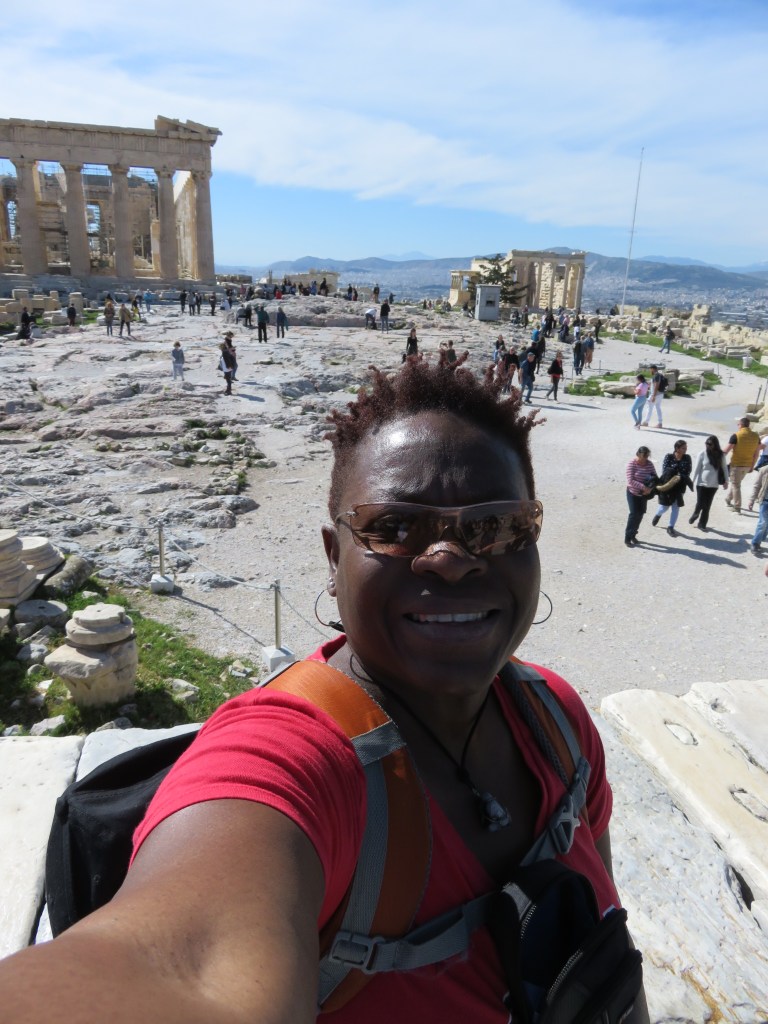
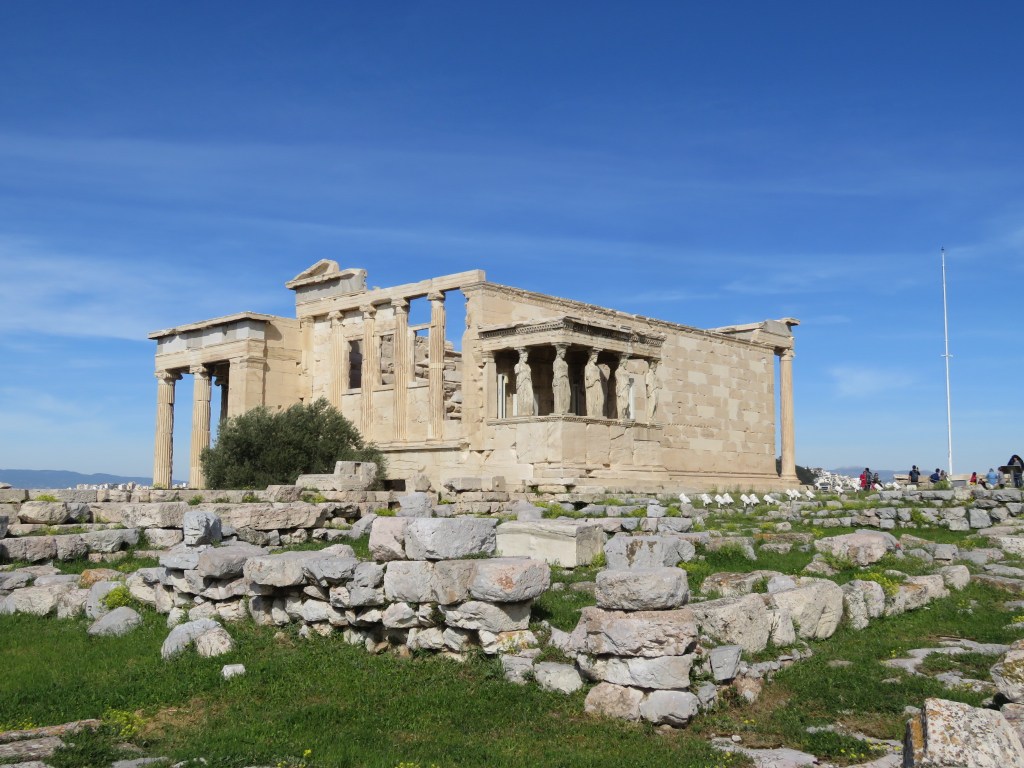
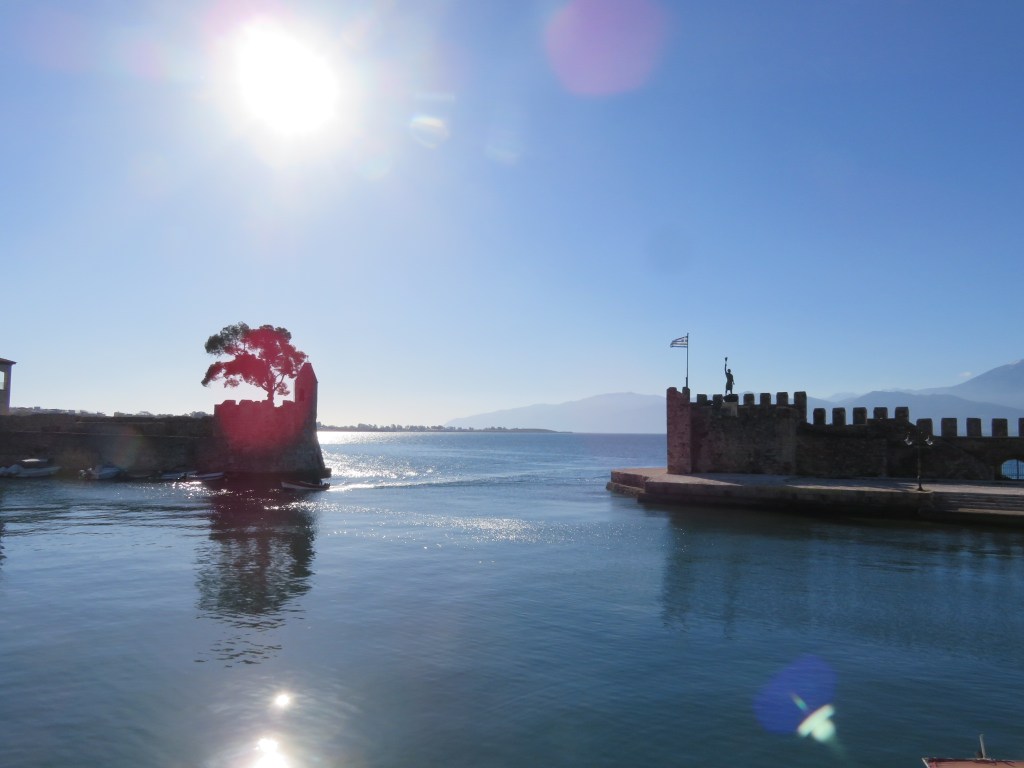
In 2019 I travelled for pleasure, bleisure, and work; alone, with friends, with colleagues, and with students; in state, out of state, and to other countries. My travels this year took me to Joshua Tree National Park (it’s over 160 miles away from home and I stayed overnight so it counts), Sacramento & the Bay Area, Yosemite, Santa Cruz, Tennessee, Kentucky, Puerto Rico, Boston, Greece, Japan, and saving the best for last, home to Barbados. I posted about most of my travels in this blog, so if you haven’t been following, go check them out 😁.
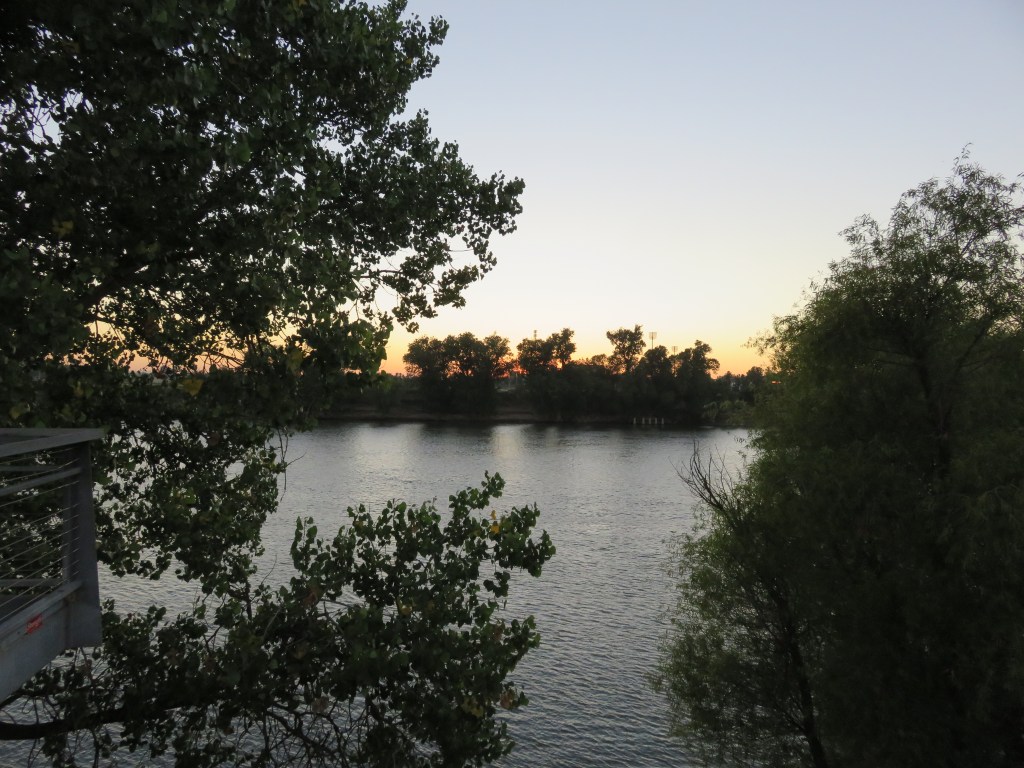
American River, Sacramento
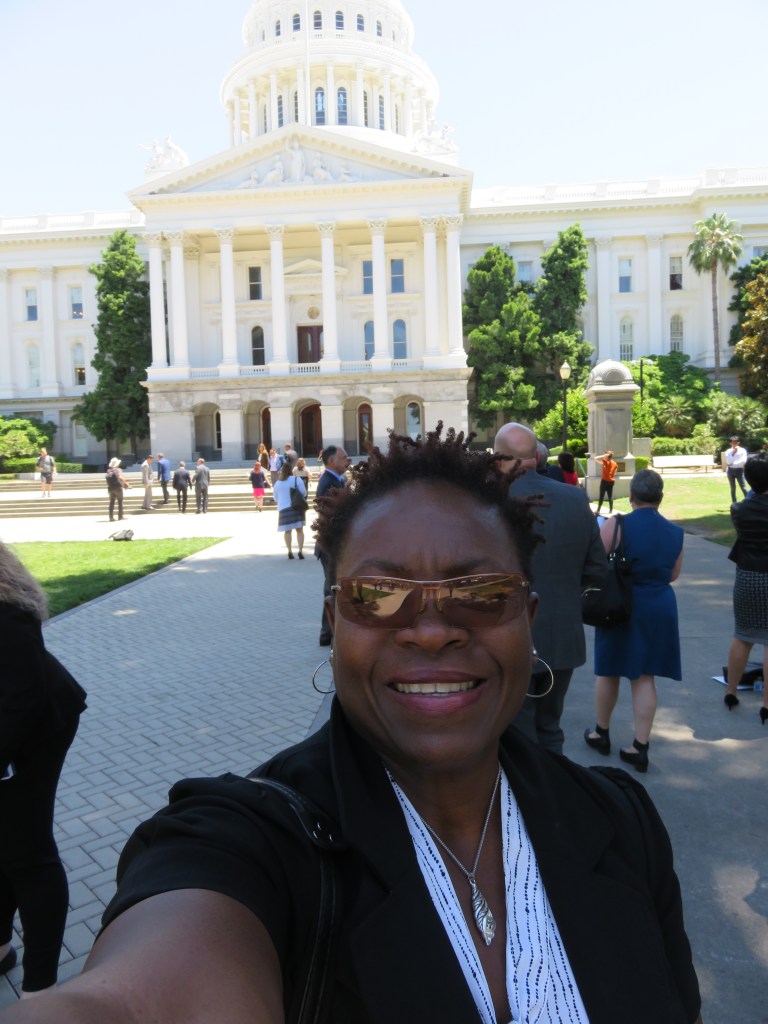
At the State Capitol
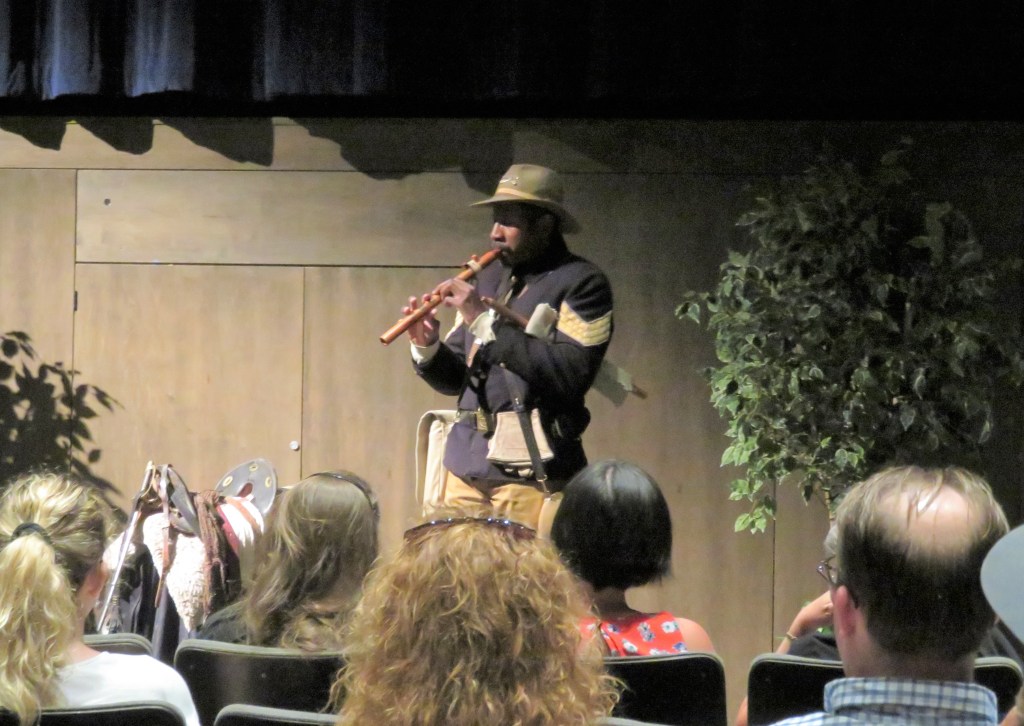
Shelton Johnson reenacting a Buffalo Soldier at Yosemite
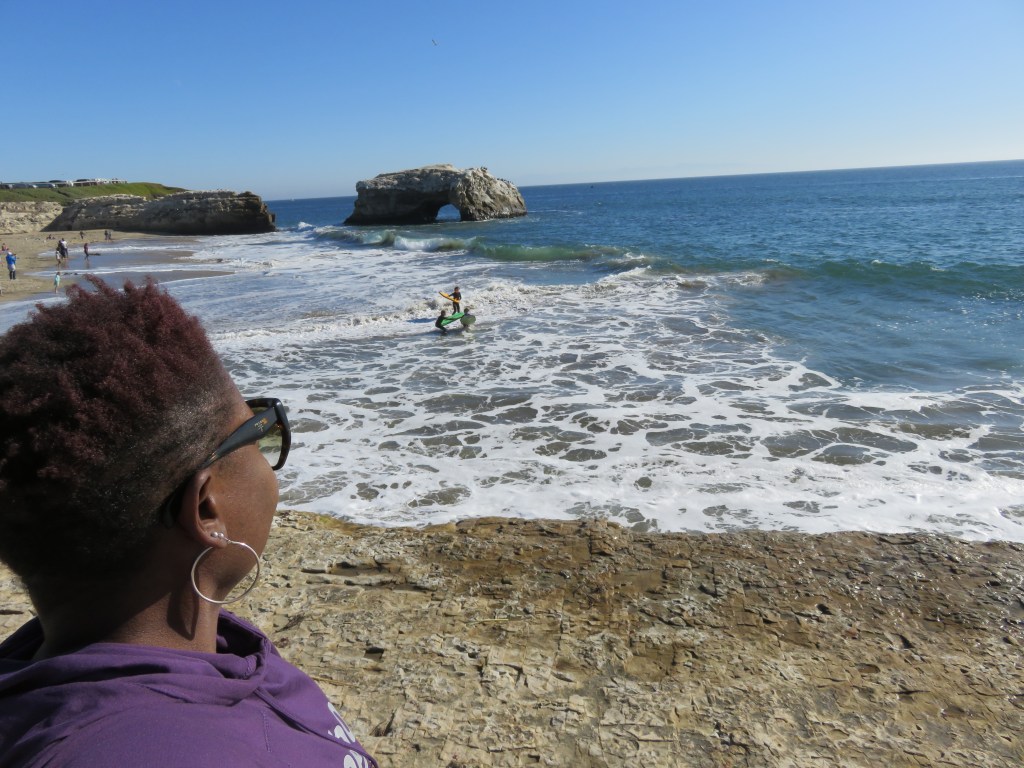
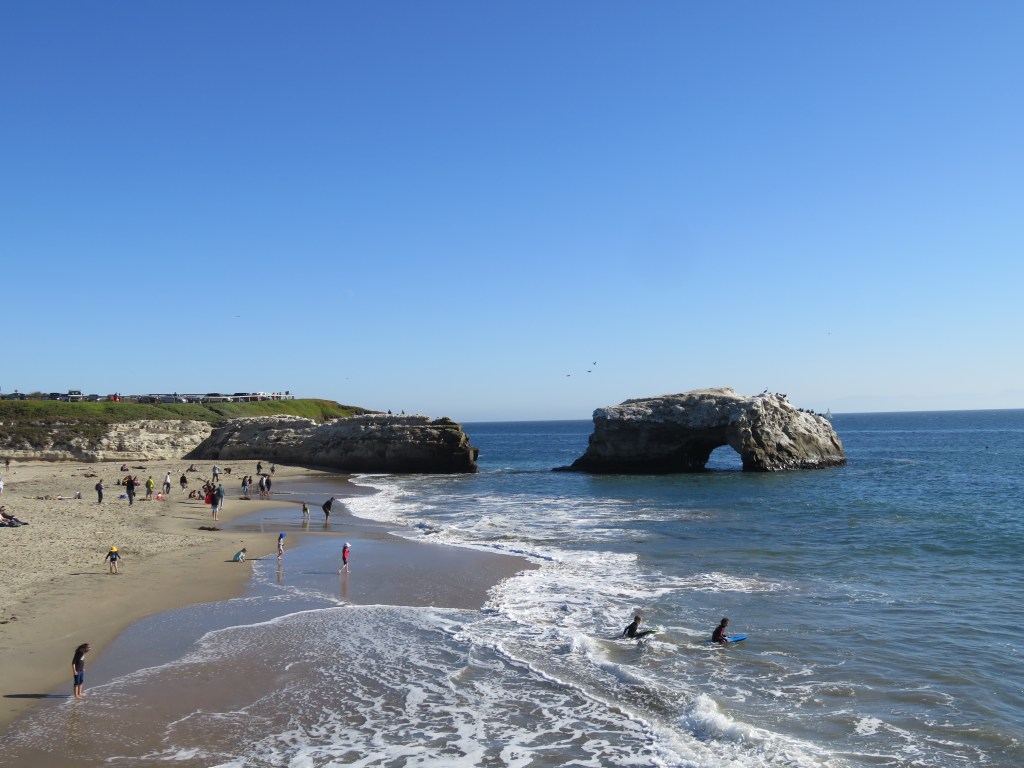
Natural Bridges State Park
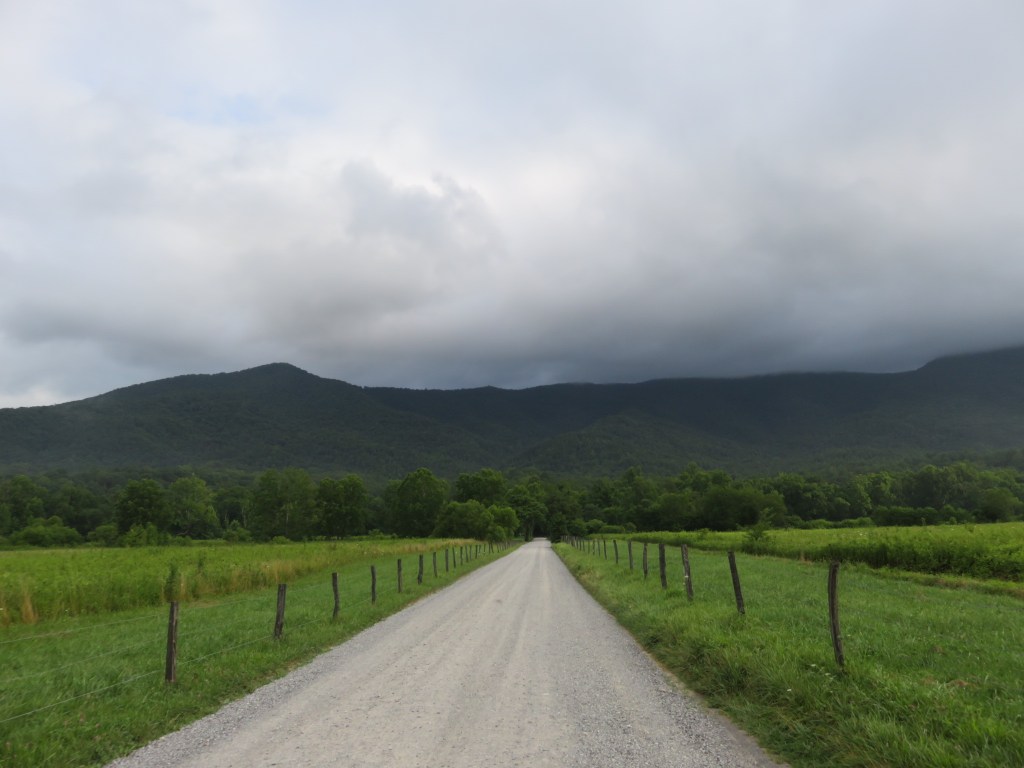
Tennessee
Kentucky
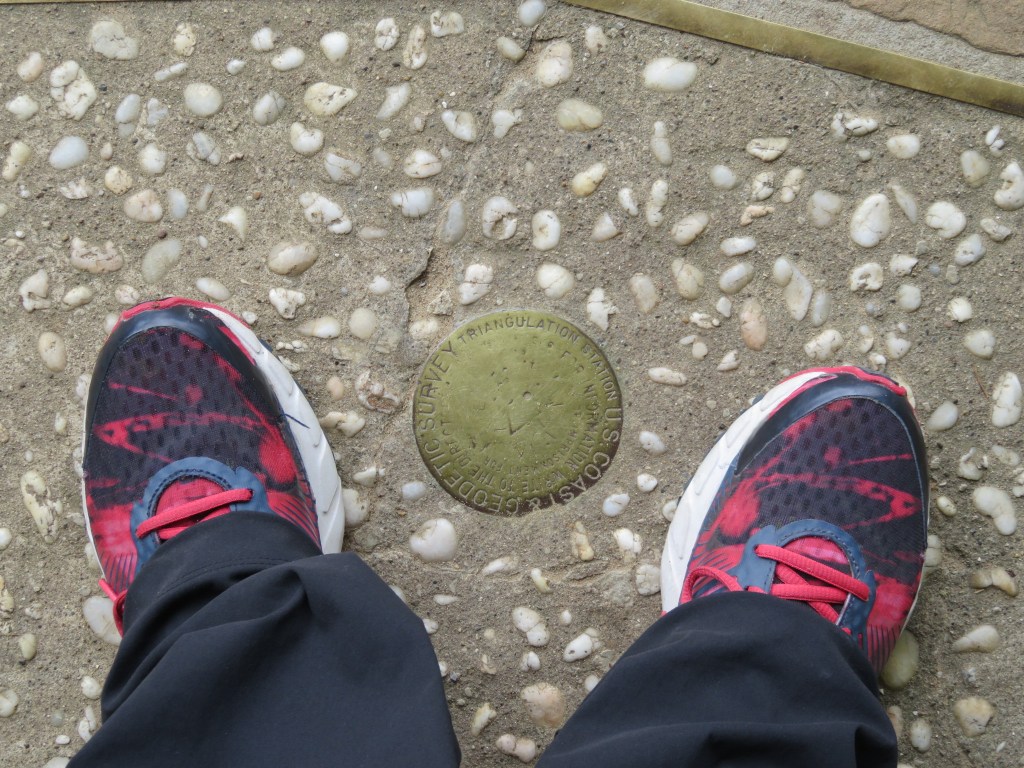
I was in Virginia, Tennessee and Kentucky all at once
Puerto Rico
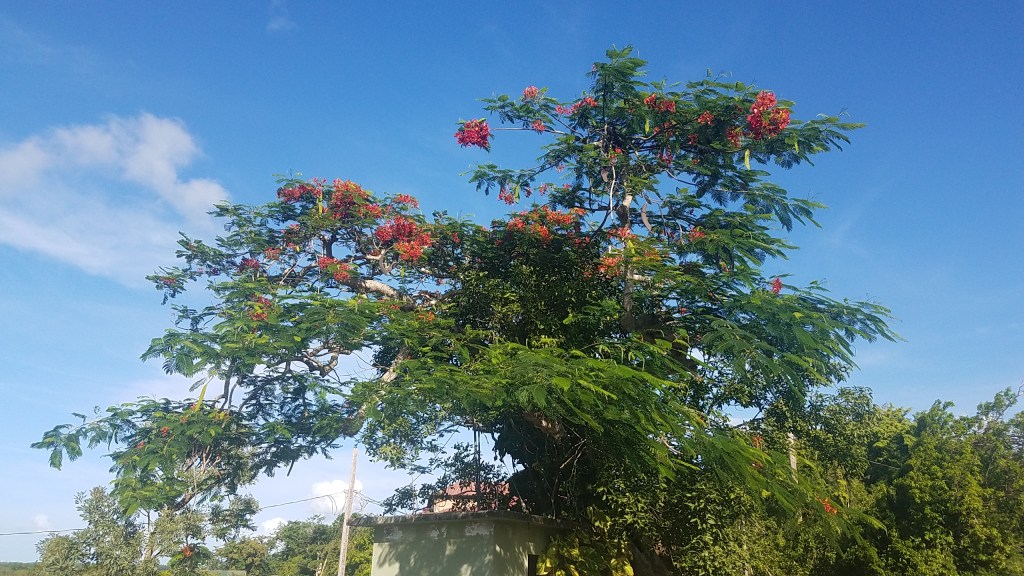
Flamboyant in Puerto Rico
Boston
Greece
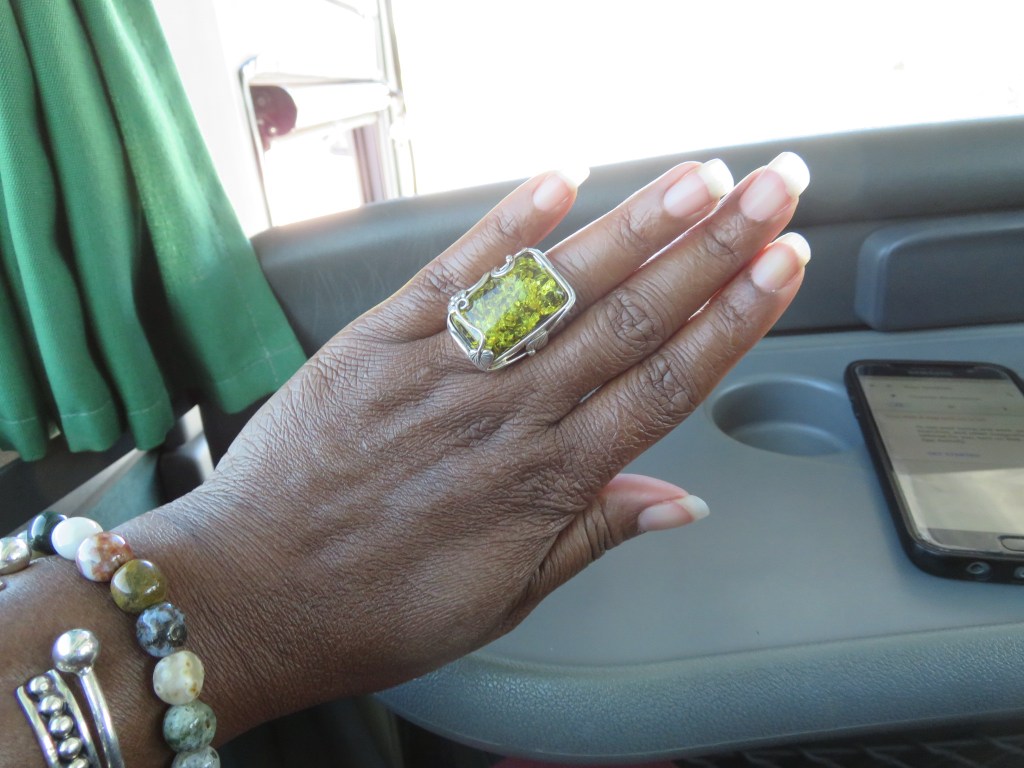
A souvenir from Greece 😁
Japan
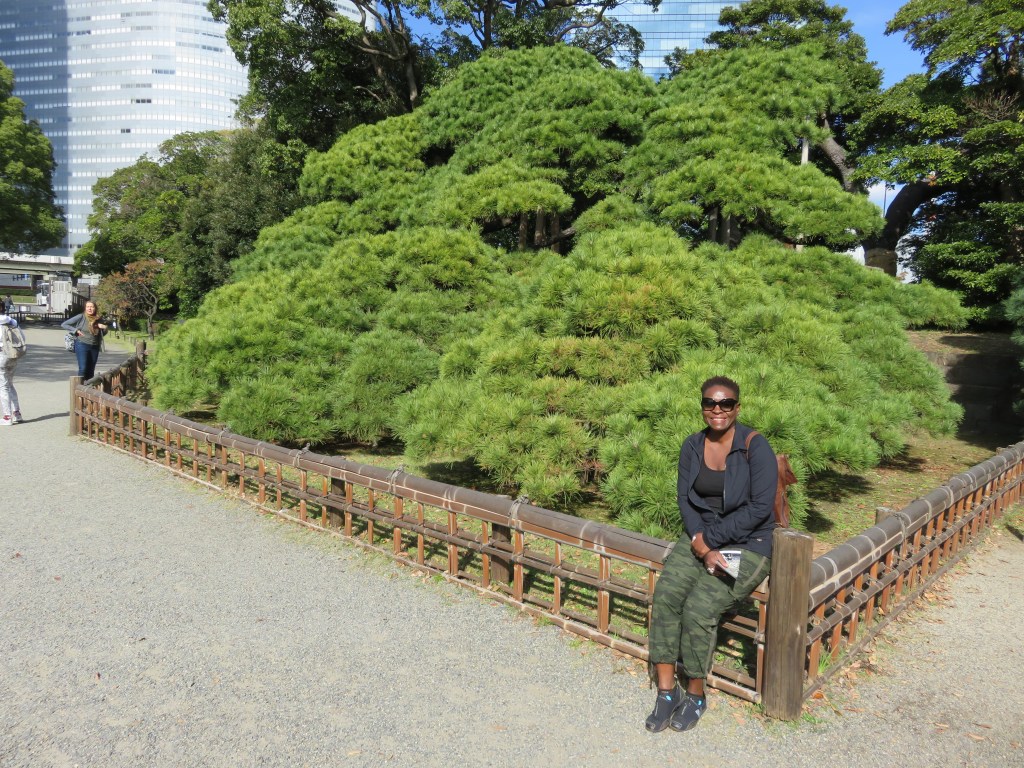
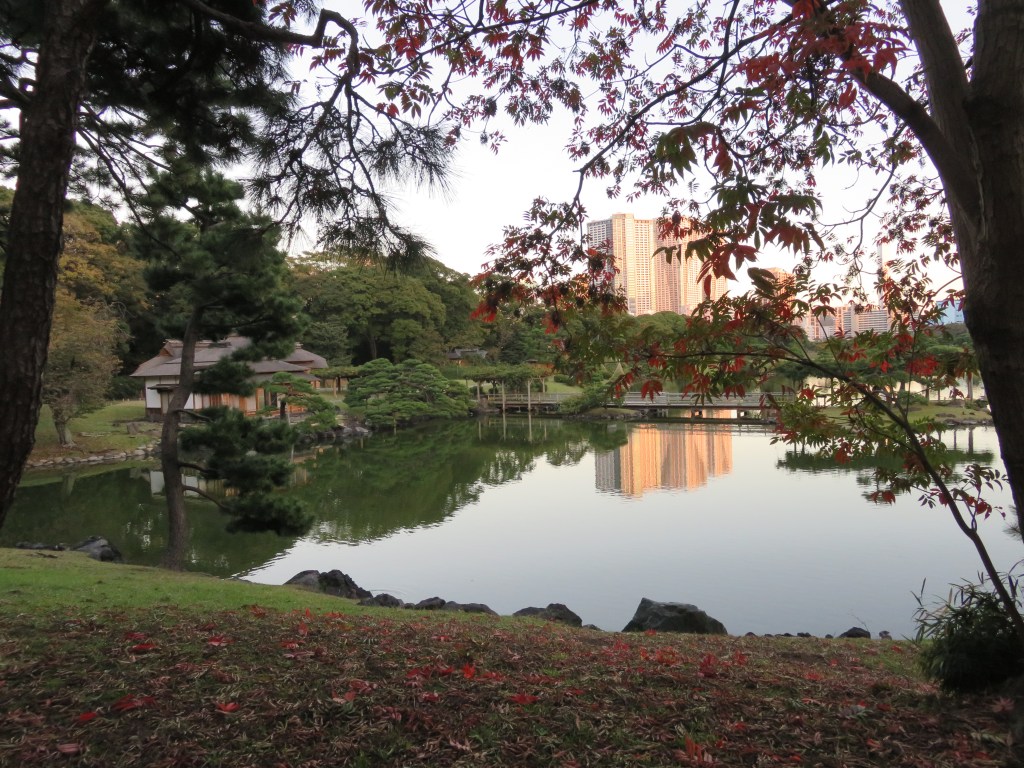
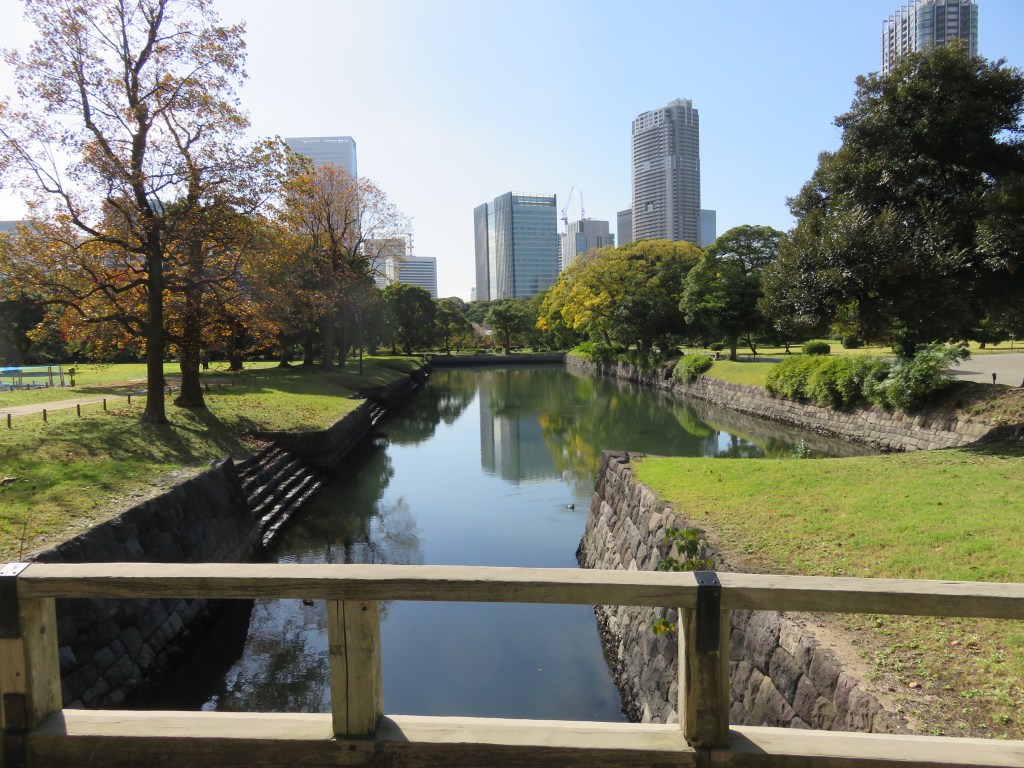
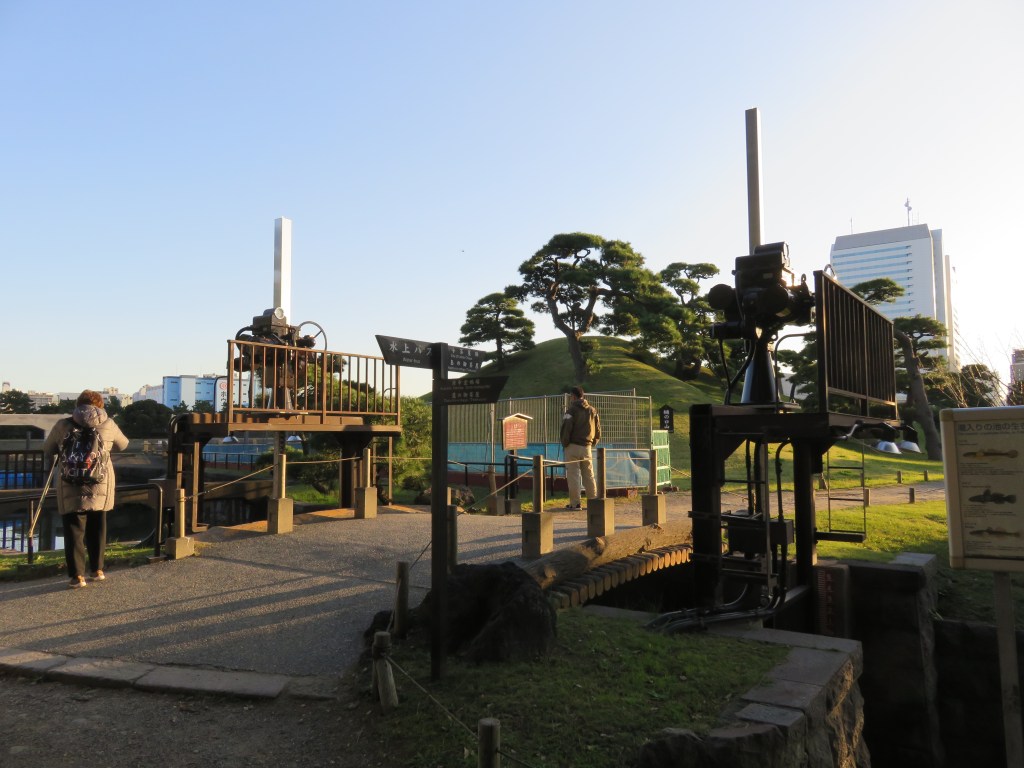
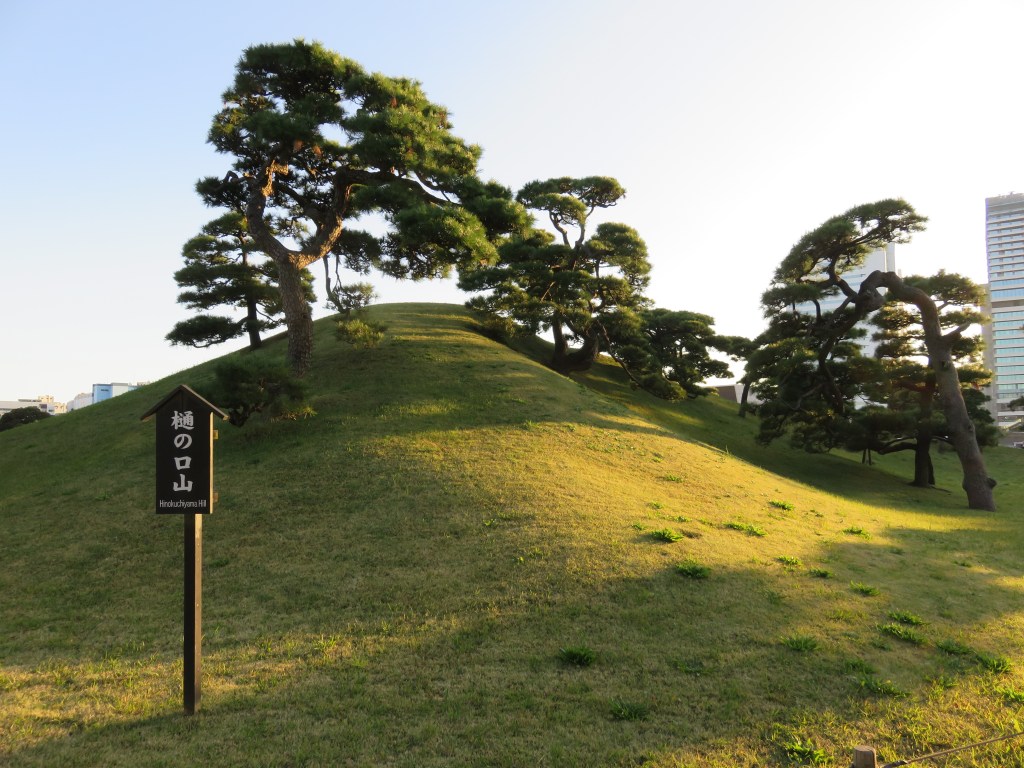
Beautiful Japanese garden
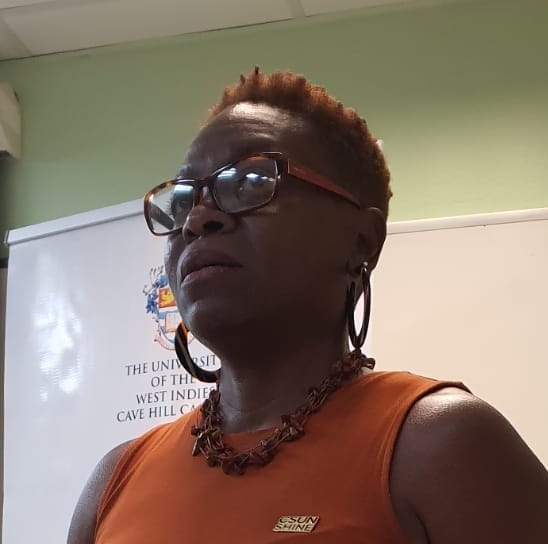
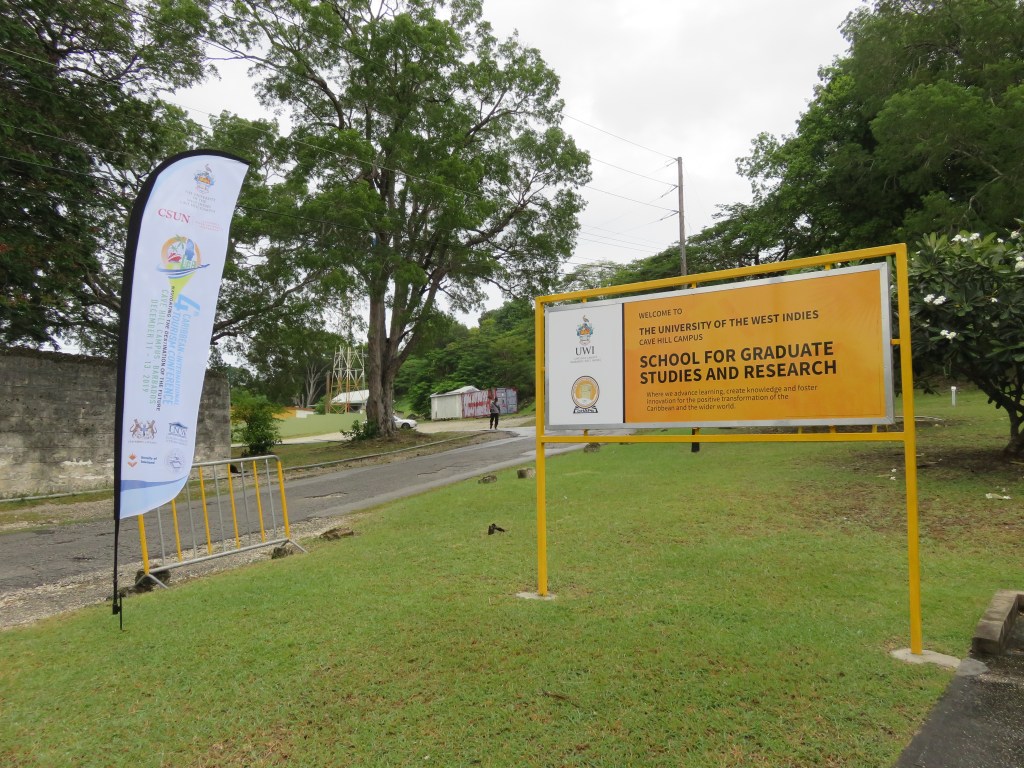
At my Alma Mater in Barbados – the University of the West Indies, Cave Hill Campus
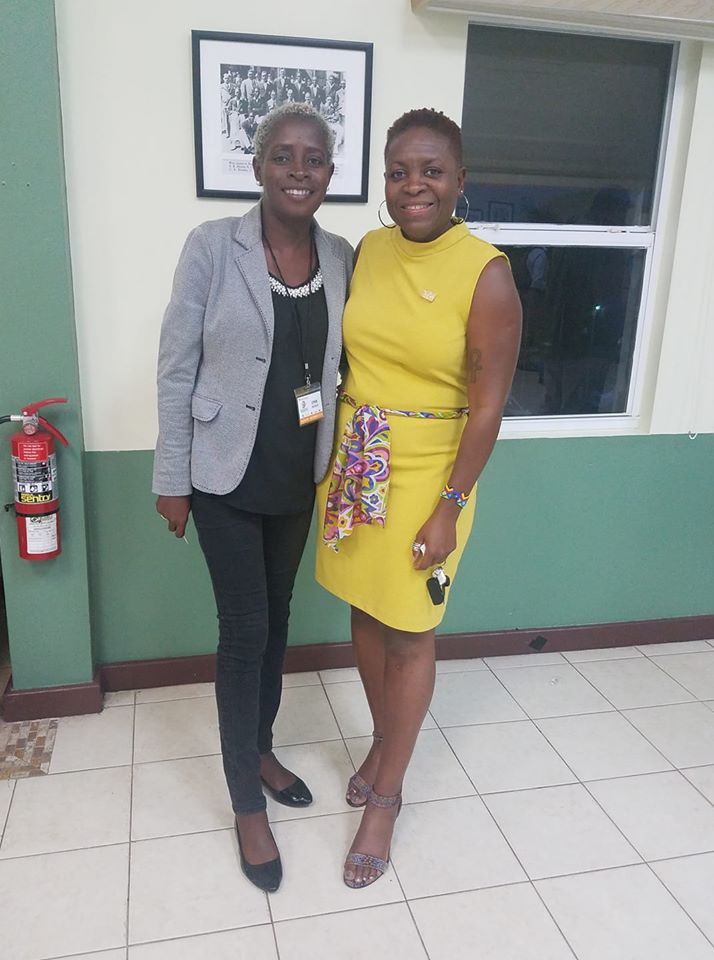
With Lynn, my lifelong friend
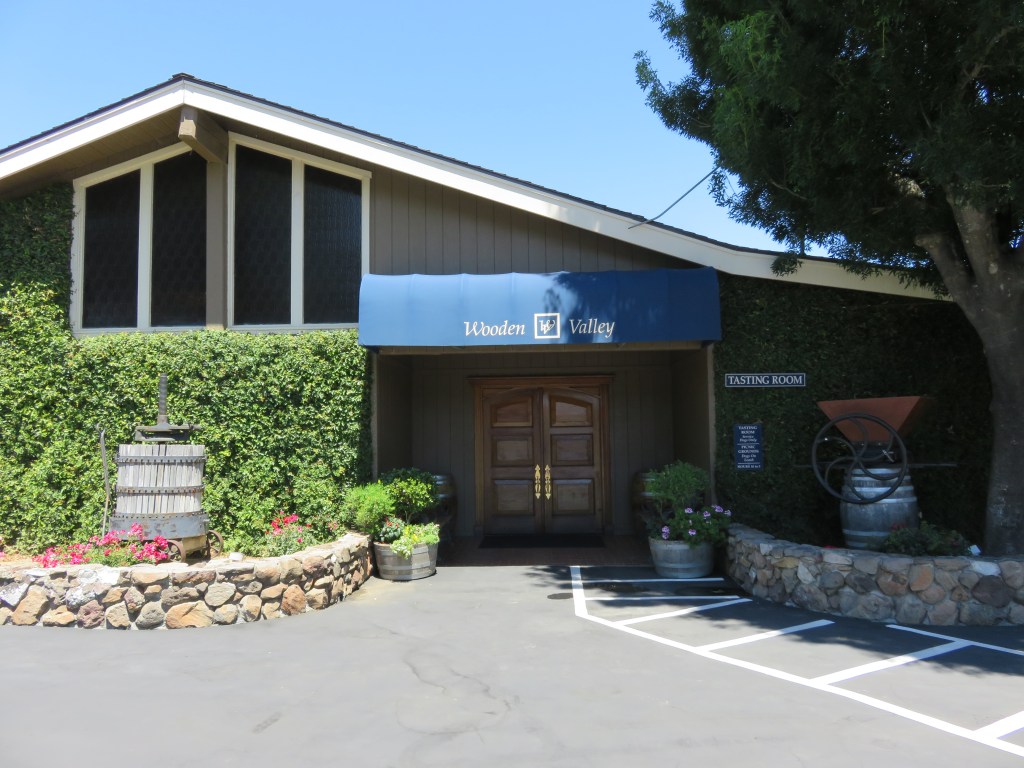
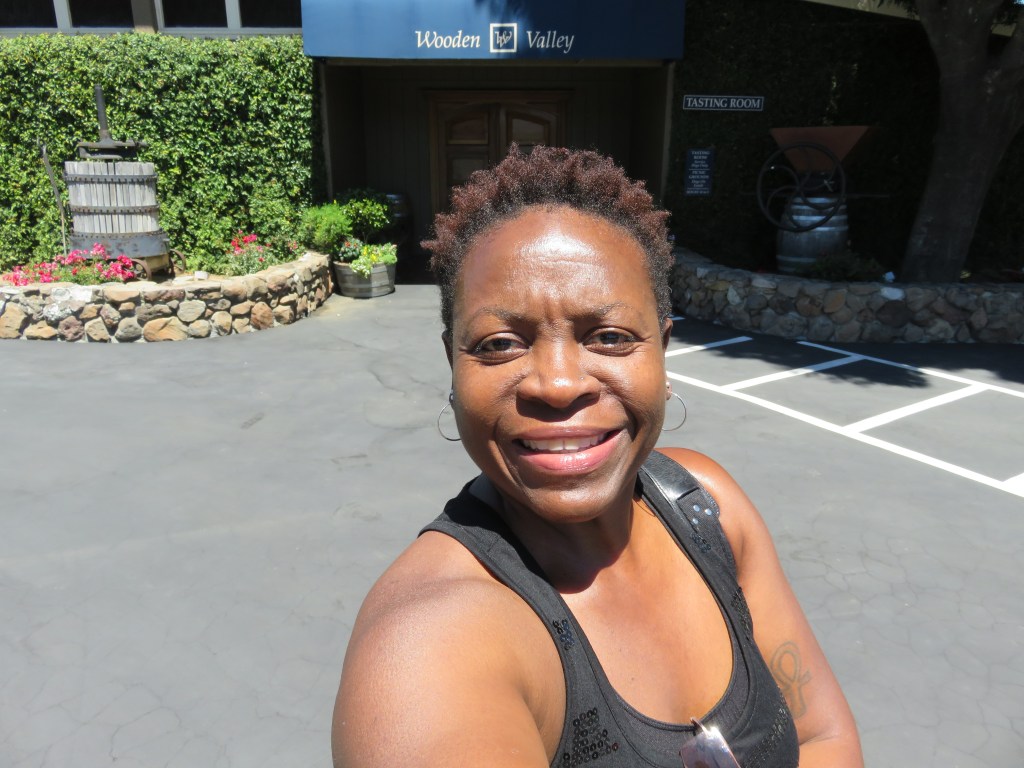
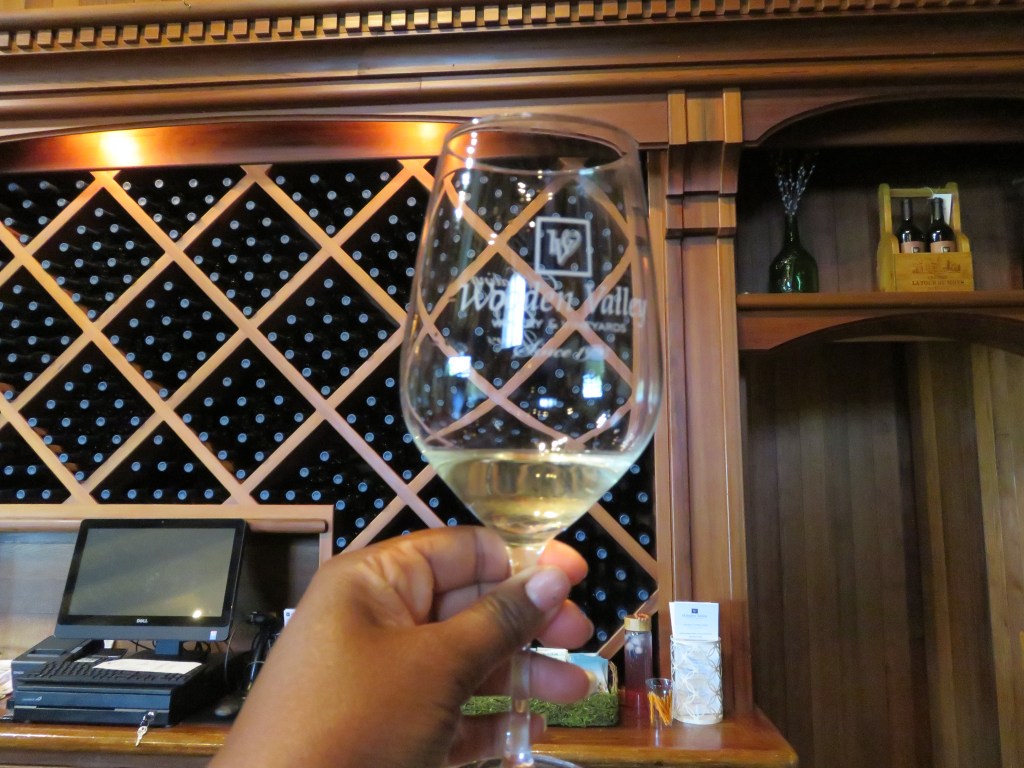
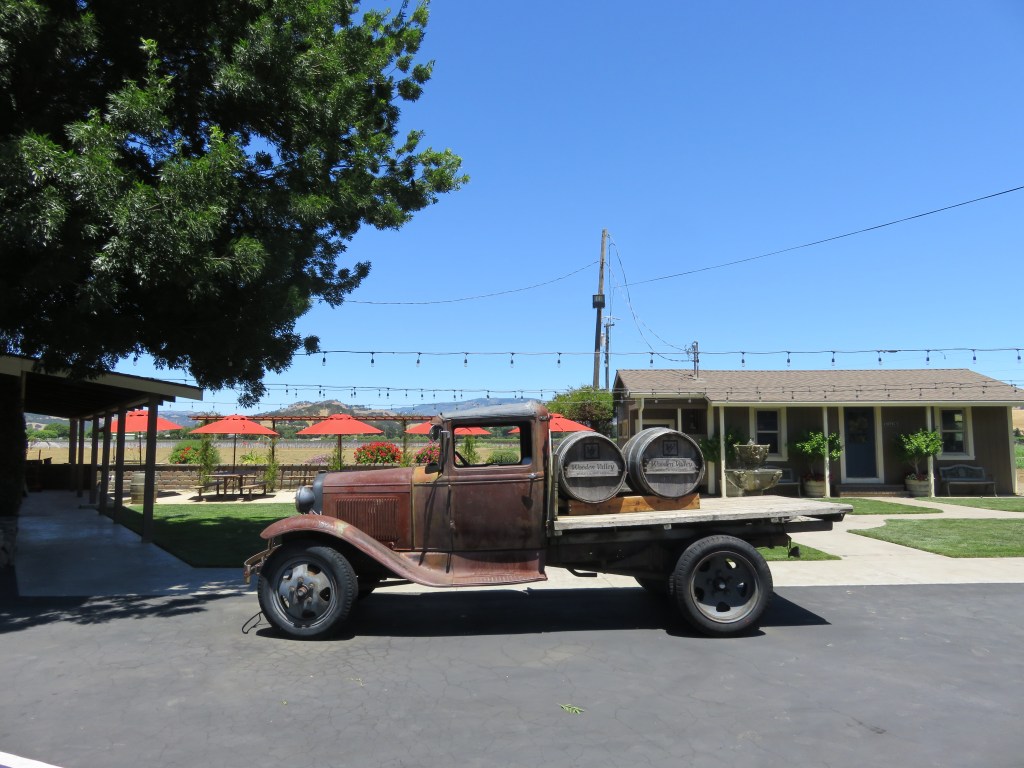
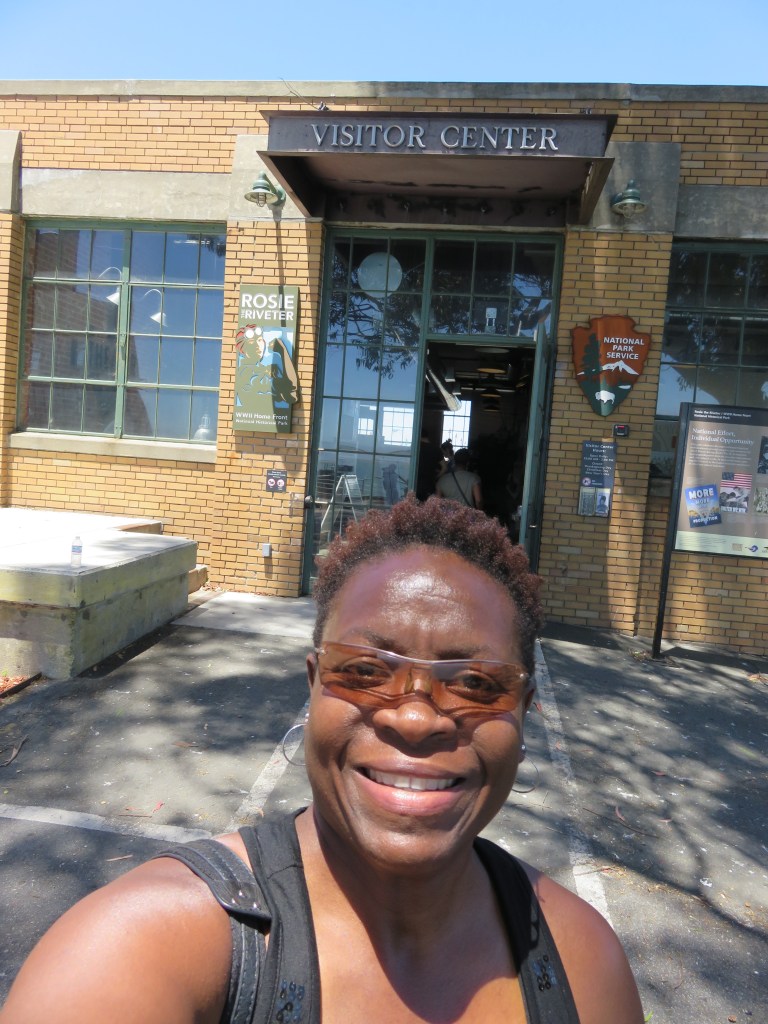
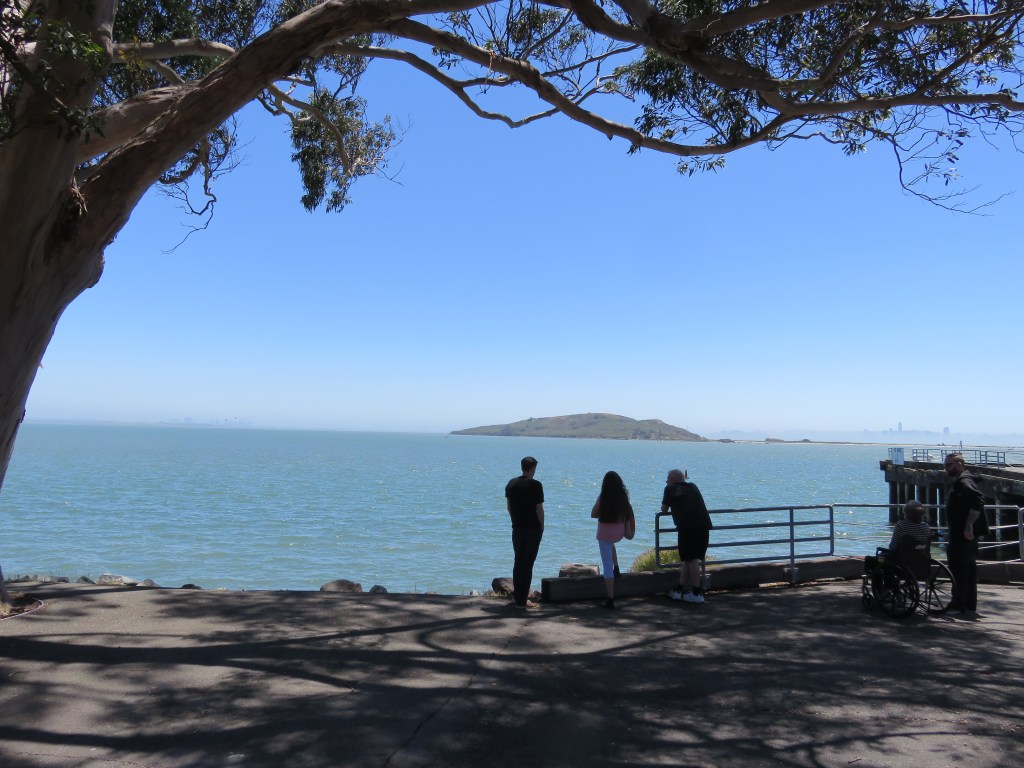
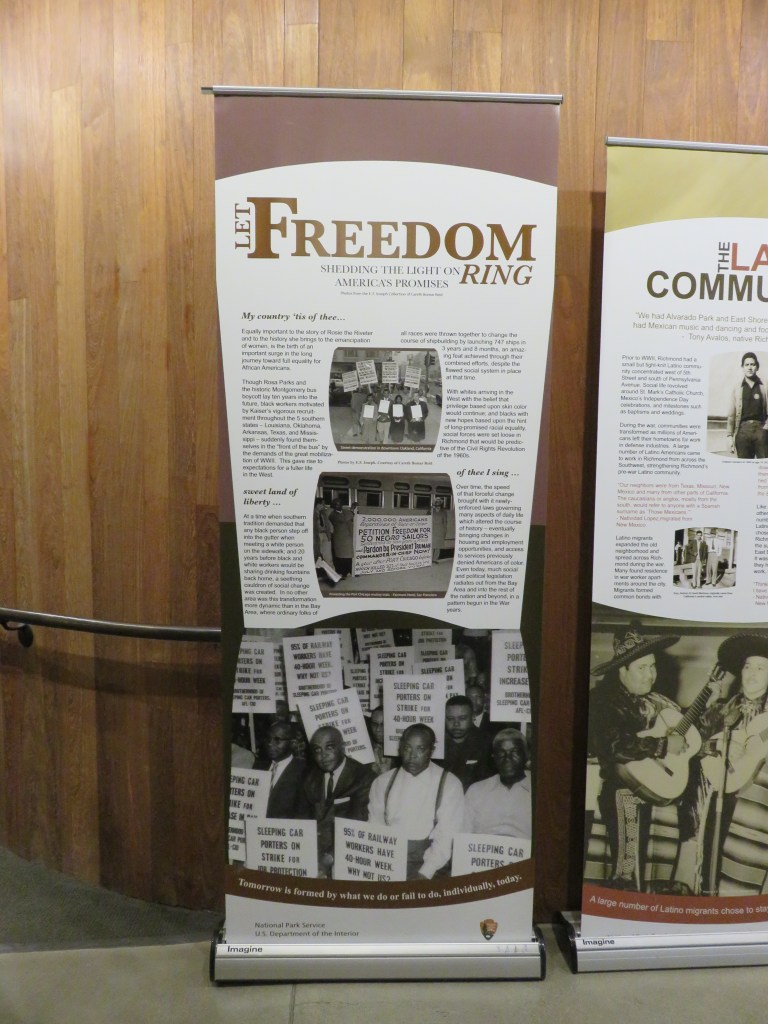
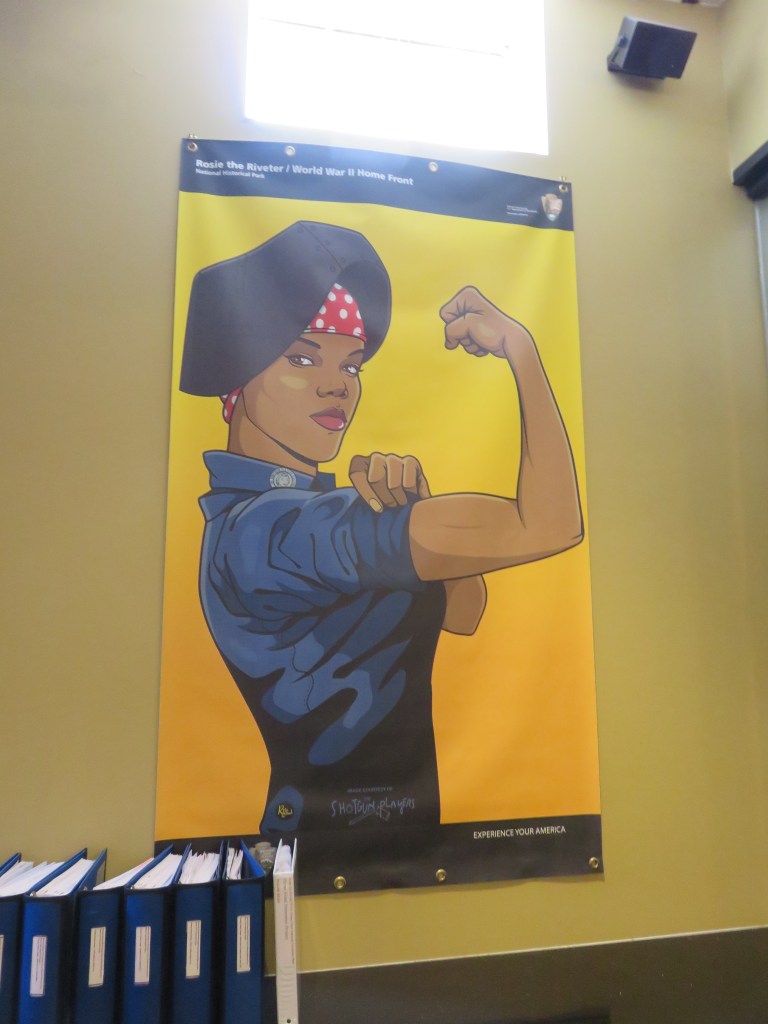
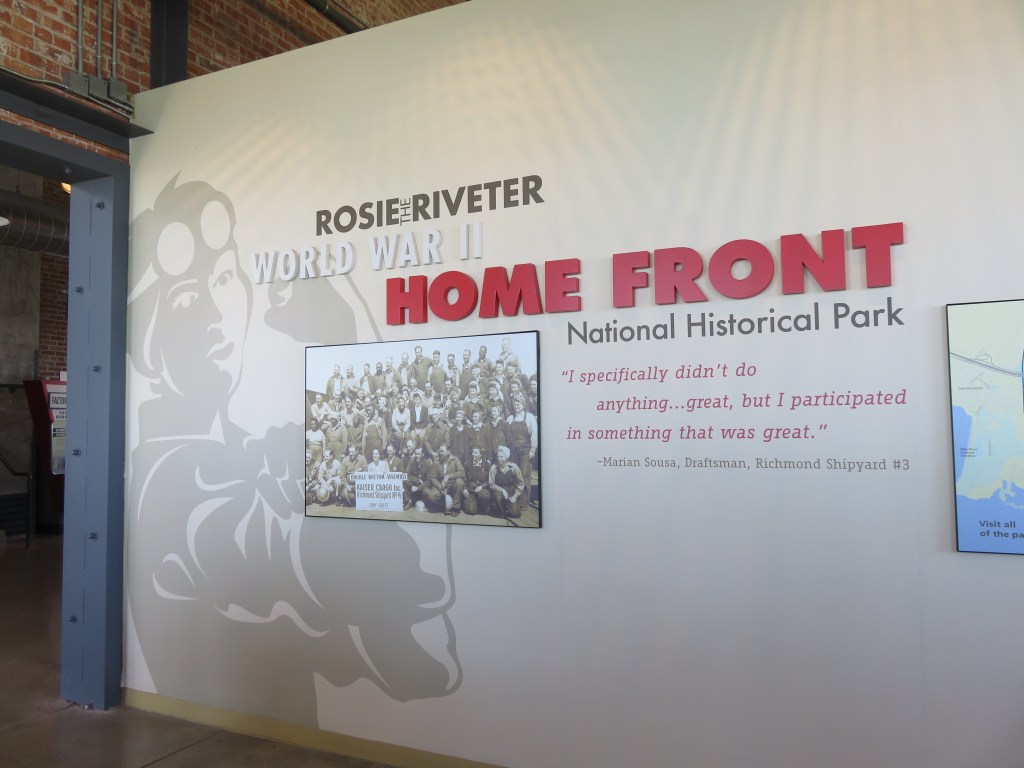
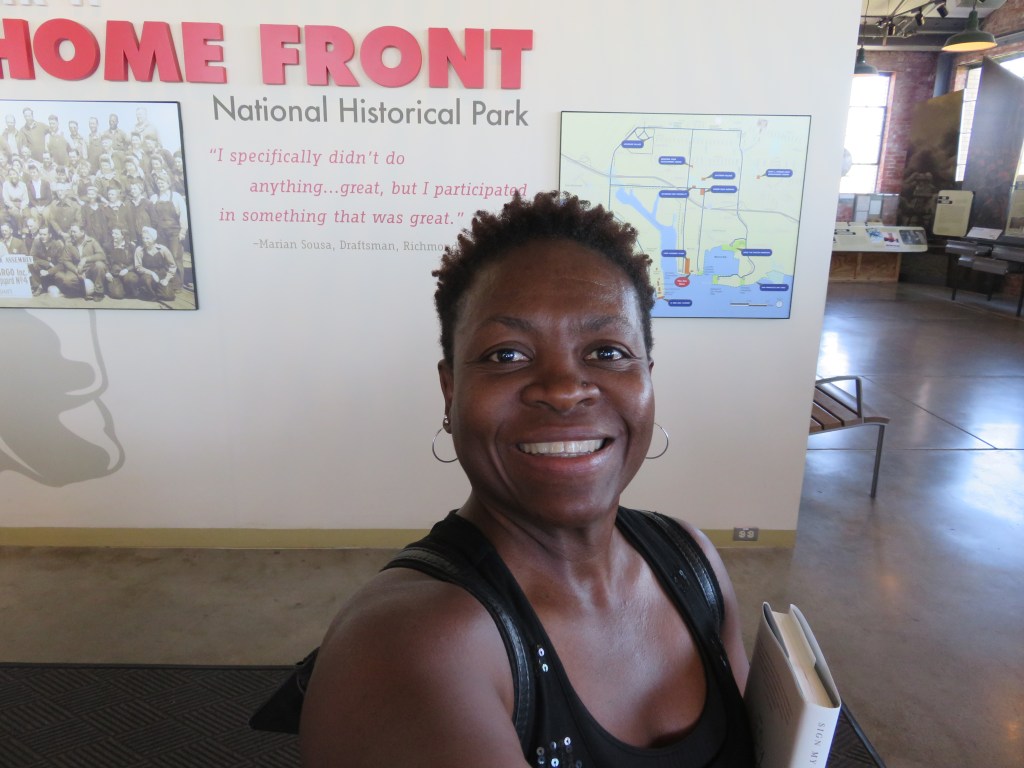
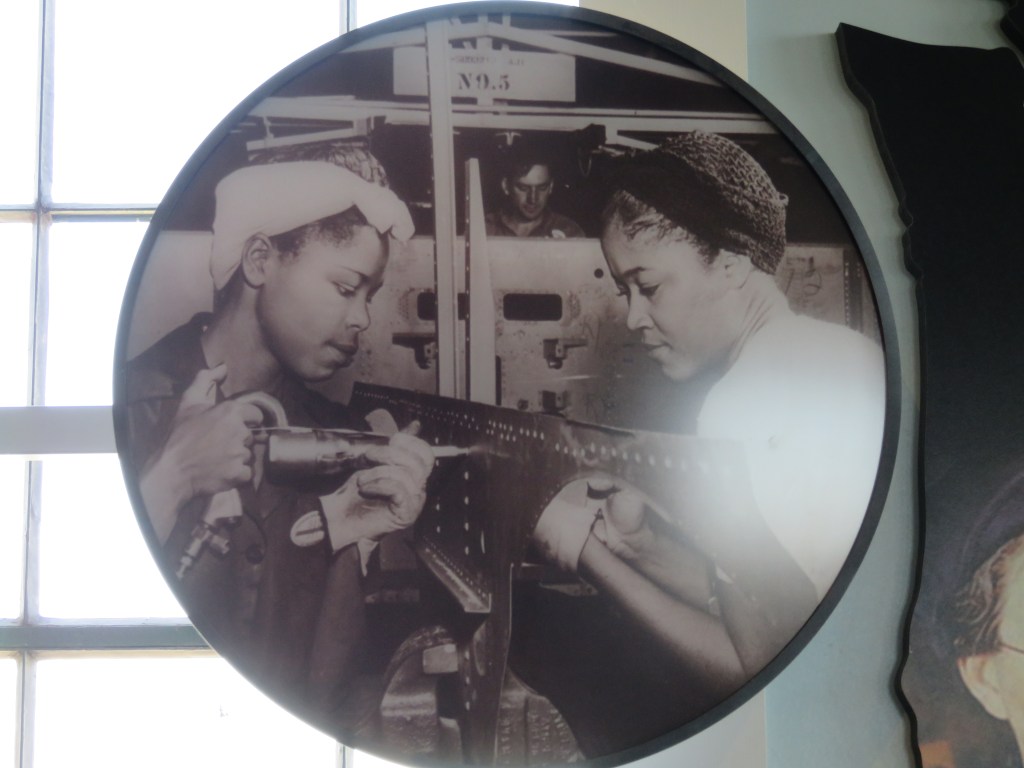
My birthday celebrations in the Bay Area included wine tasting, a visit to Rosie the Riveter WWII Home Front National Historic Park, Louisiana cuisine, strolling through San Francisco, and hiking.
Hiking … Gotta Love It!
While I travelled several times for the year, I also spent a lot of time hiking. At the end of 2018, I decided that in 2019 I would complete the 52 Hike Challenge – Adventure Series. My first hike for the challenge was on the first Saturday of the year with my friends Tiffany and Jennetta. We did a short hike and helped with dune restoration at LAX Dunes. I had many other awesome hiking experiences this year – from hikes in ‘my backyard’, to hikes in other states, and other countries and best of all, hikes from my bucket list (Yosemite, Mammoth Cave, El Yunque). Unfortunately, I wasn’t able to hike in Bim, but I’ll make up for that next year. Most of my hikes were with friends, but I got to do a few with family 😊. It was hard to select just a few photos to highlight the hikes 😏, so you’ll have to review the other blog posts to see more.
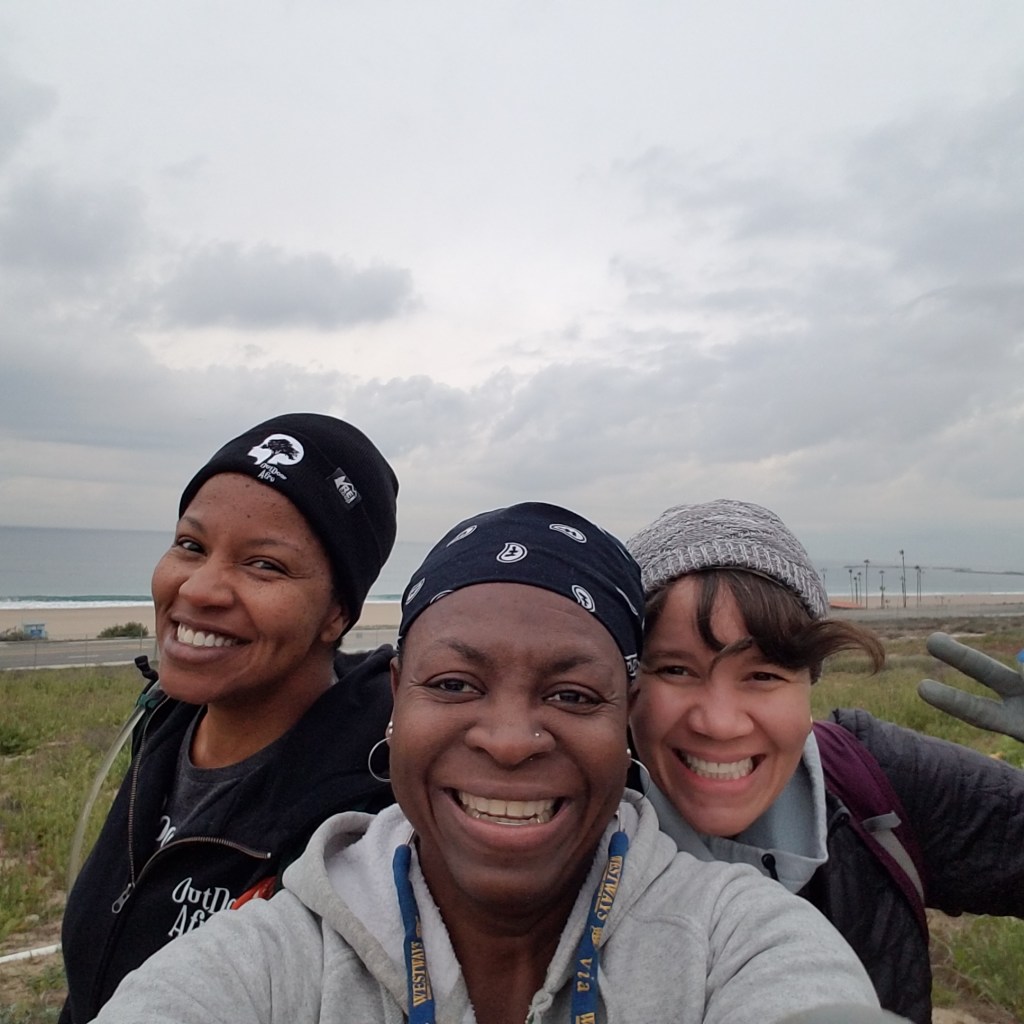
LAX Dunes
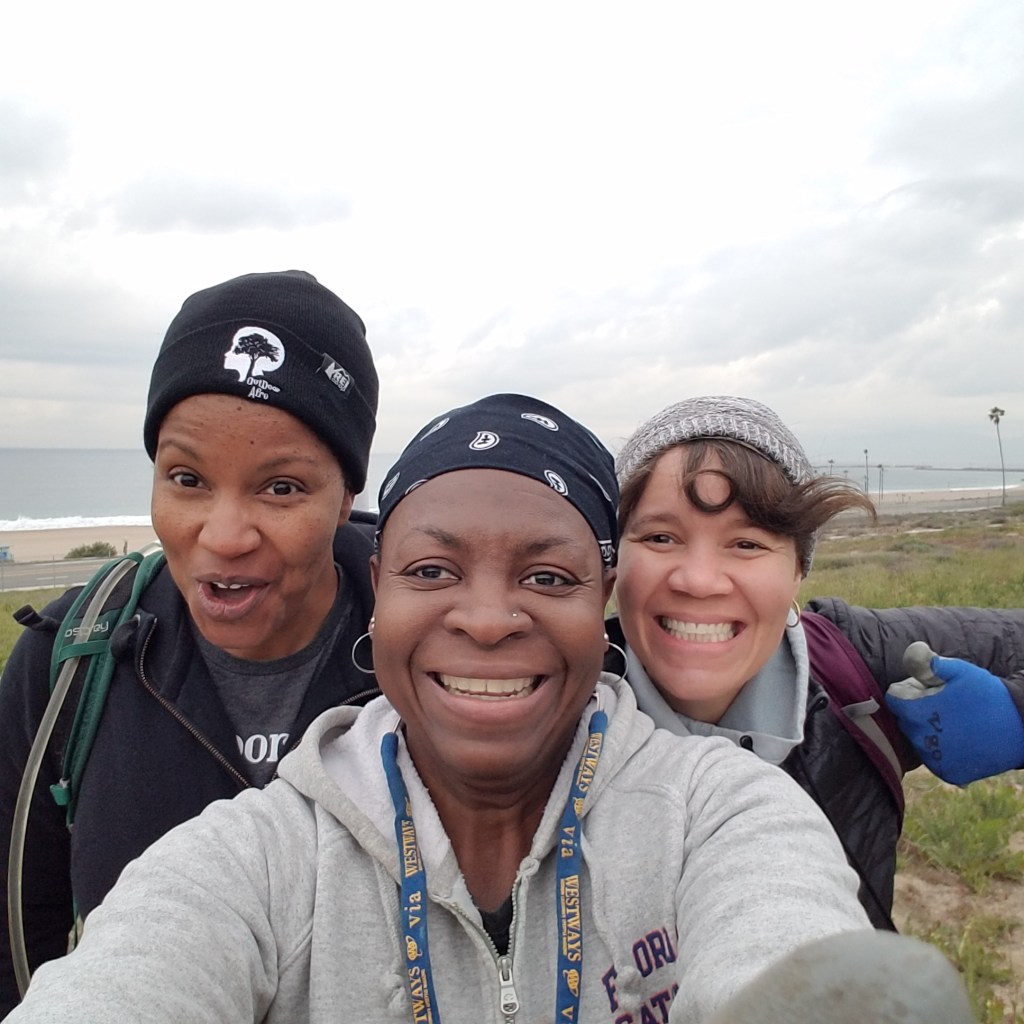
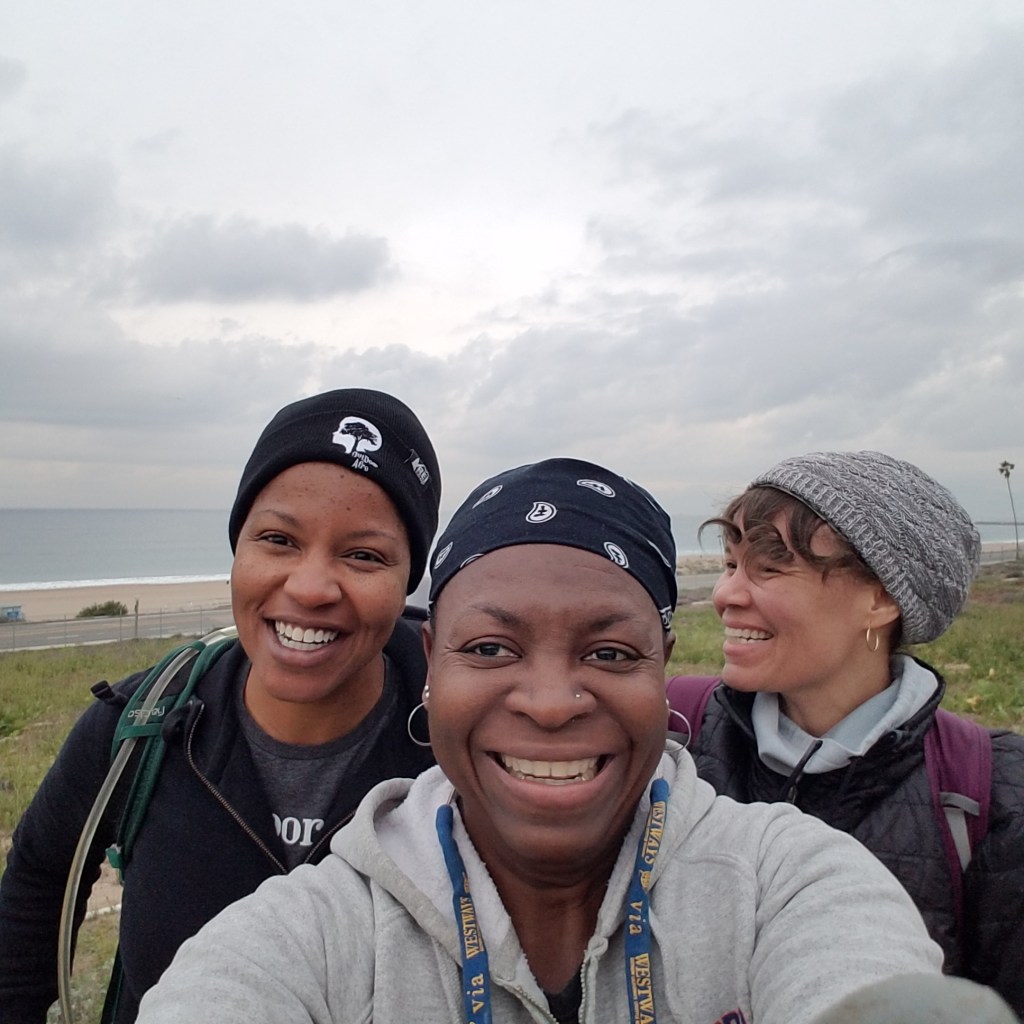
LAX Dunes with Tiffany & Jennetta
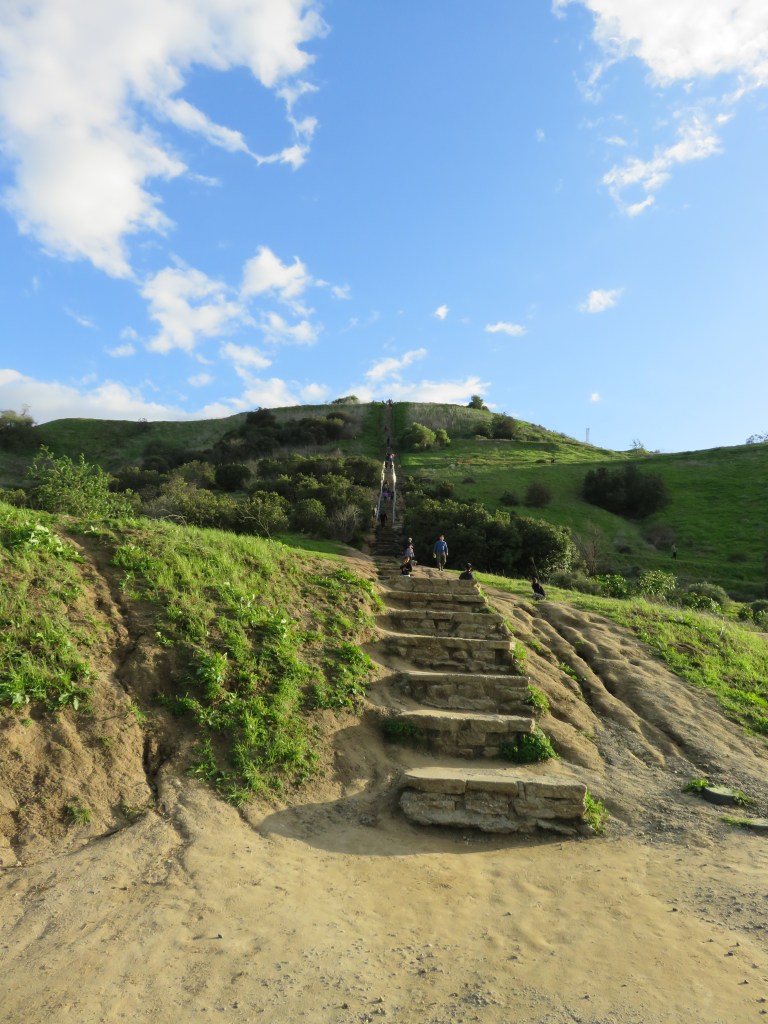
Baldwin Hills Scenic Overlook in February
Another view from Baldwin Hills Overlook
Old Bailey Canyon
Old Bailey
Old Bailey
Neighbourhood hike
Neighbourhood
Franklin Canyon
Hiking along American River in Sacramento
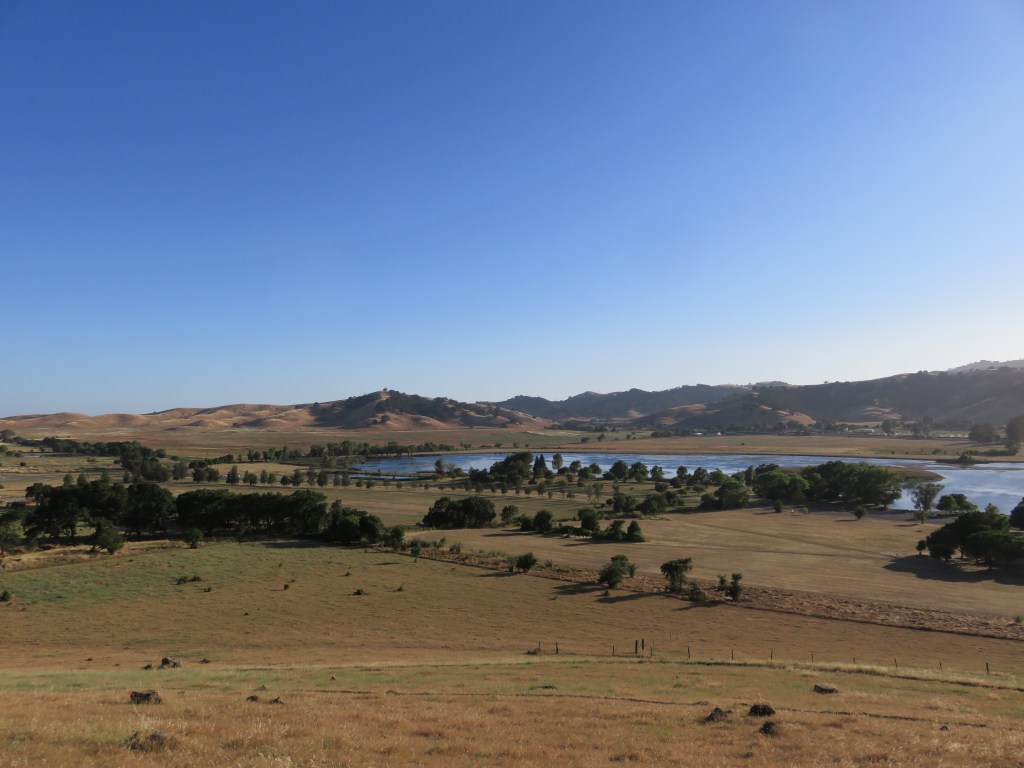
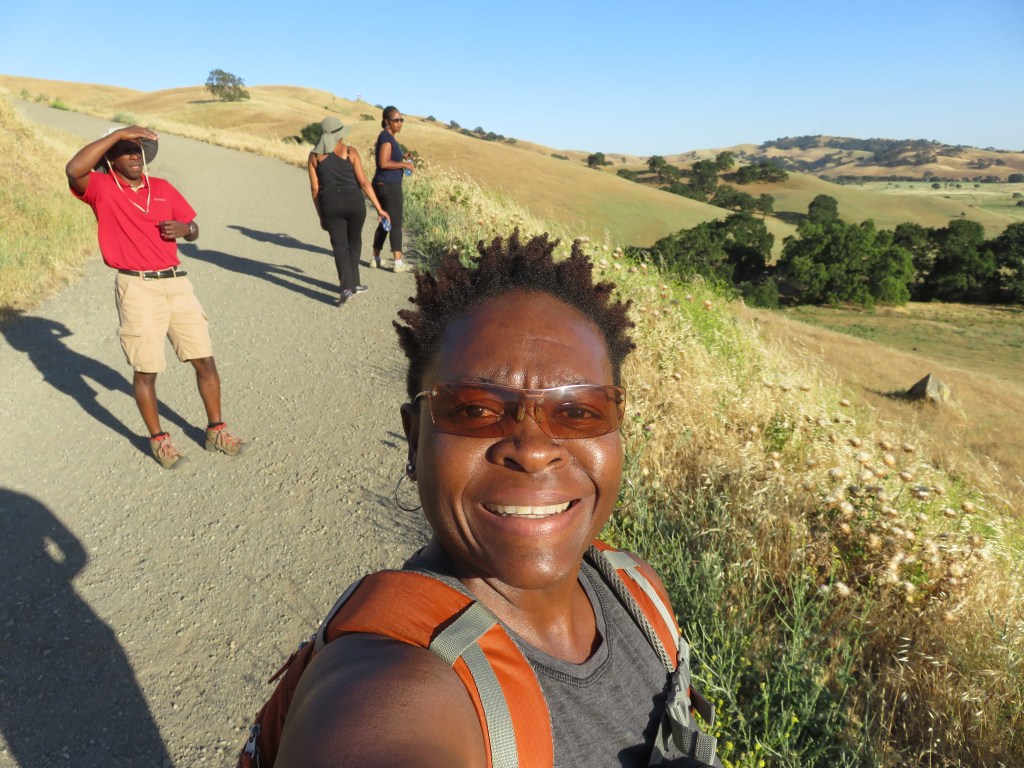
Birthday hike – Lagoon Valley Park in Vacaville
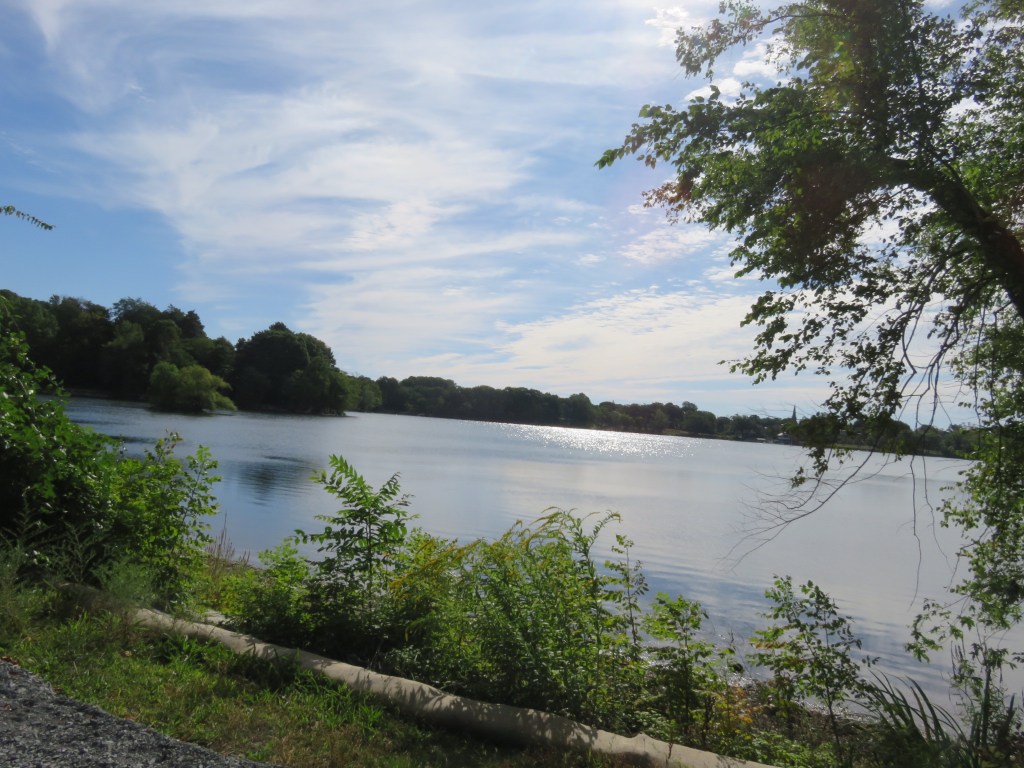
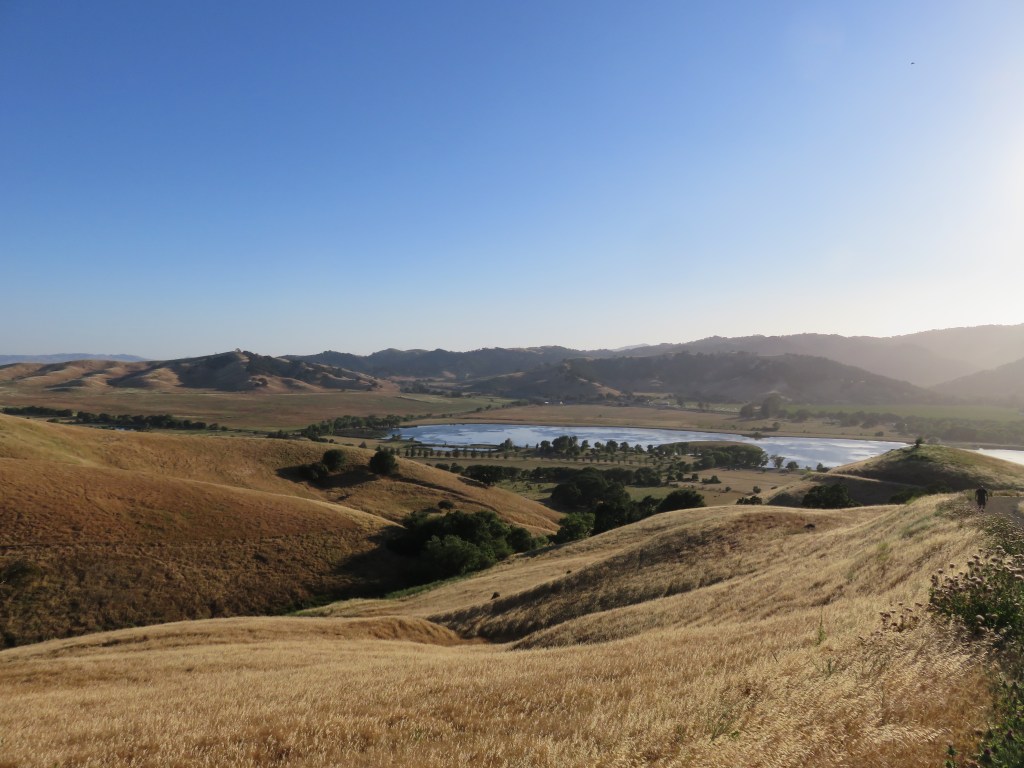
Lagoon Valley Park at the end of the hike – beautiful
Taking photos while hiking Tomales Point Trail
Hiking with big sis
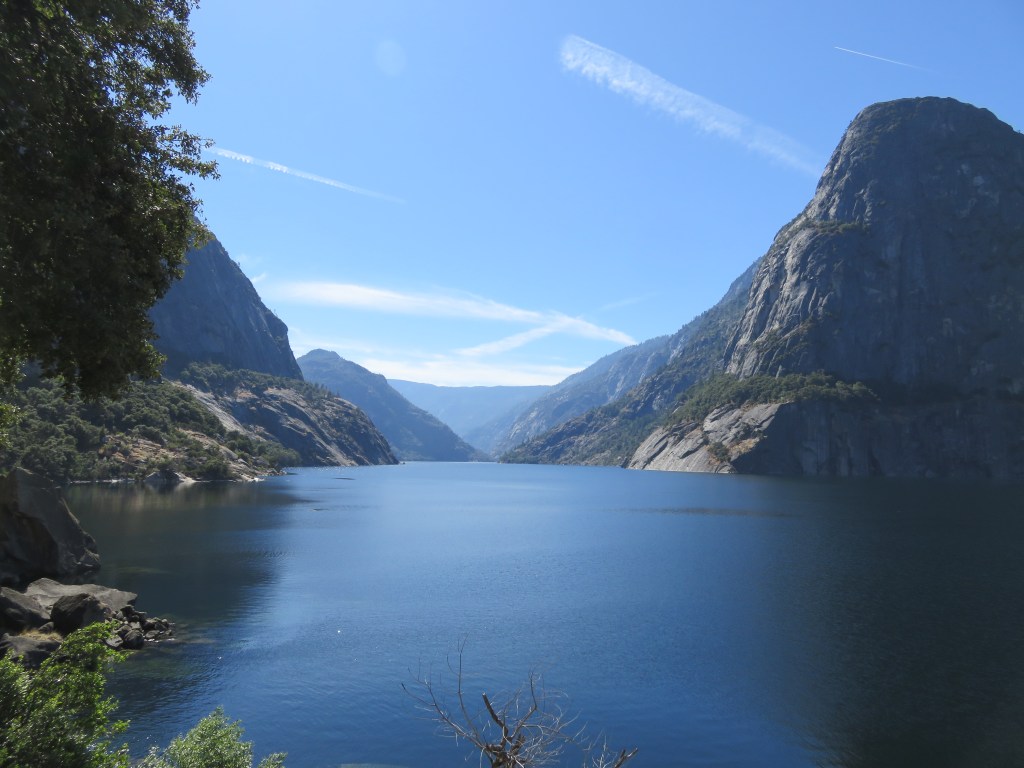
Wapama Falls, Hetch Hetchy
Yosemite!
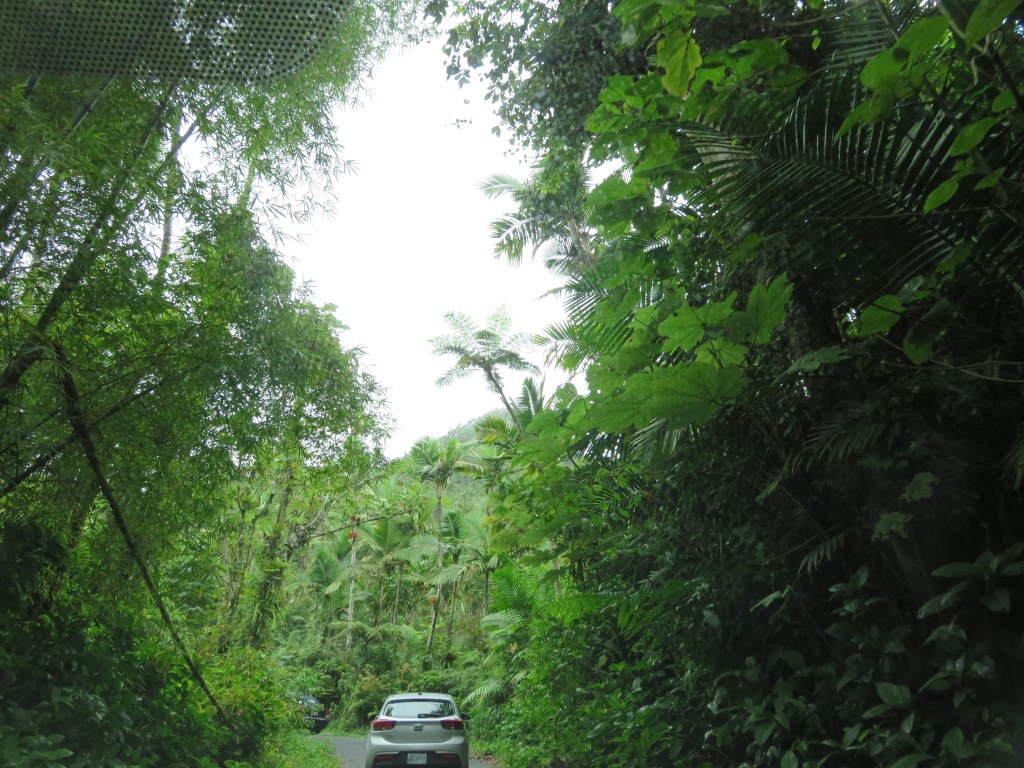
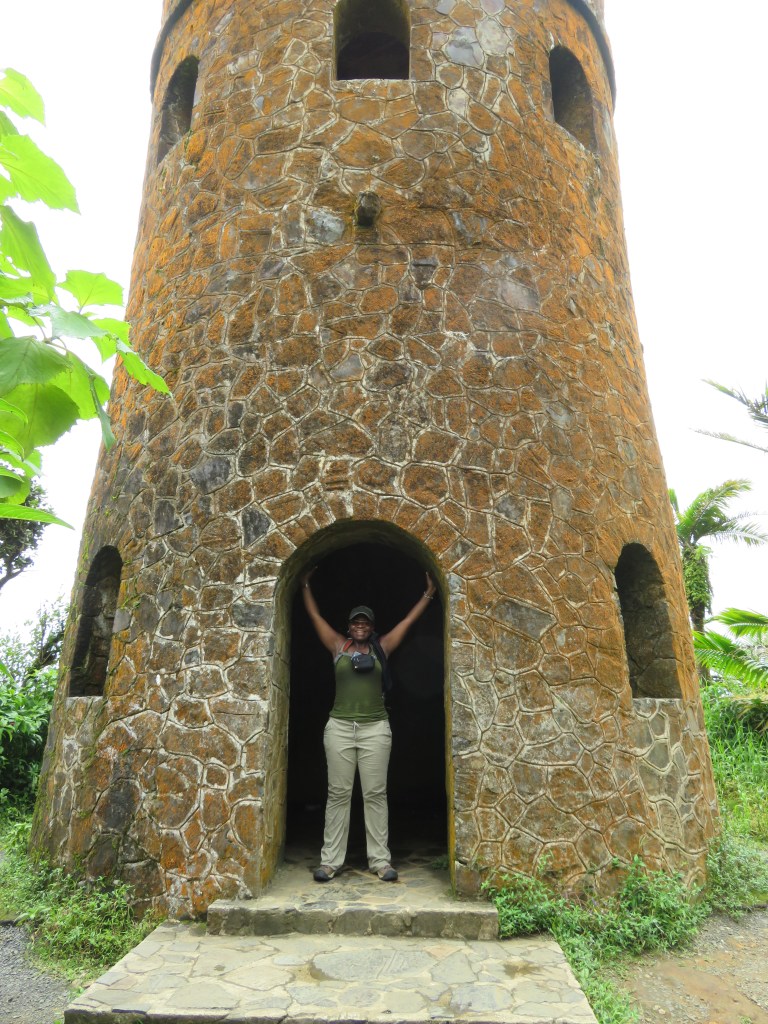
El Yunque at last!
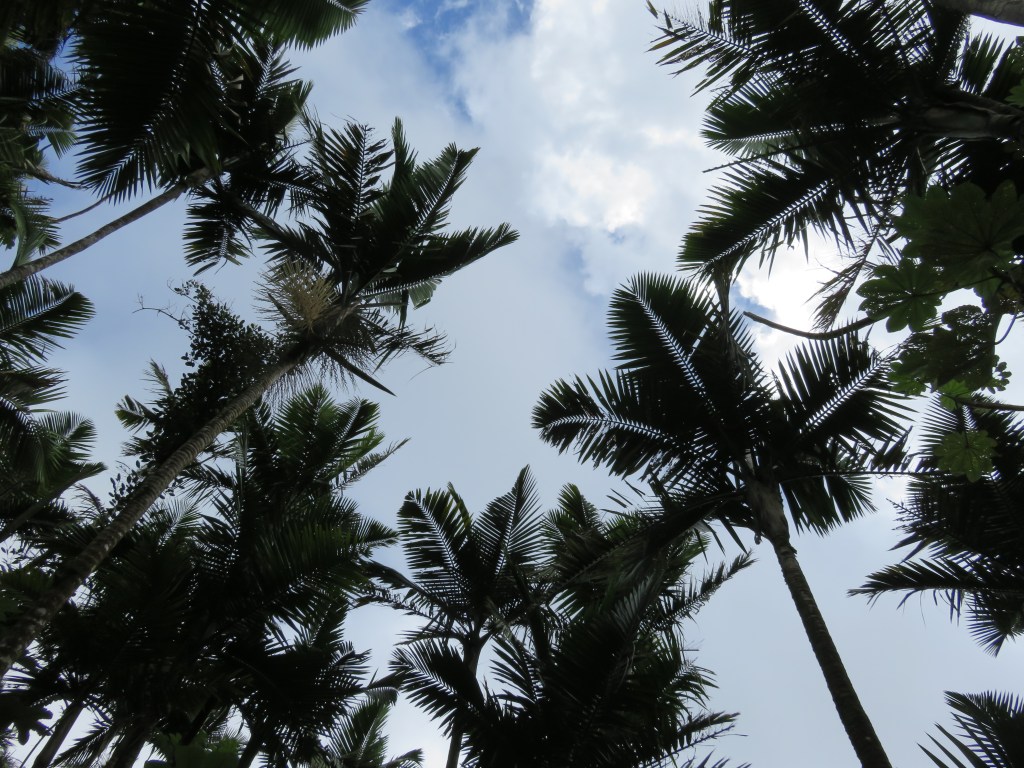
El Yunque
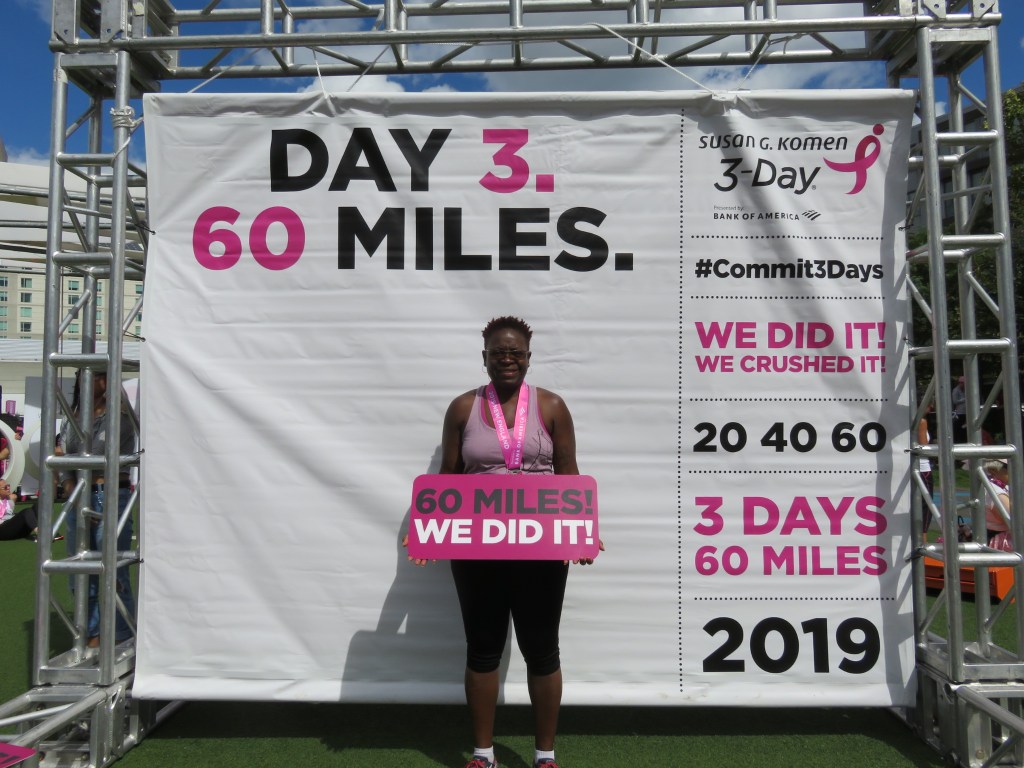
Boston during the 60 mile walk
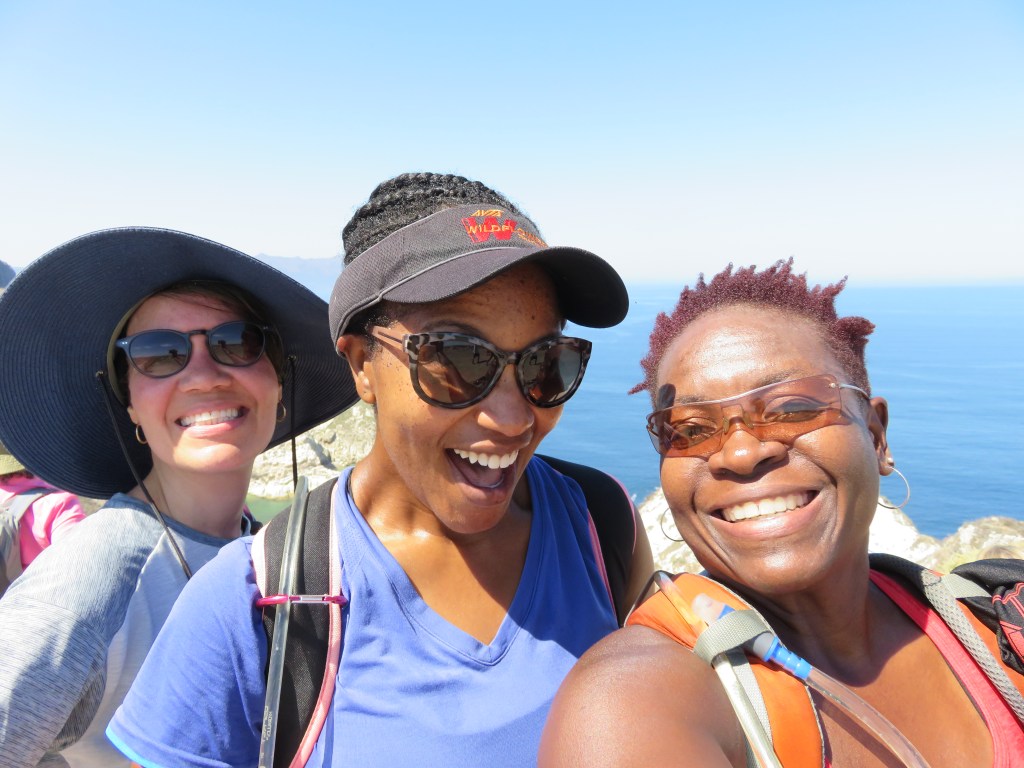
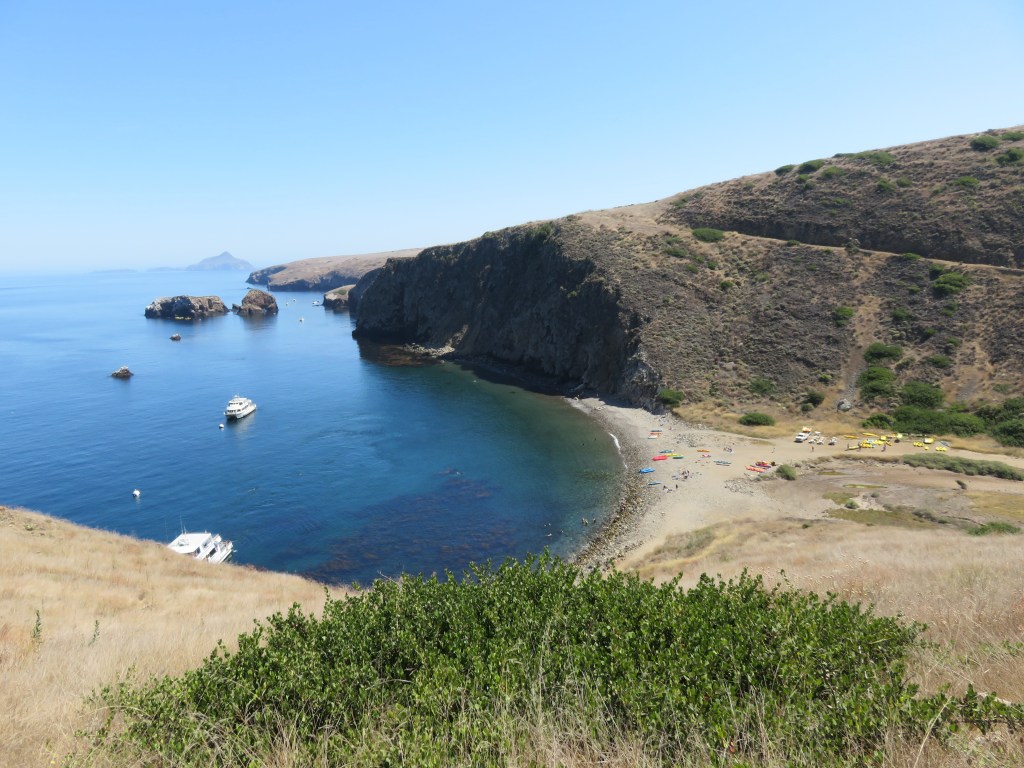
Santa Cruz Island, Channel Islands National Park
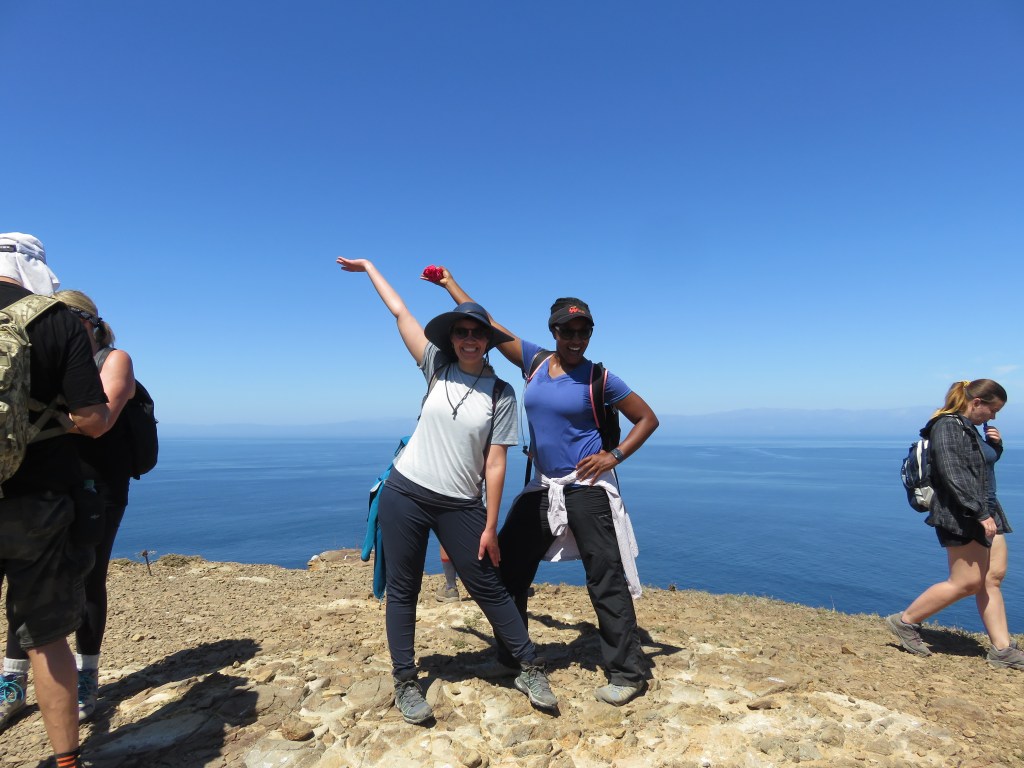
Runway models
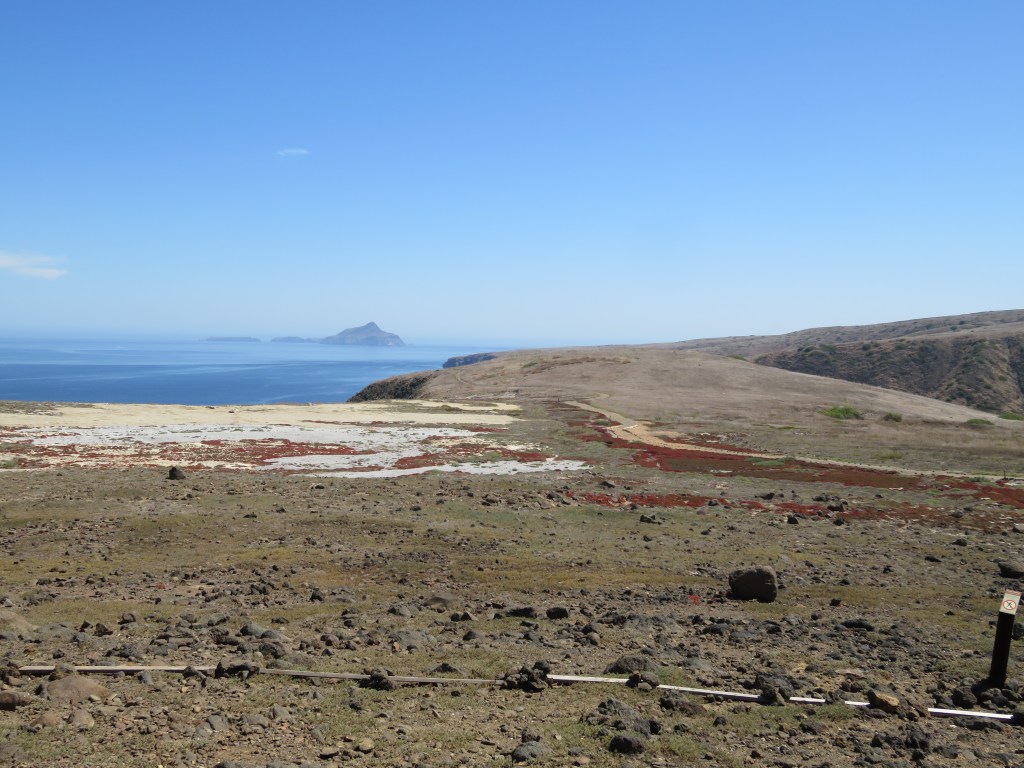
Last look at Santa Cruz
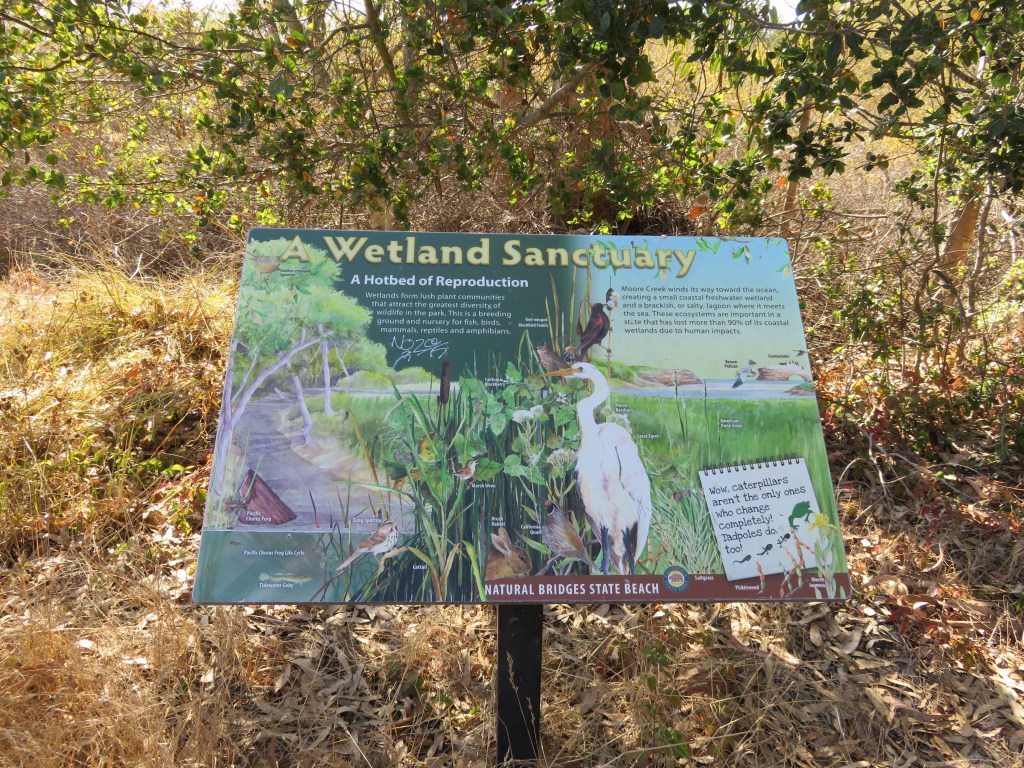
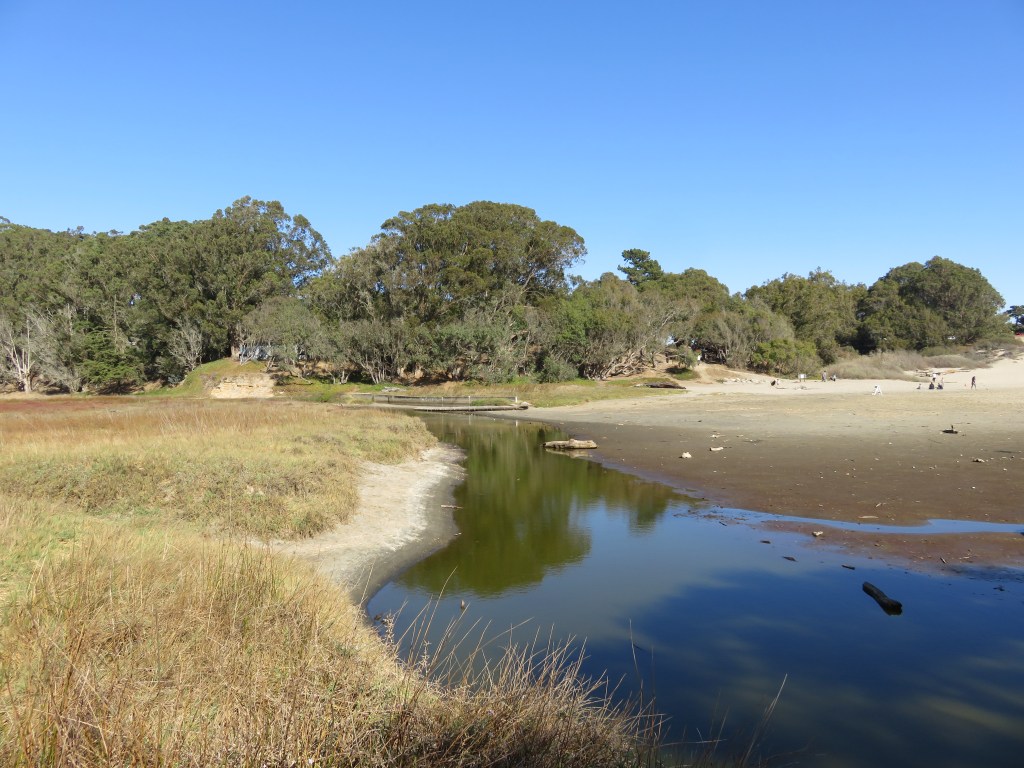
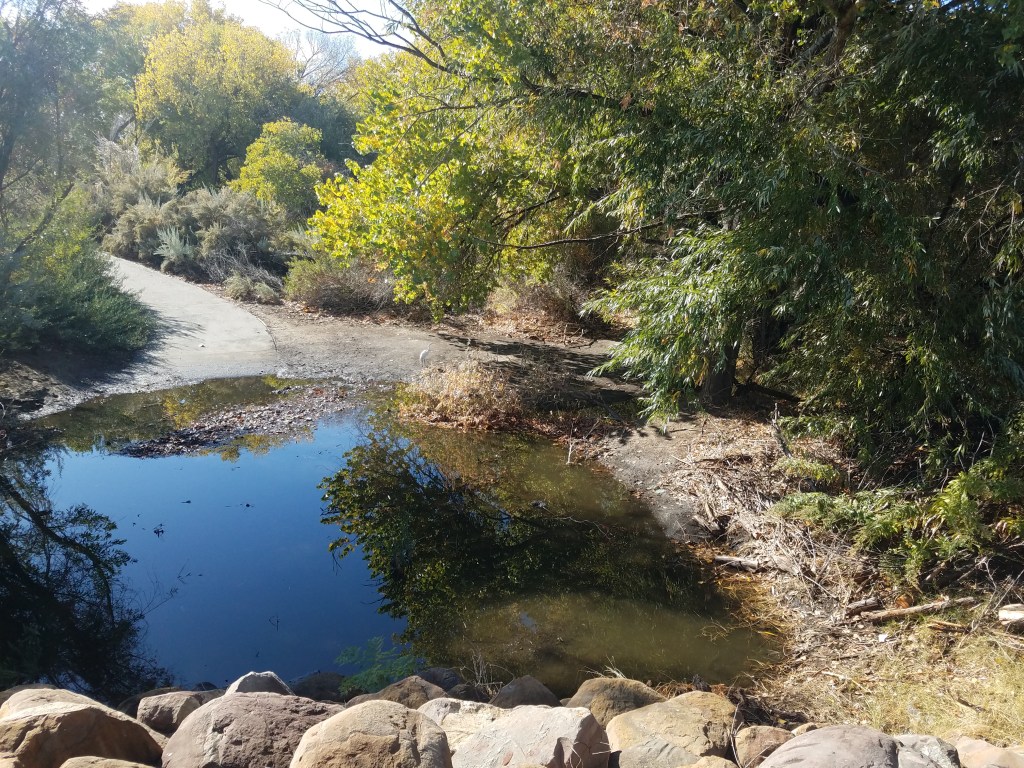
Hiking through wetlands along Natural Bridges State Beach
Shiba Park, Japan
Shiba Park had a series of steps
Santa Clara River Trail
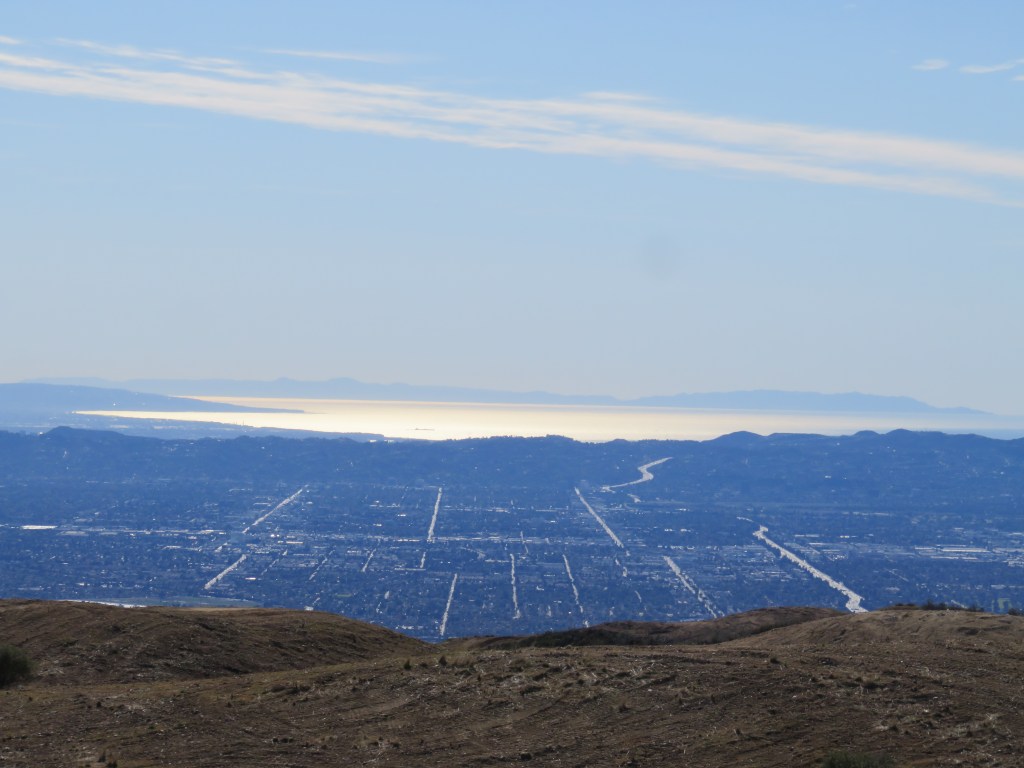
Views of awesome town
Whitney Canyon Park Trail with family and friends
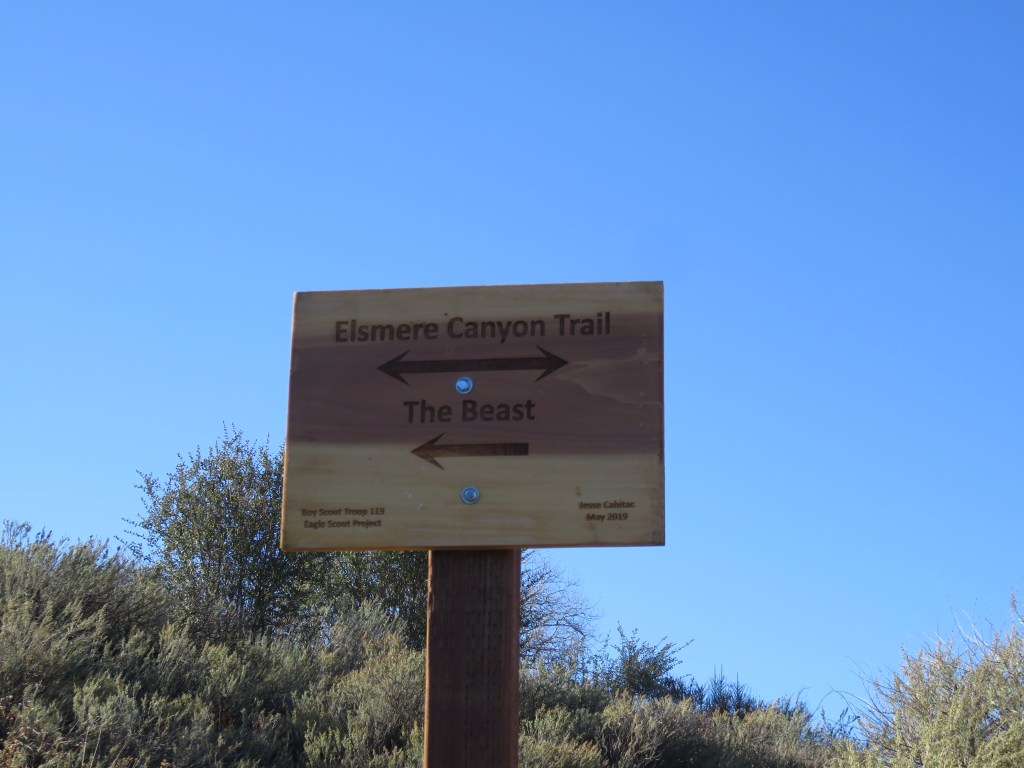
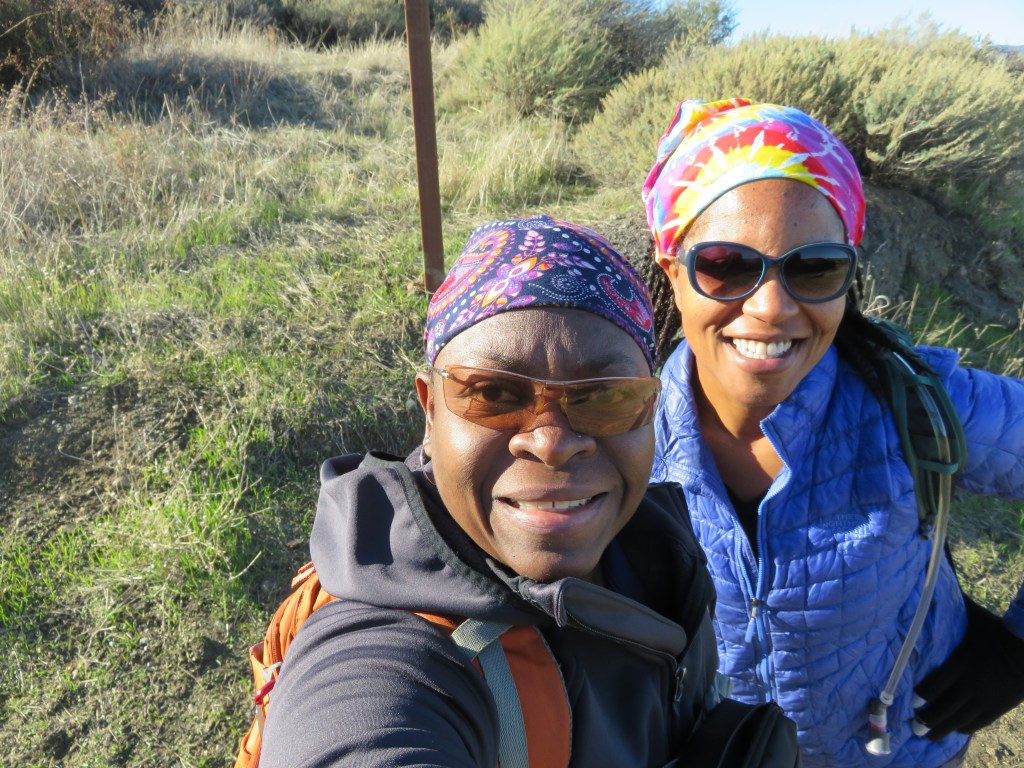
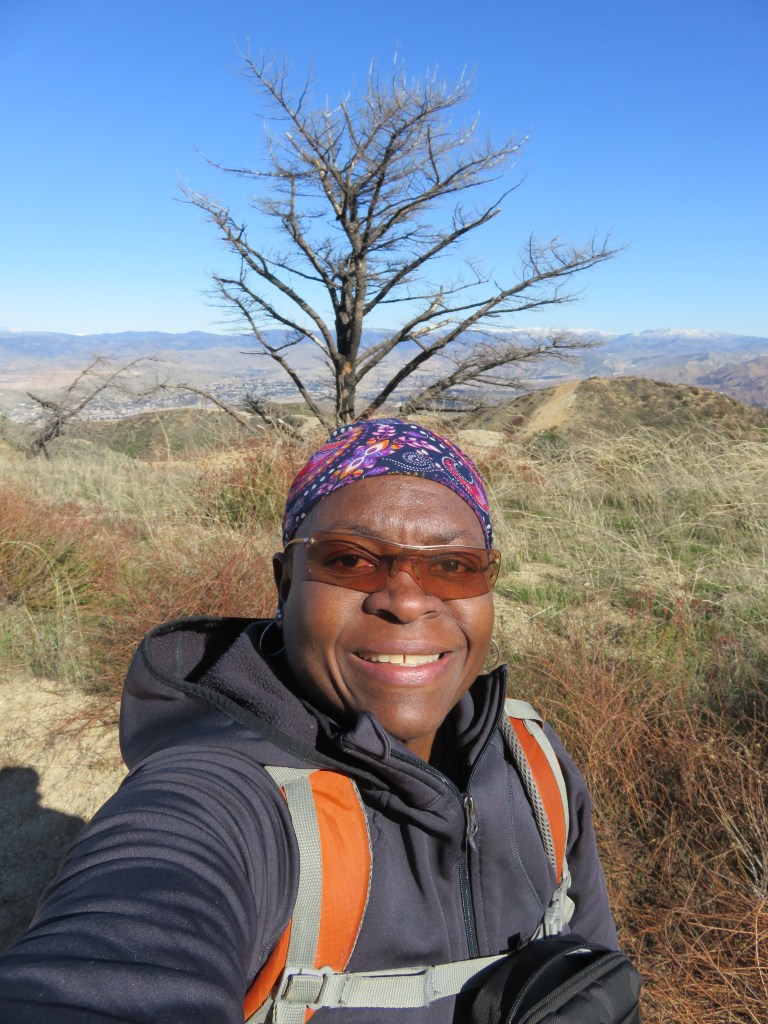
My 52 hikes started in California in January (I reached the halfway point in Sacramento during my birthday week) and ended in Puerto Rico in August. However because I love the outdoors and I love to hike, 52 was just a number. By December, 52 was far in my rearview mirror and on the last day of 2019, I did my 77th hike with my friend and frequent hiking partner, Jennetta. It was a special hike because it was Jennetta’s final hike to complete the 52 Hike Challenge and she wanted to make it memorable. What better way to make it special than to conquer ‘The Beast’, a Santa Clarita trail of some repute, right in ‘my backyard’.
The Beast: Culmination of a Year’s Worth of Hikes
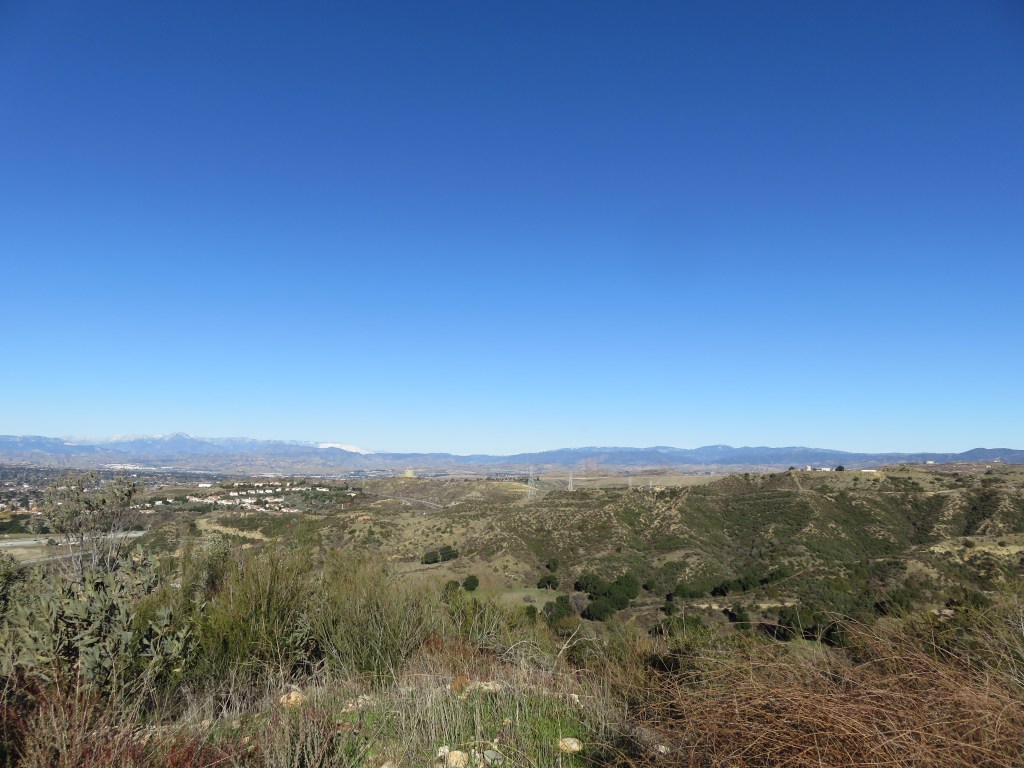
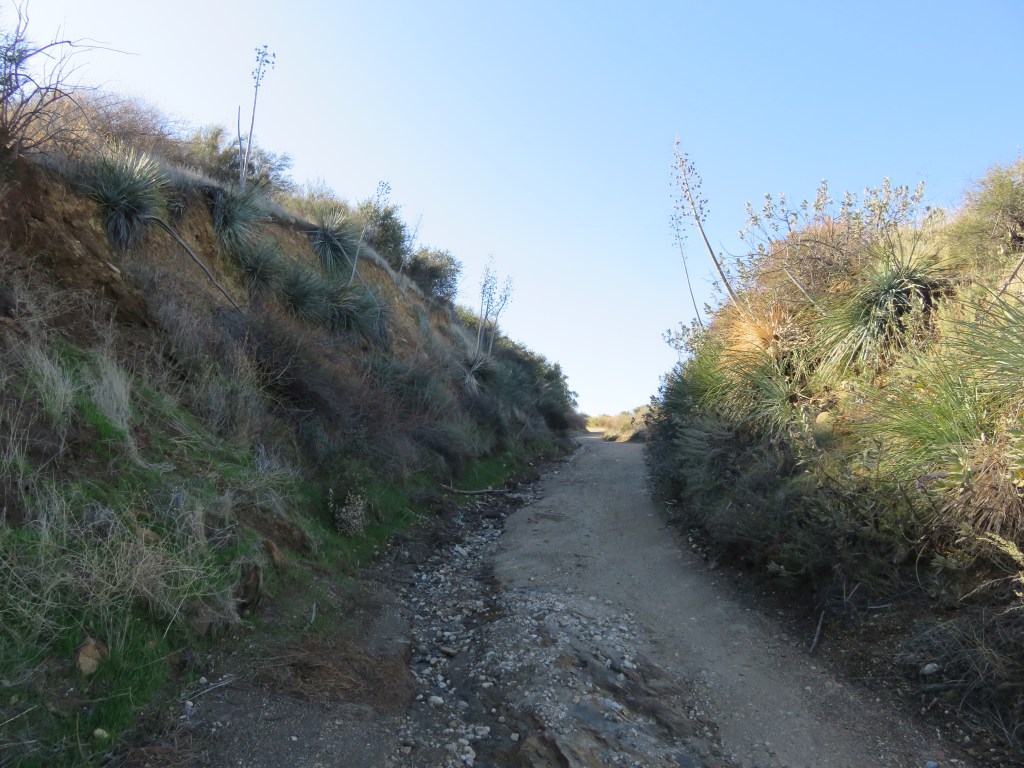
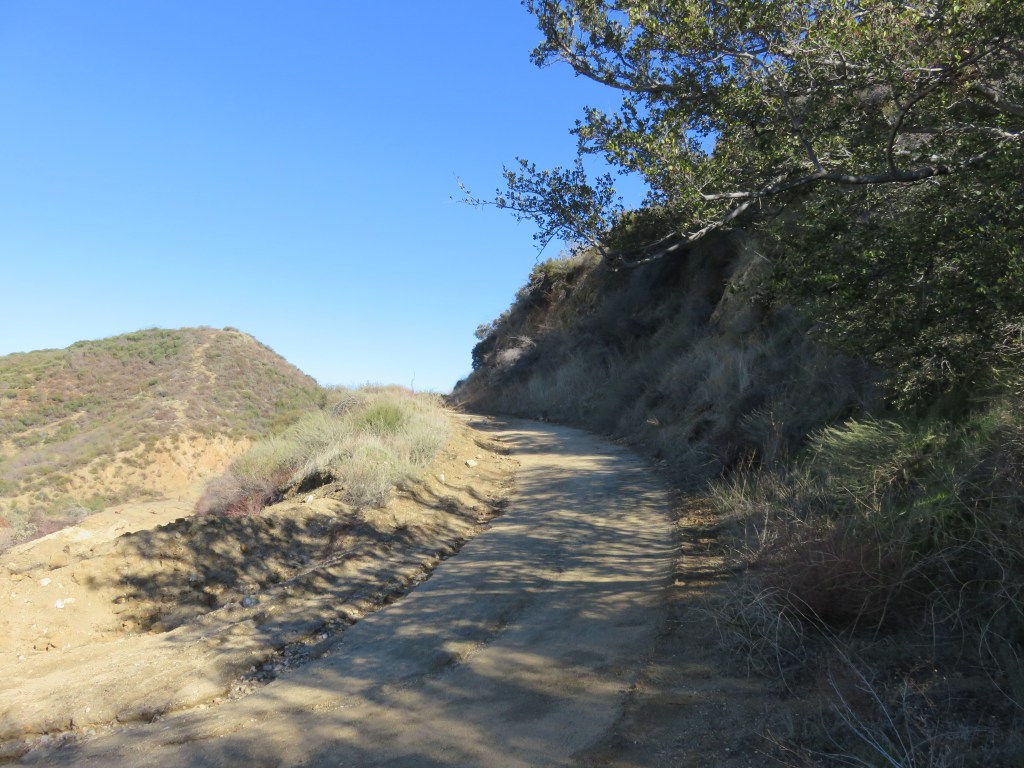
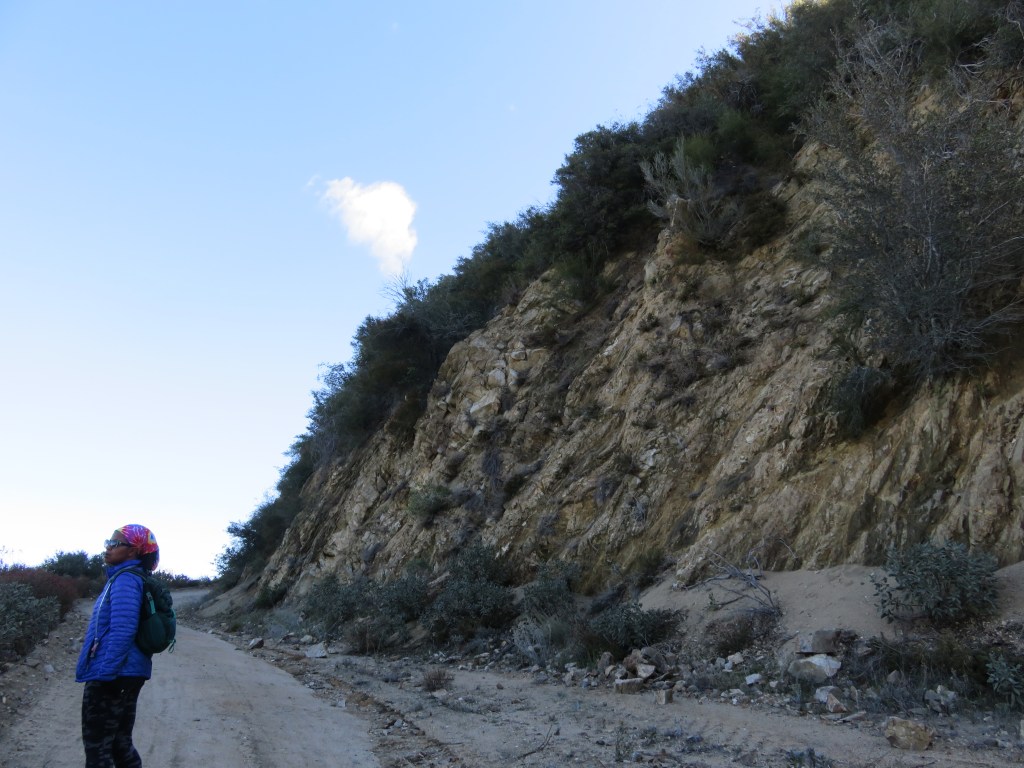
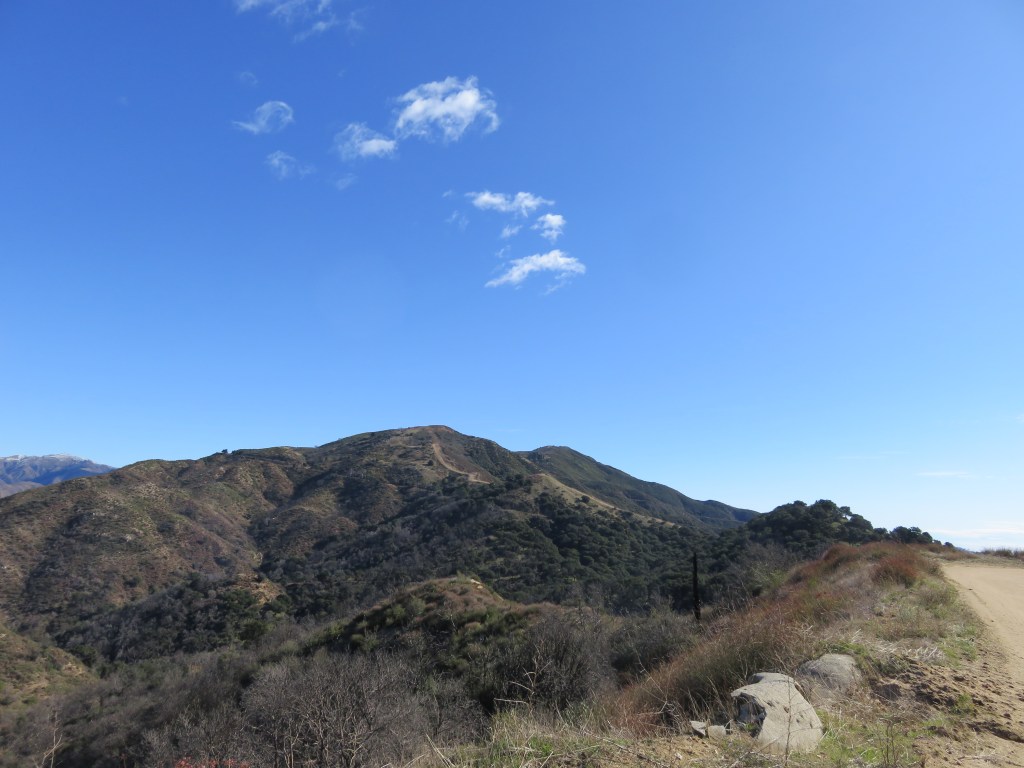
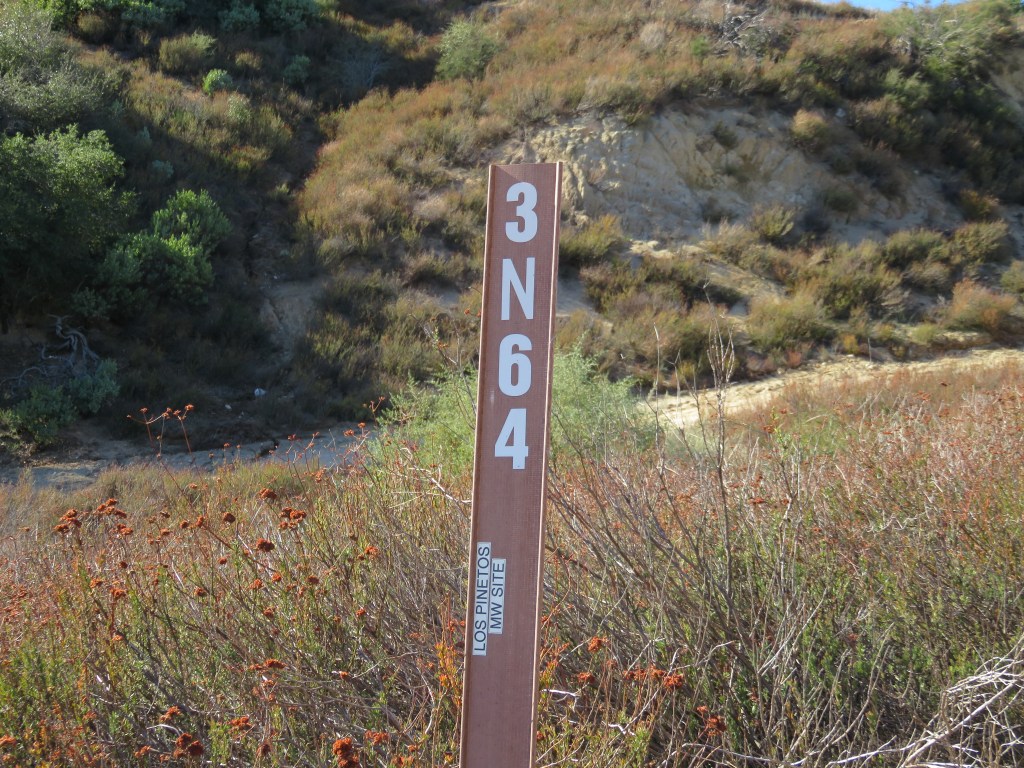
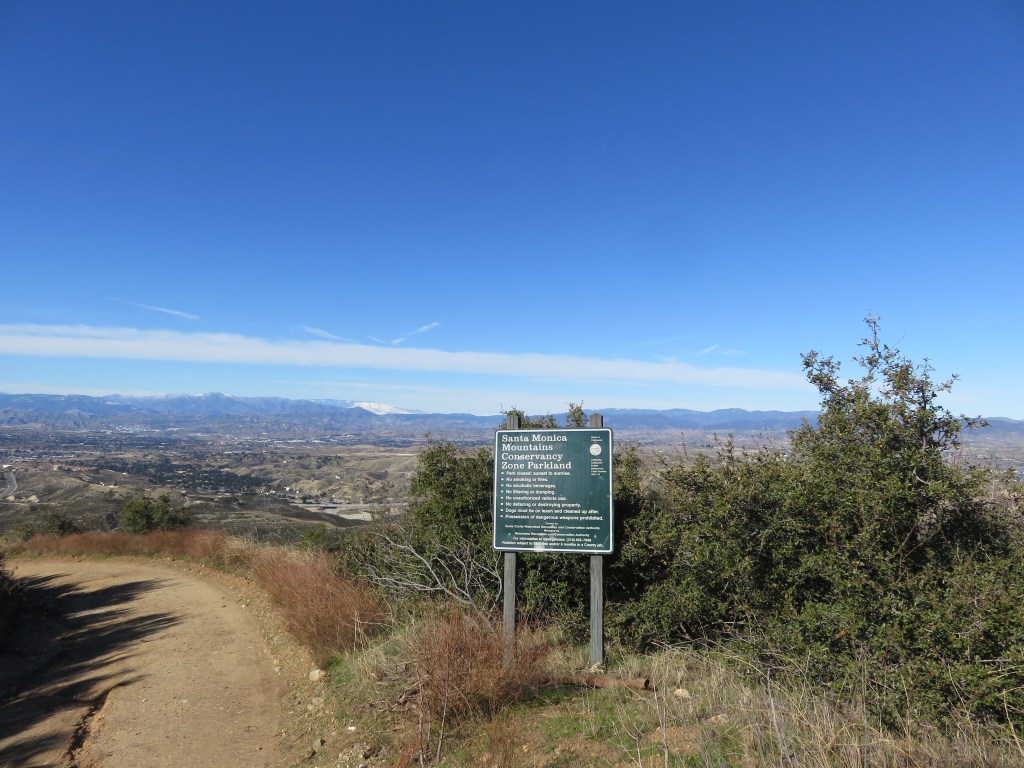
The Beast (Santa Clara Divide Road to Los Pinetos) was not as beastly as its name implies. Anecdotes suggests it is a difficult trail. Some trail sites rate it as intermediate to difficult. For Jennetta and I, it was not difficult, but moderate. The inclines are similar to other Santa Clarita trails we’ve done, like Towsley Canyon and Mentryville, but what The Beast has going for it, is that it’s a steady uphill from the start for about 4.5 miles to the peak. There aren’t many steep inclines, but there are few plateaus or downhills to break up the climb. It was also very windy as we hiked, with gusts so strong at times that our words got lost. The wind was also strong enough to knock one foot into the other as I walked.
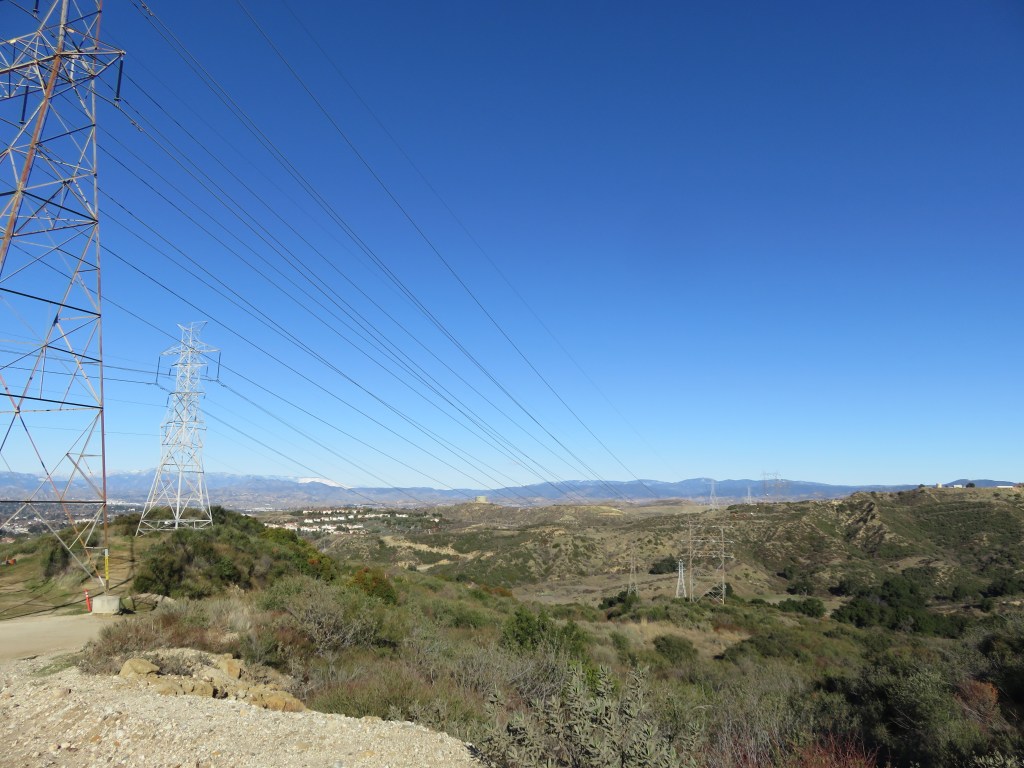
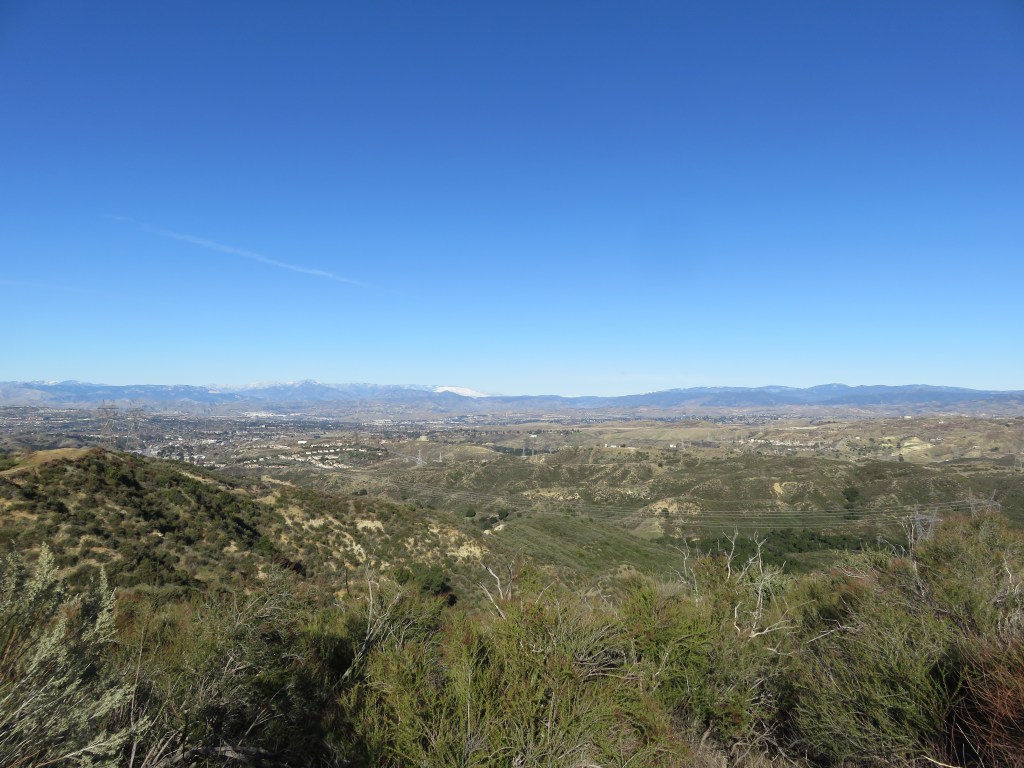
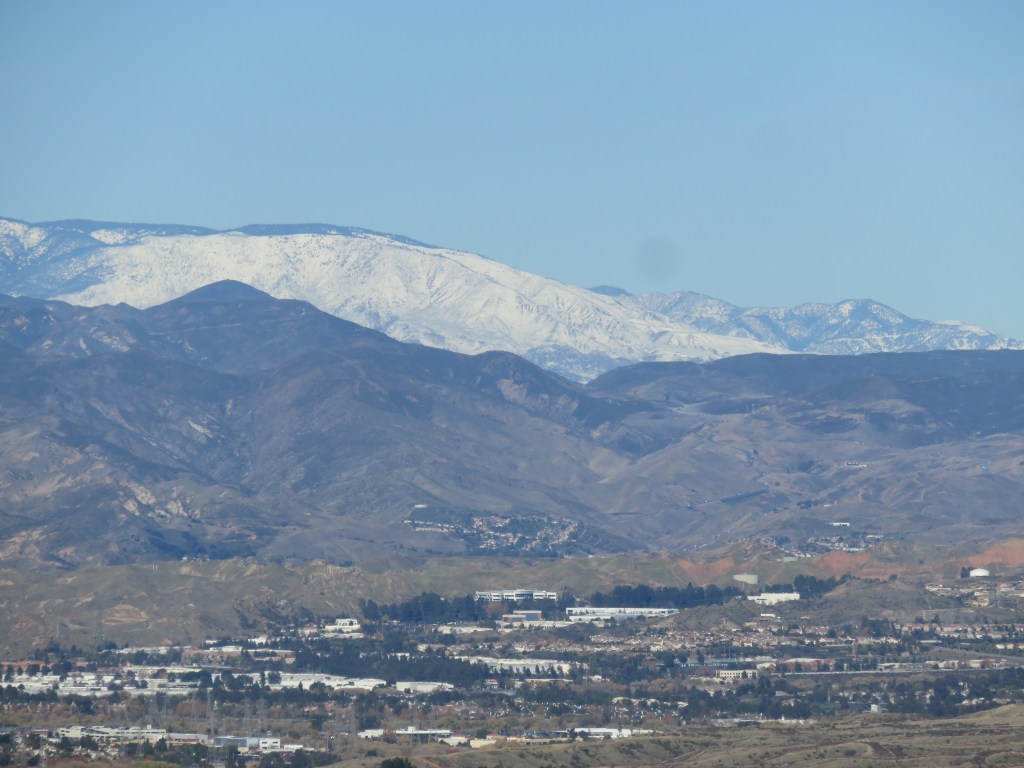
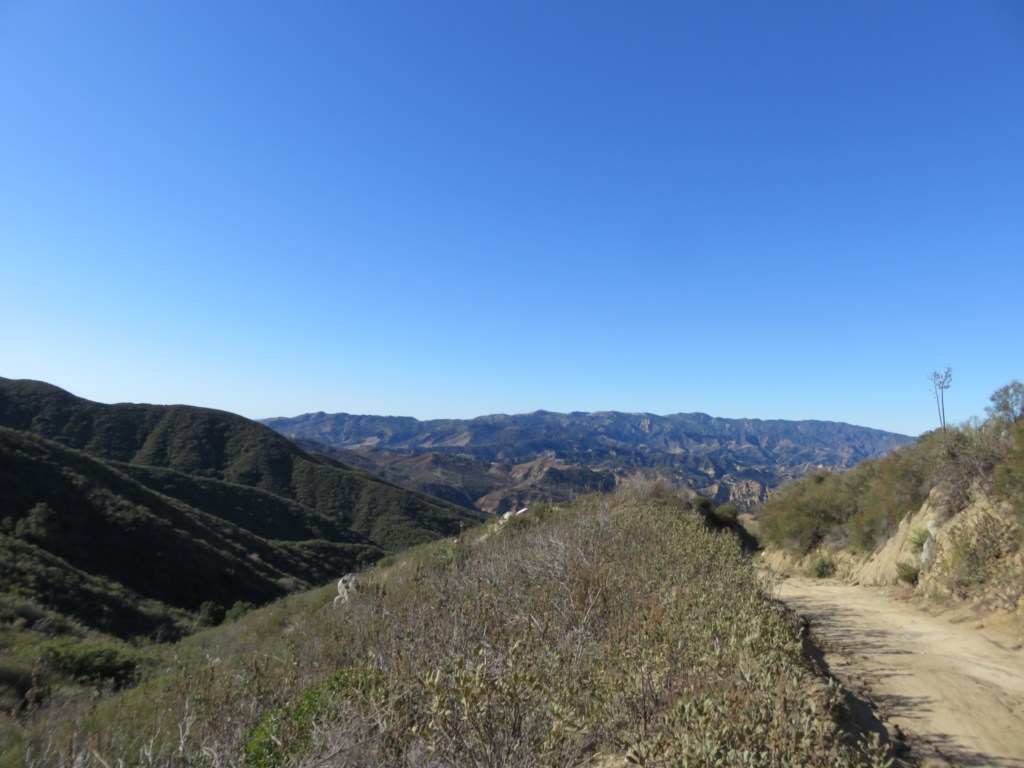
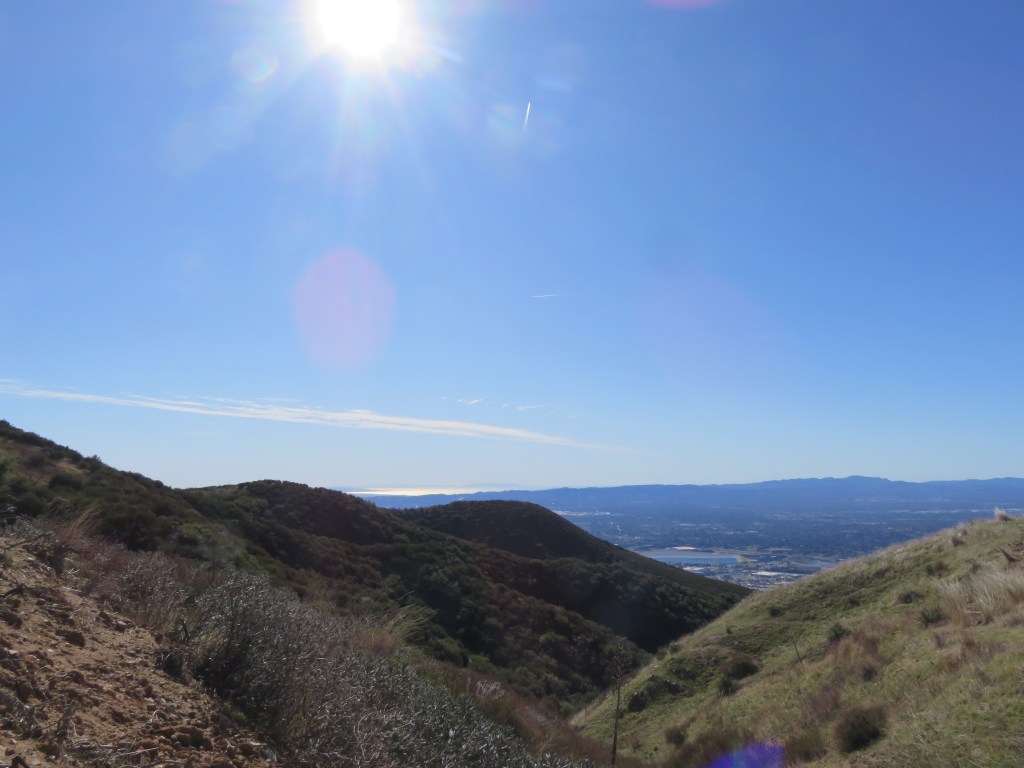
The advantage of tackling The Beast in December is that we didn’t have to contend with the heat – that would certainly have made it beastly! On the last day of the year, the temperature was in the low to mid 50s – excellent for hiking. At around 9.7 miles (total in and out), around 2,100 ft elevation gain, beautiful views of awesome town and the snow on the mountains, it was a great hike to end 2019. And it was right in my back yard 😉.
Here we go
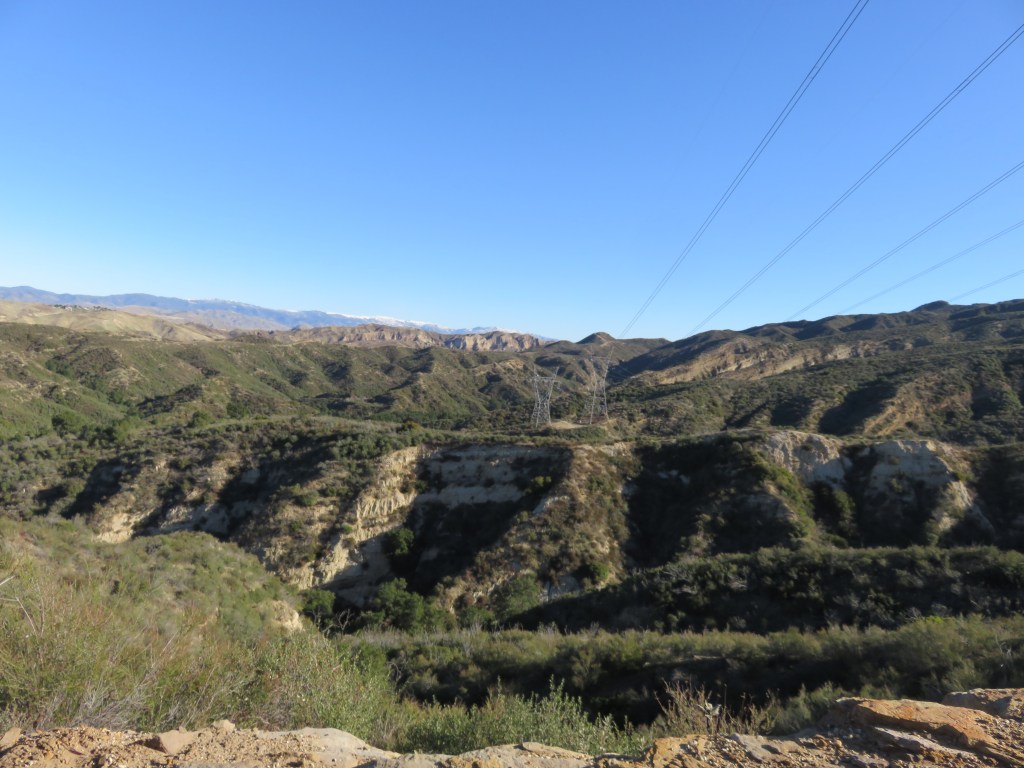
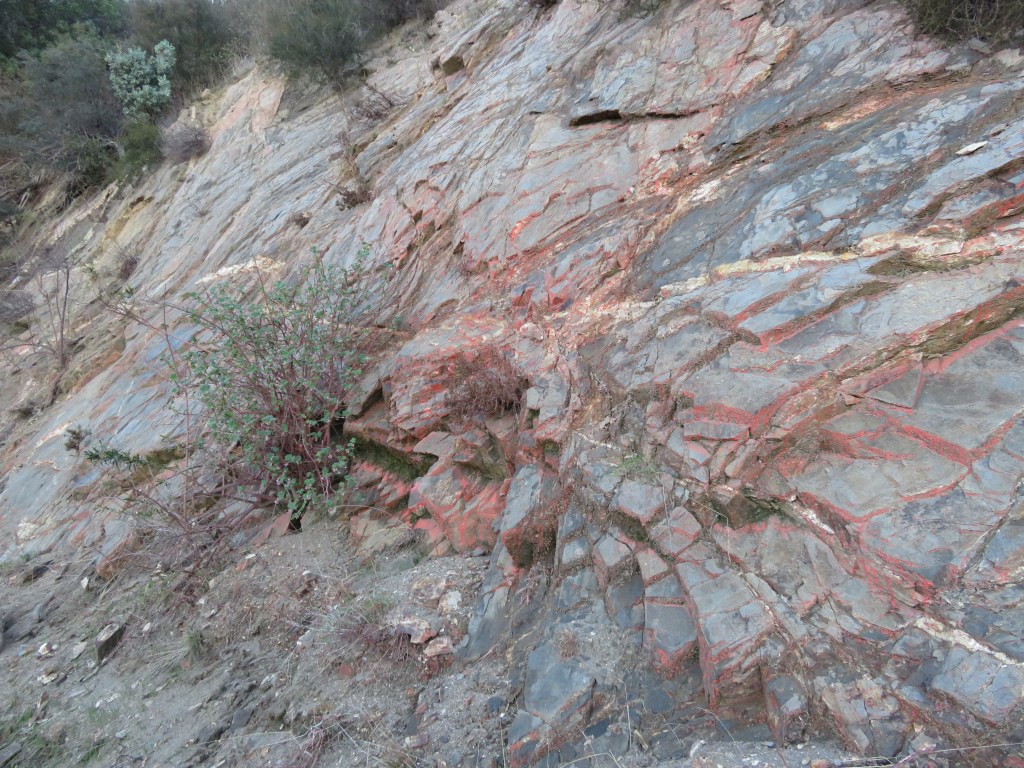
Development and nature
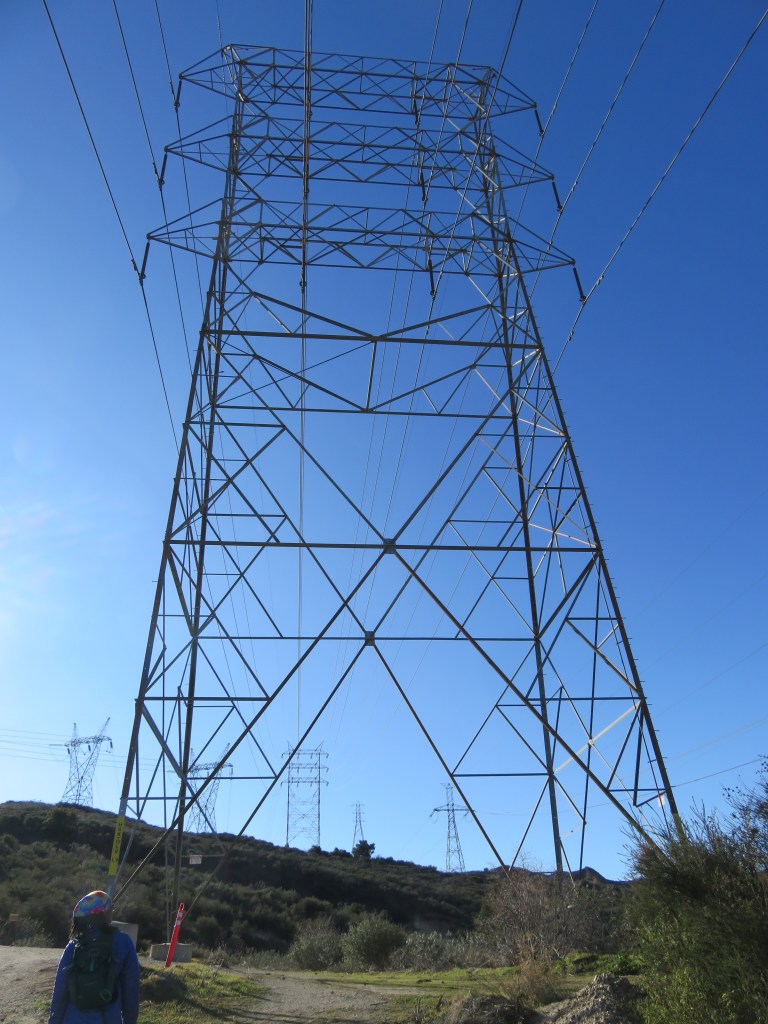
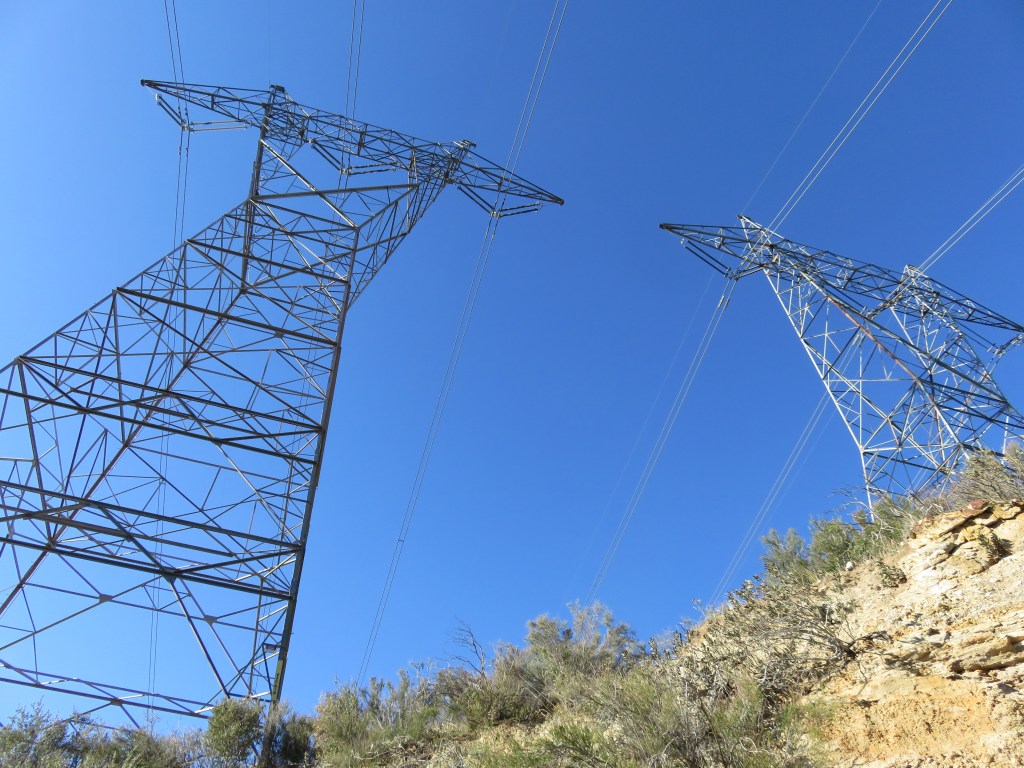
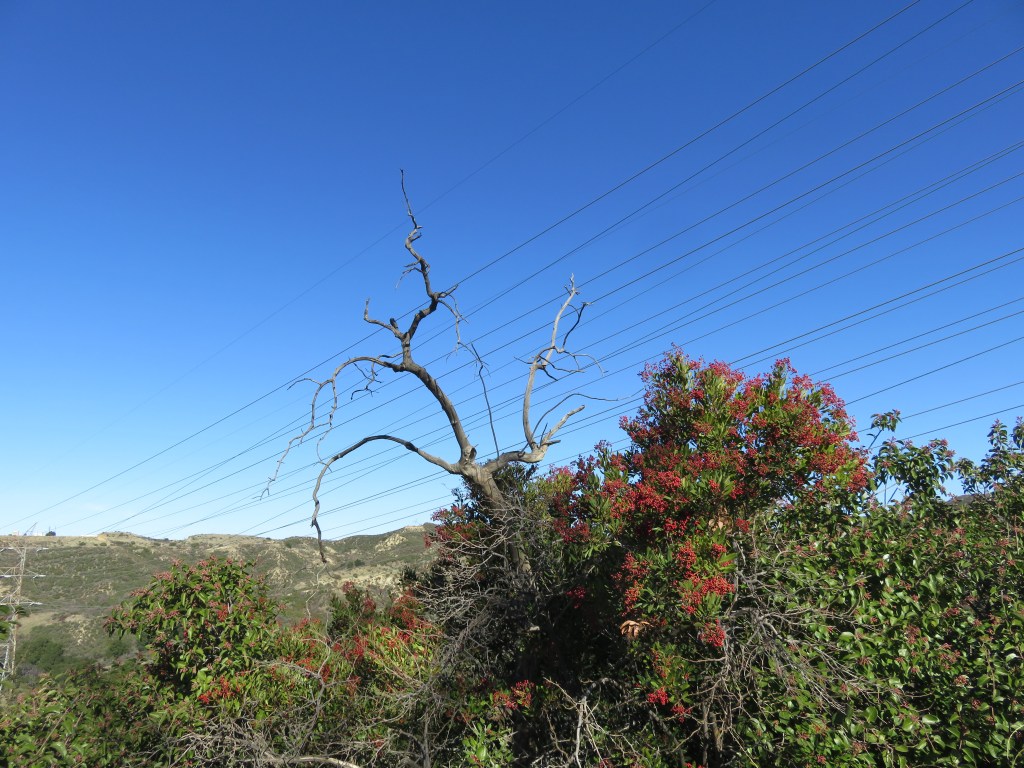
The buzz from these cables was loud
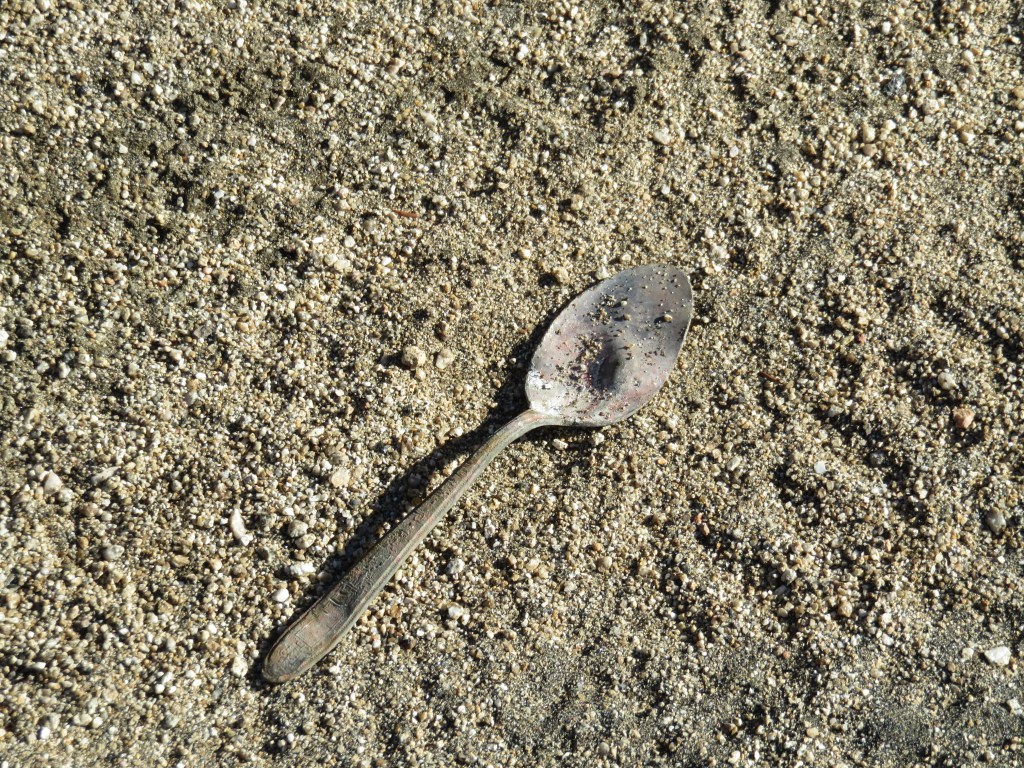
No one heard the spoon drop …
More fire retardant residue
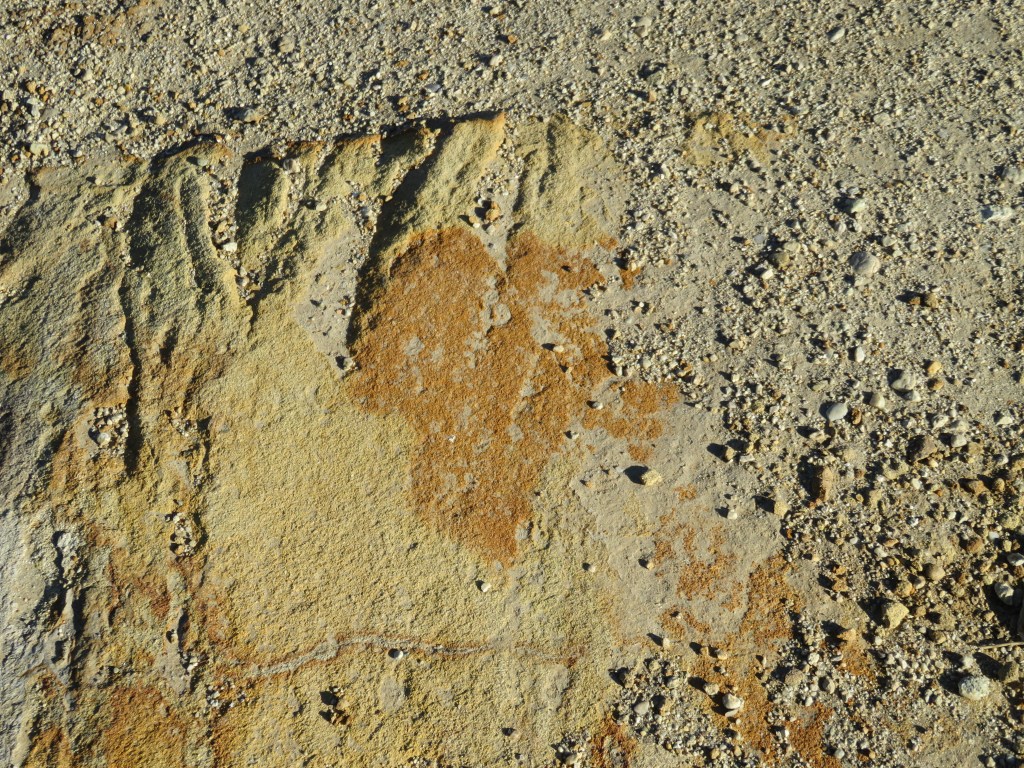
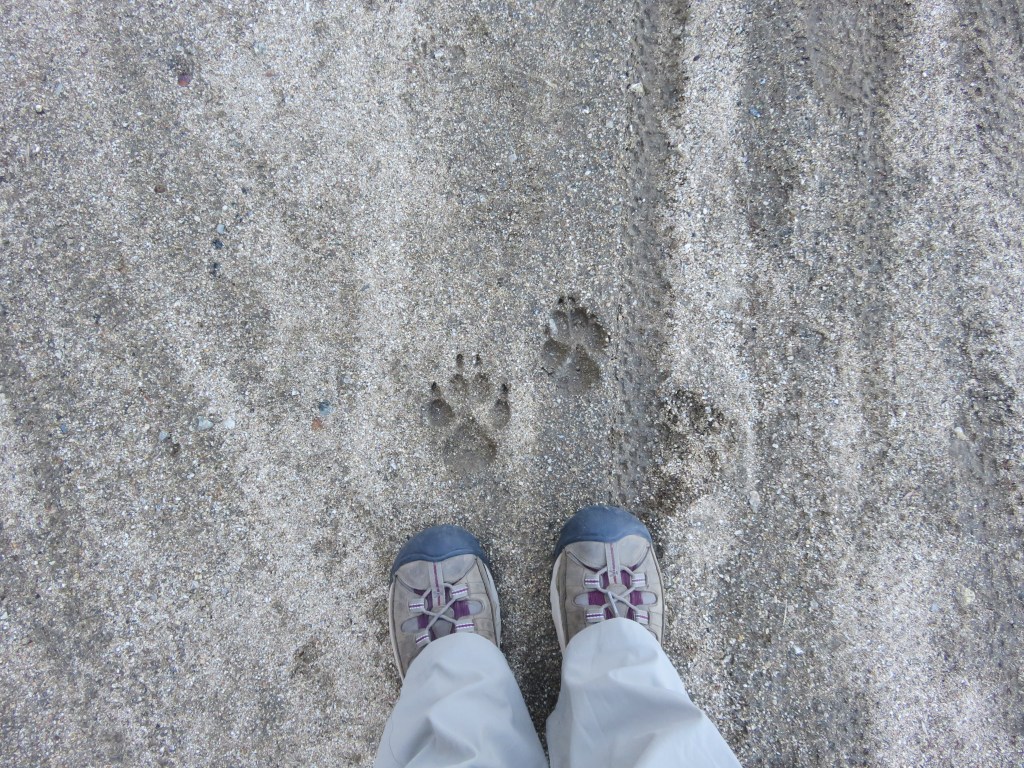
Don’t know what these pawprints belong to but I’m glad I didn’t see it 😄
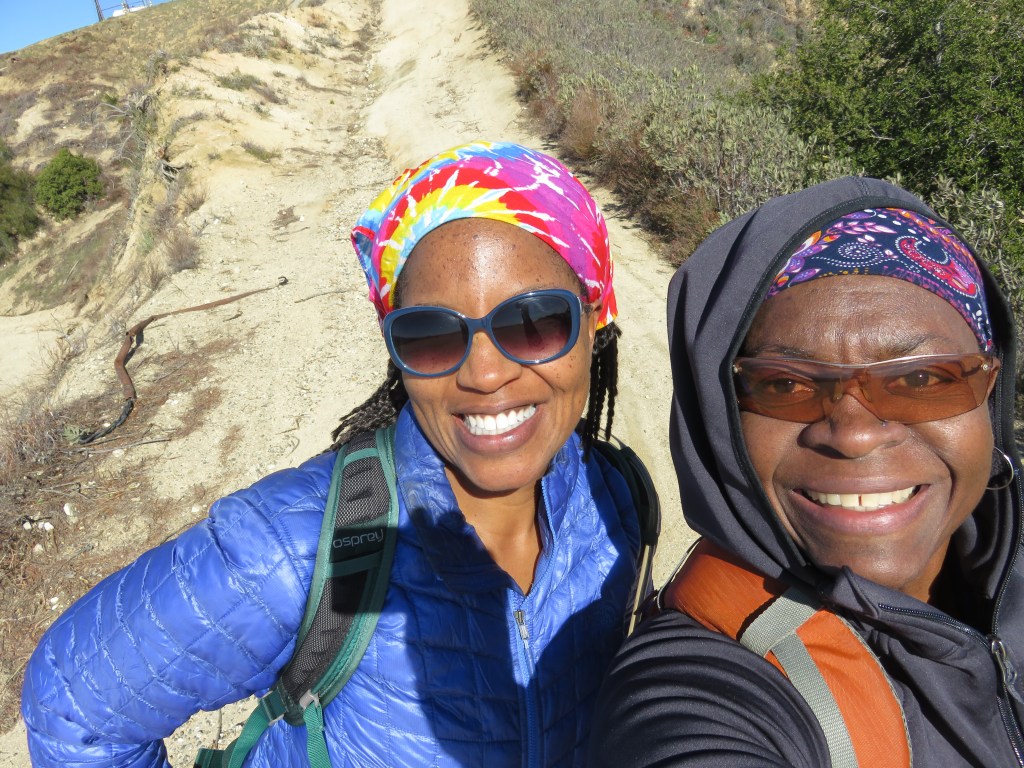
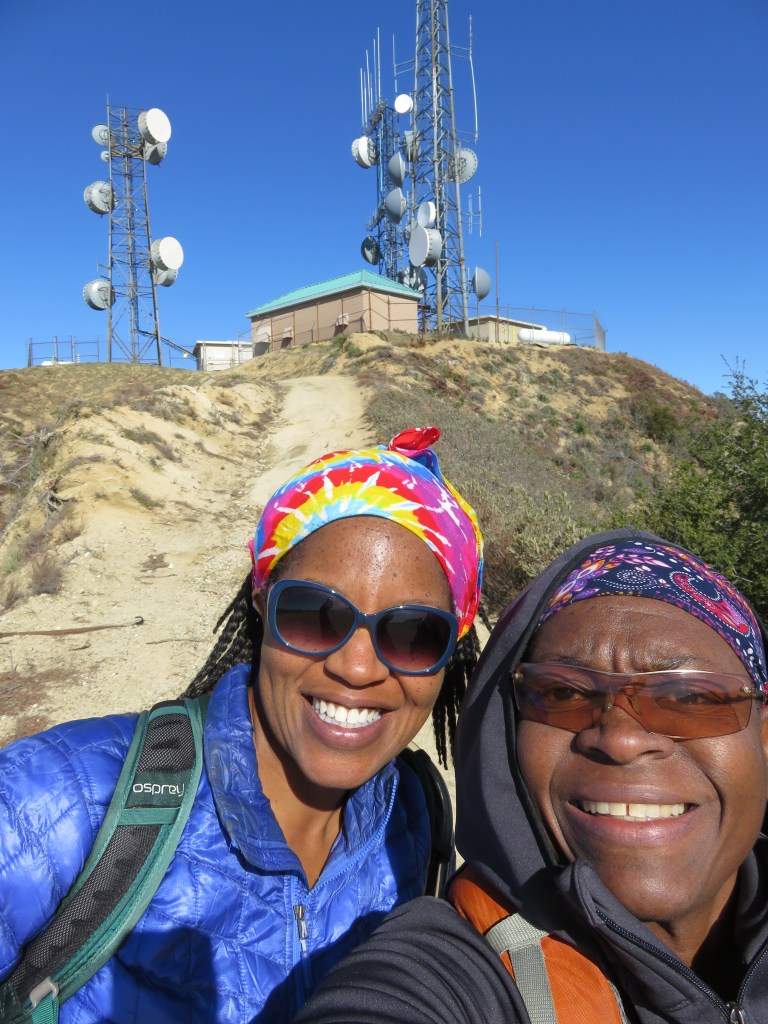
We conquered The Beast!
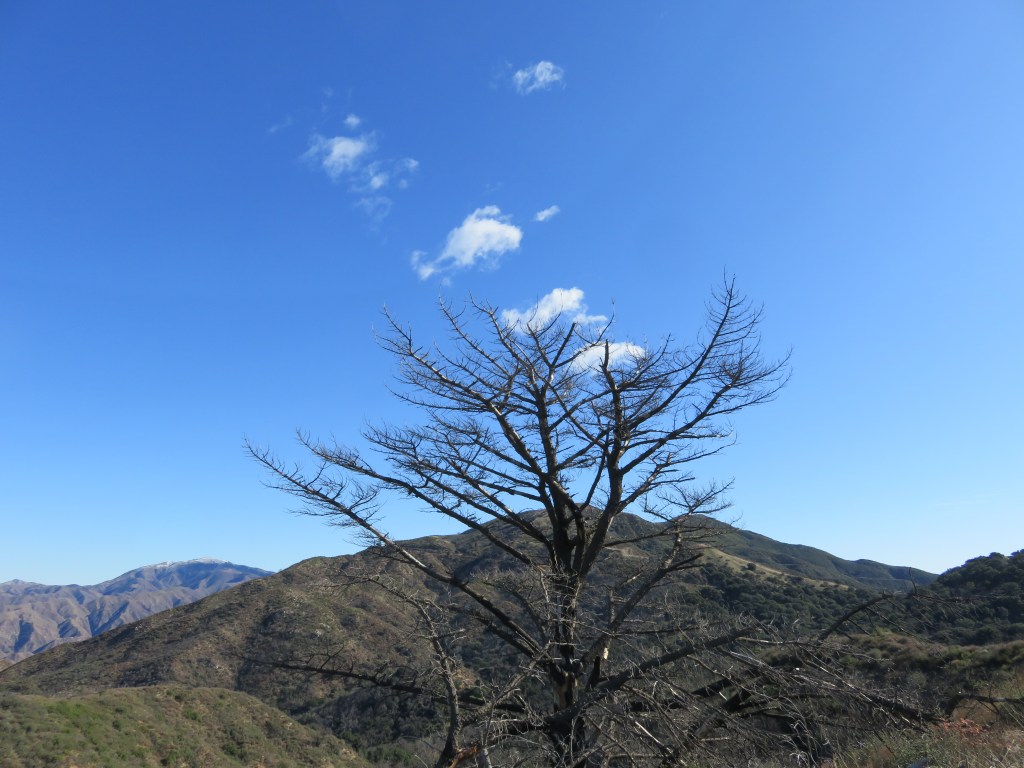
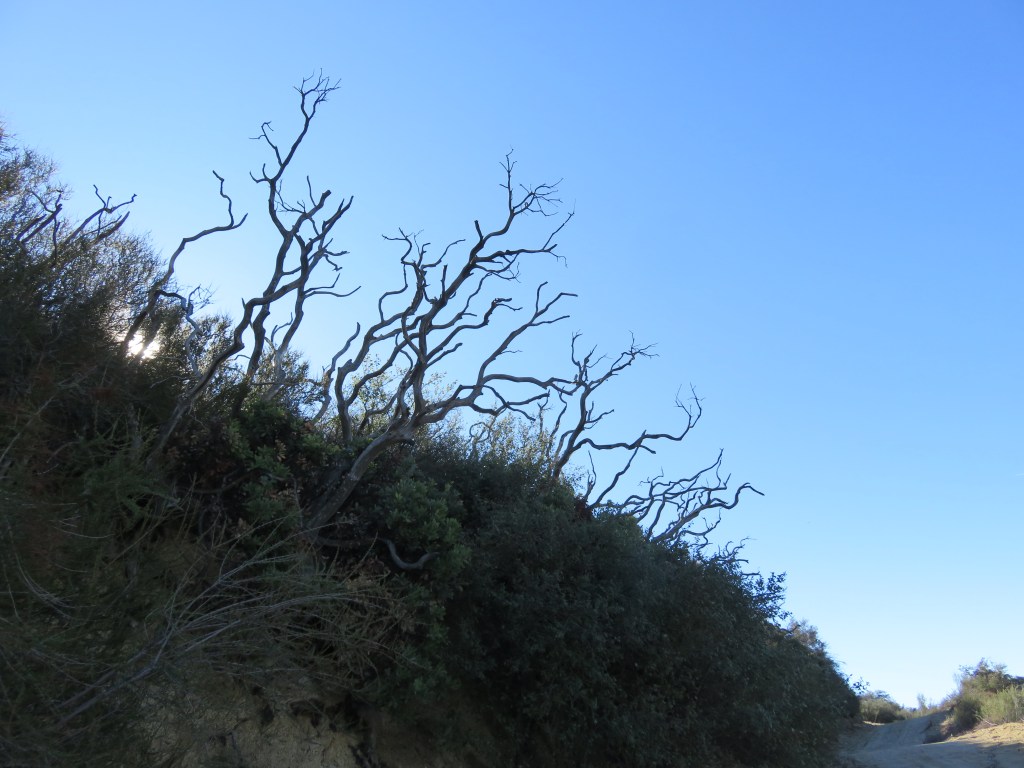
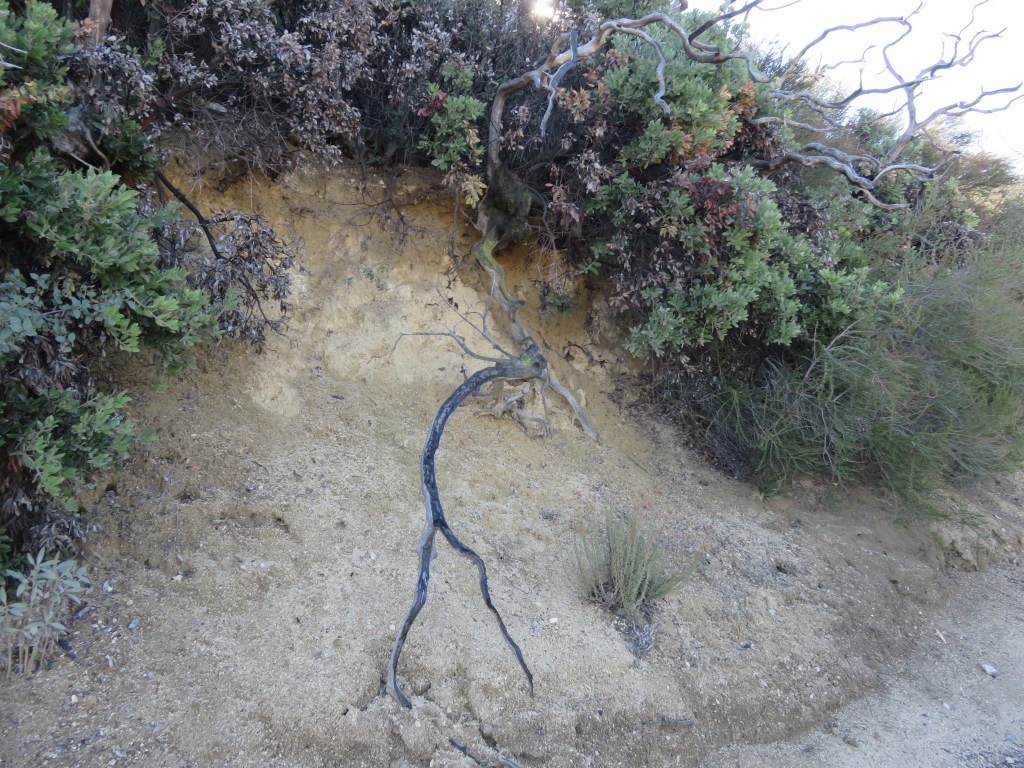
Look carefully. You’ll see that part of the mountain is recovering from fire
9.7 miles done. Time for lunch!
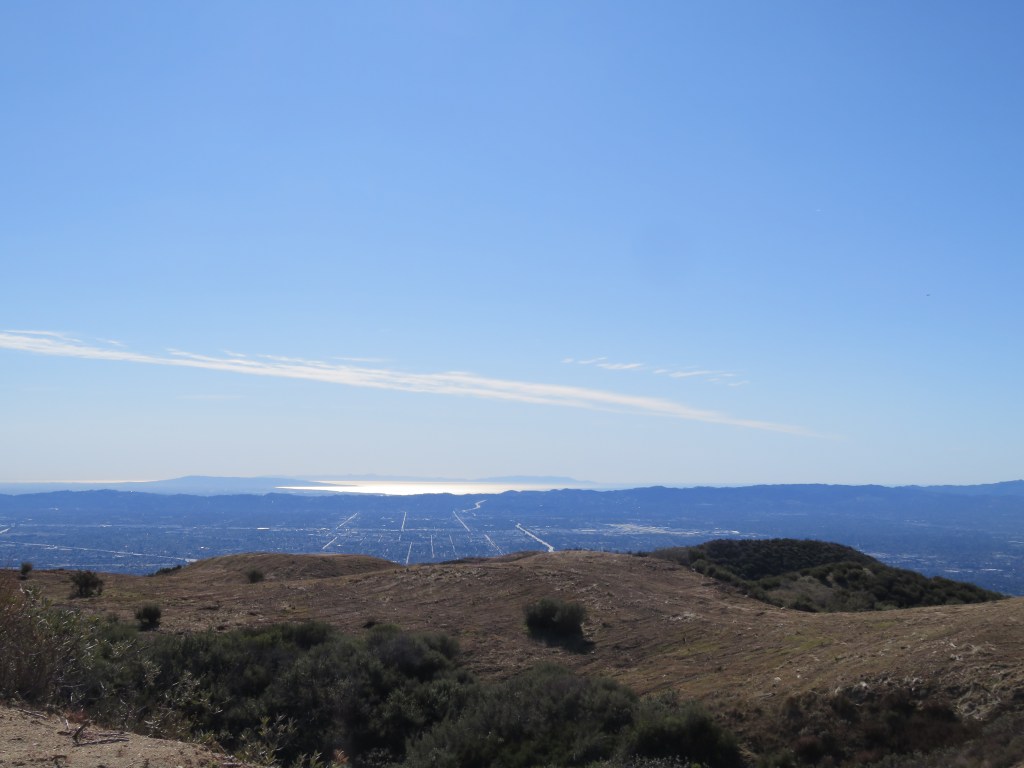
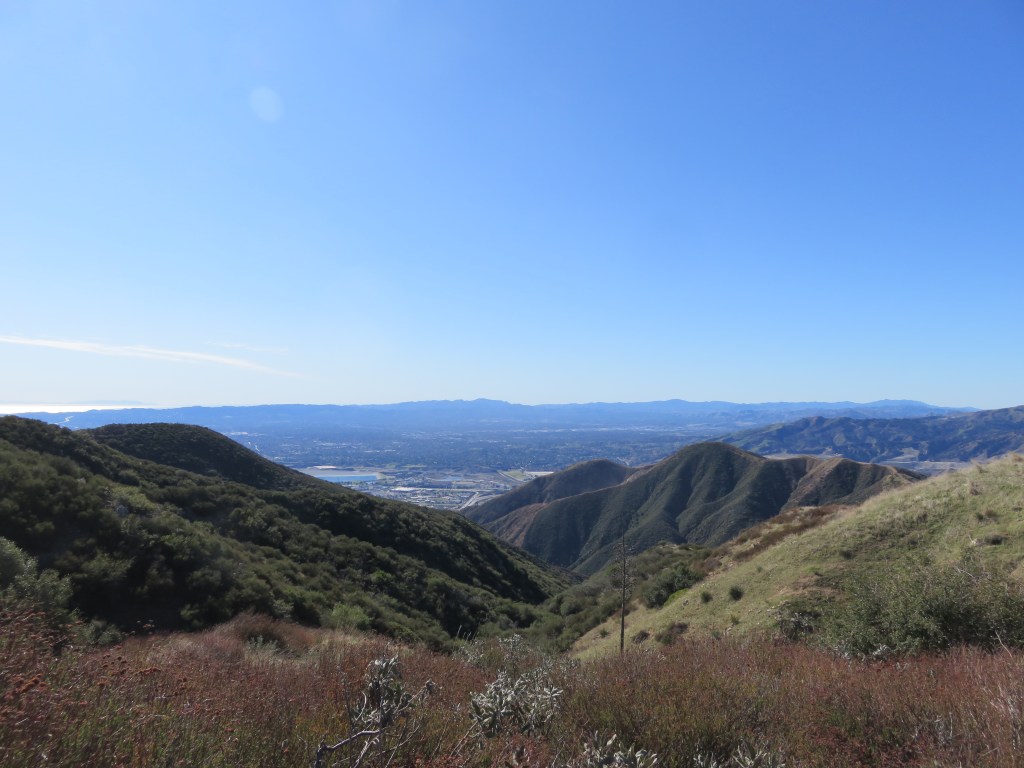
Early views of awesome town and more.
The wind
We conquered The Beast
With hike 77 done, I’m ready for 2020. I look forward to another year of frequent hiking. I’ll be doing the 52 Hike Challenge again, this time with 52 unique hikes, one of which will be the Colin Hudson Great Train Hike in Bim early in the year. I will travel periodically throughout the year because after all, tourism is my business. I anticipate going home, visiting Greece, Switzerland, The Bahamas, a few national parks, and wherever else the travel bug takes me responsibly. I plan to catch up friends, hang out with my family, meet some new people, stay healthy and fit, and keep doing my part to take care of our natural and cultural assets (and of course continue encouraging others to do the same). We die once, but live every day. So above all, in 2020 I’ll be living my Best life … living it like it’s golden, because it is. Live it with me, in person or through my blog 😁.



























 Barbados Uh Cum From!